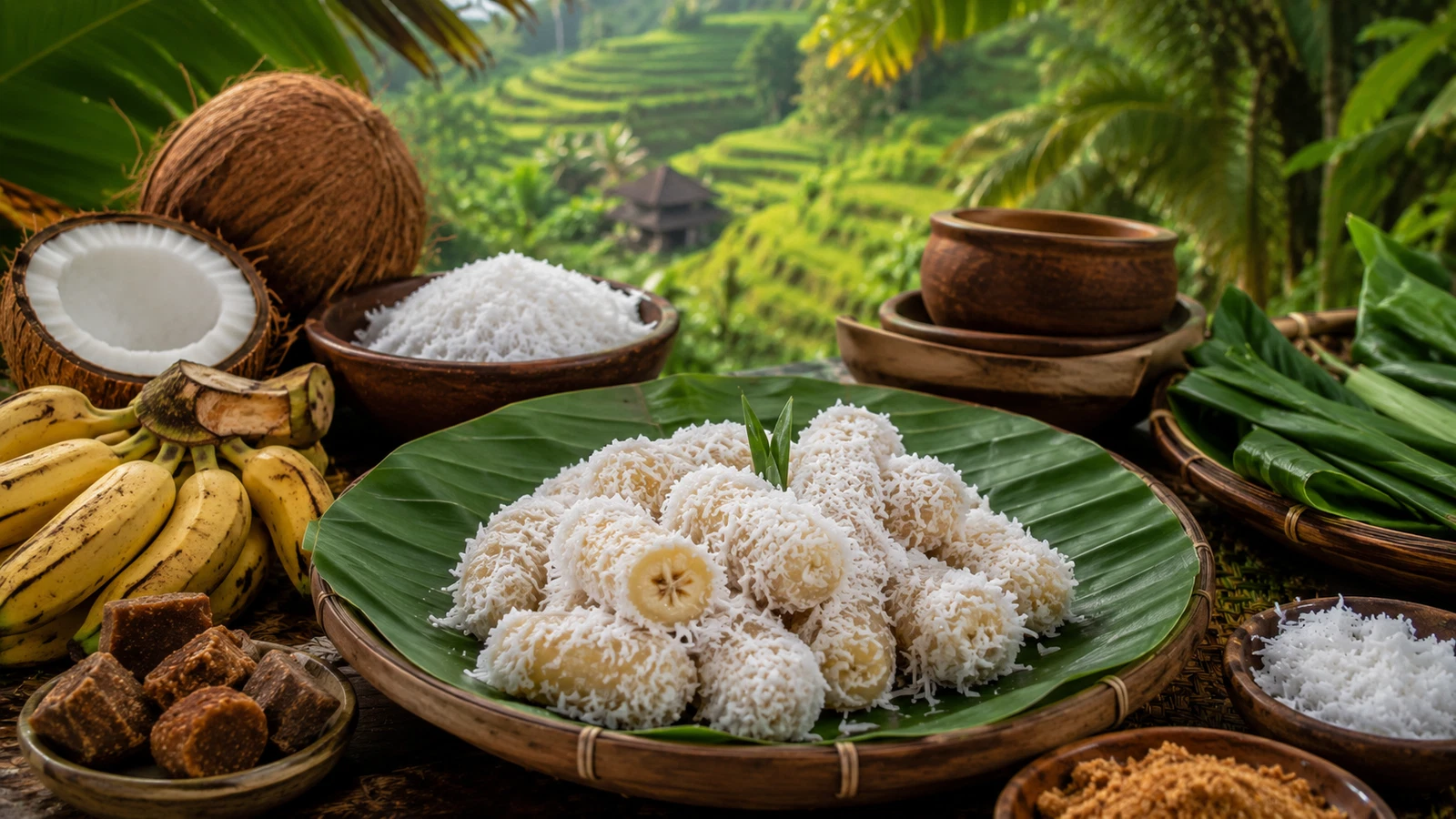
Pisang rai is firm banana pieces covered with a light rice-flour coating, gently cooked, sliced, and rolled in fresh coconut. Its appeal comes from the relationship between familiar ingredients and careful handling. The recipe is not difficult because it contains many components; it is demanding because moisture, heat, freshness, and timing must line up in a small piece of food.
Travelers can understand those decisions clearly during a traditional cooking class near Ubud. The wider guide to Balinese desserts and traditional sweets places pisang rai beside other rice cakes, coconut sweets, banana preparations, and puddings, while this page focuses on the details that make this particular example work.
Understanding the Basic Form
In practical terms, pisang rai is firm banana pieces covered with a light rice-flour coating, gently cooked, sliced, and rolled in fresh coconut. That definition matters because it separates the dessert from dishes that may share one ingredient but use a completely different structure. The cook is building a specific experience rather than combining sweetness, flour, and coconut at random.
Its expected character is soft banana inside a tender outer layer, with grated coconut adding a fresh, slightly coarse finish. When tasting, it helps to notice where the sweetness sits, how the surface contrasts with the center, and whether aroma arrives before or after the first bite. Those observations explain the method more accurately than color alone.
The Ingredient Balance
The core ingredients are ripe but firm bananas, rice flour, water, salt, optional pandan, grated coconut, and palm sugar syrup. Each one solves a different problem: structure, elasticity, moisture, aroma, richness, sweetness, or contrast. Substitution is possible in some kitchens, but a replacement should preserve the ingredient’s function rather than merely resemble its appearance.
Shopping quality becomes especially important when the recipe depends on fresh produce or minimally processed ingredients. The website’s tropical fruit guide for an Ubud market visit adds useful context for selecting and recognizing ingredients before cooking. Freshness can influence aroma and texture as strongly as the written ratio.
The Key Cooking Sequence
The essential sequence is to select bananas that hold shape, prepare a smooth coating, cover each piece evenly, simmer or boil gently until set, cool briefly, slice, and finish with coconut. Keeping that order prevents later corrections from damaging the food. A filling should be ready before a wrapper dries, a syrup should be strained before it coats a dessert, and shaped dough should not wait uncovered until the surface cracks.
A test portion is one of the most reliable tools when making pisang rai. It reveals whether the dough needs moisture, the batter needs thinning, the pan is too hot, or the syrup will thicken more than expected. Correcting one small test is faster and less wasteful than trying to repair an entire batch.
Reading the Sensory Signs
Useful doneness signs include the coating stays attached, the banana remains intact, and the cooked exterior is tender rather than gummy or thick. These clues combine sight, touch, smell, and movement. A timer can support the process, but it cannot account for flour absorption, fruit ripeness, sugar moisture, pan thickness, or the size of each piece.
The intended result is soft banana inside a tender outer layer, with grated coconut adding a fresh, slightly coarse finish. If one element dominates, the dessert loses balance. Thick dough hides filling, watery syrup weakens aroma, old coconut tastes dull, and excessive sweetness can cover the quiet flavors of rice, banana, or pandan.
Serving Context and Everyday Appeal
Pisang rai is served in bite-sized slices with coconut and optional palm sugar sauce. It is also an approachable banana sweet that reflects the practical use of local fruit, rice flour, and coconut. Availability is not uniform: market vendors, family routines, and local preferences influence when a traveler will encounter it and how it is presented.
For visitors who prefer preparation over passive tasting, Balinese sweet-making activity offers a relevant connection. Seeing ingredients before they are mixed makes it easier to understand the finished sweet and to recognize why a market version may differ from a household version.
Mistakes That Change the Result
Frequent problems include using overripe fruit, applying a heavy coating, rough boiling, slicing while extremely hot, or storing with wet coconut for too long. Most are not solved by adding more sugar or flour. The cook first identifies whether the problem comes from hydration, temperature, size, freshness, or timing, then makes the smallest useful correction.
Another mistake with pisang rai is judging the food only when it is extremely hot. Rice dough, syrup, pudding, and coconut mixtures continue changing as they cool. A sauce that looks thin in the pan may become heavy on the plate, while a soft dumpling may firm after resting. The final serving temperature belongs in the recipe plan.
A Practical Way to Learn the Method
At home, choose short firm bananas, coat evenly with wet hands or a spoon, and test cooking time with one piece. Work in small quantities until the sensory signs become familiar. Write down what the dough felt like, how quickly the syrup coated a spoon, or how the aroma changed; those details transfer better than a single cooking time.
From a dietary perspective, often plant-based, but coconut and any packaged flour or flavoring should be considered for allergies. A traditional label does not replace a recipe check. Guests with allergies should communicate before ingredients are purchased, and hosts should explain honestly when a shared kitchen cannot provide complete separation.
Frequently Asked Questions
Which bananas work best?
Choose ripe bananas that are sweet but still firm enough to survive coating, cooking, and slicing.
Why does the coating fall off?
The batter may be too thin, the banana surface too wet, or the water may be boiling too violently.
Is palm sugar sauce required?
No. Coconut and banana already provide flavor, while syrup is an optional richer finish.
A Useful Final Perspective
The lasting lesson from pisang rai is that simple ingredients reward close attention. The food succeeds when each component performs a clear role and the cook responds to texture and aroma instead of forcing the recipe through fixed numbers.
Taste the finished pisang rai slowly, compare it with other versions, and allow room for household variation. Traditional food stays meaningful because people continue preparing it, adjusting it, and sharing what they know.