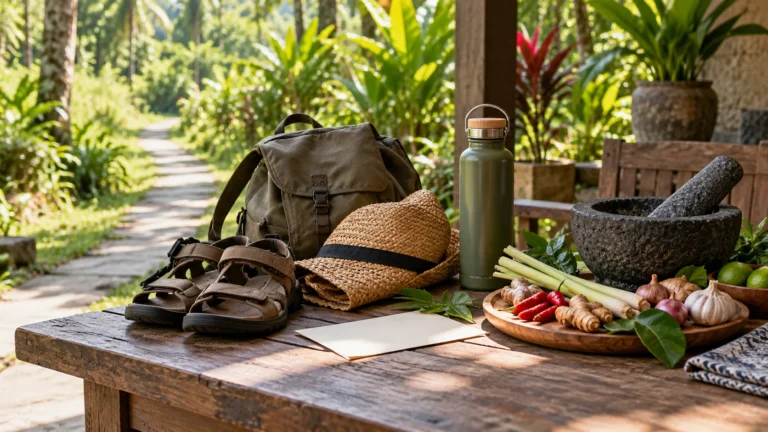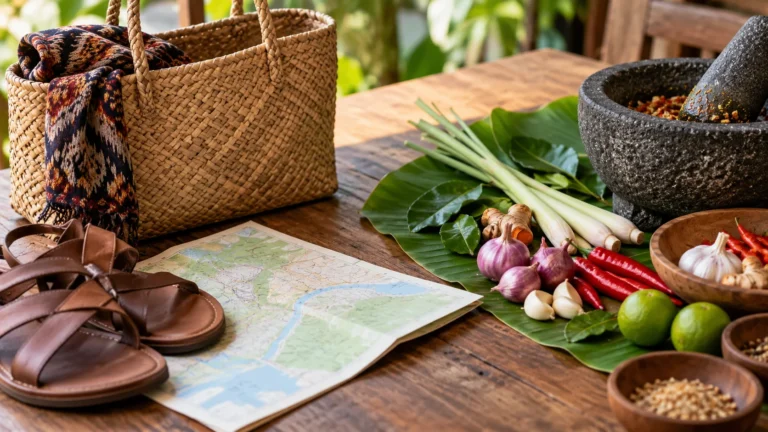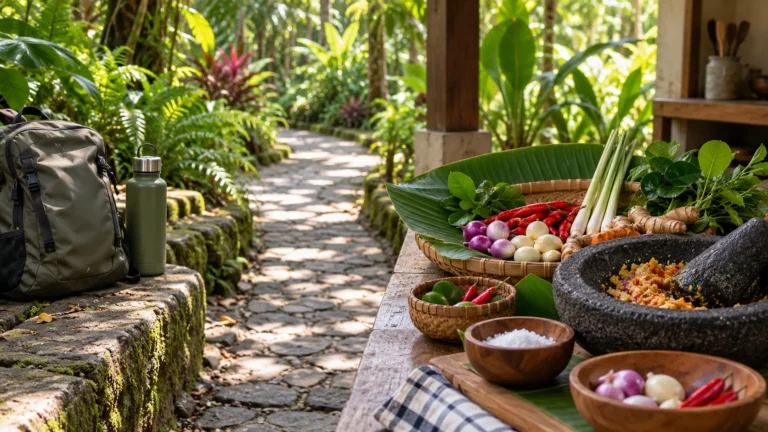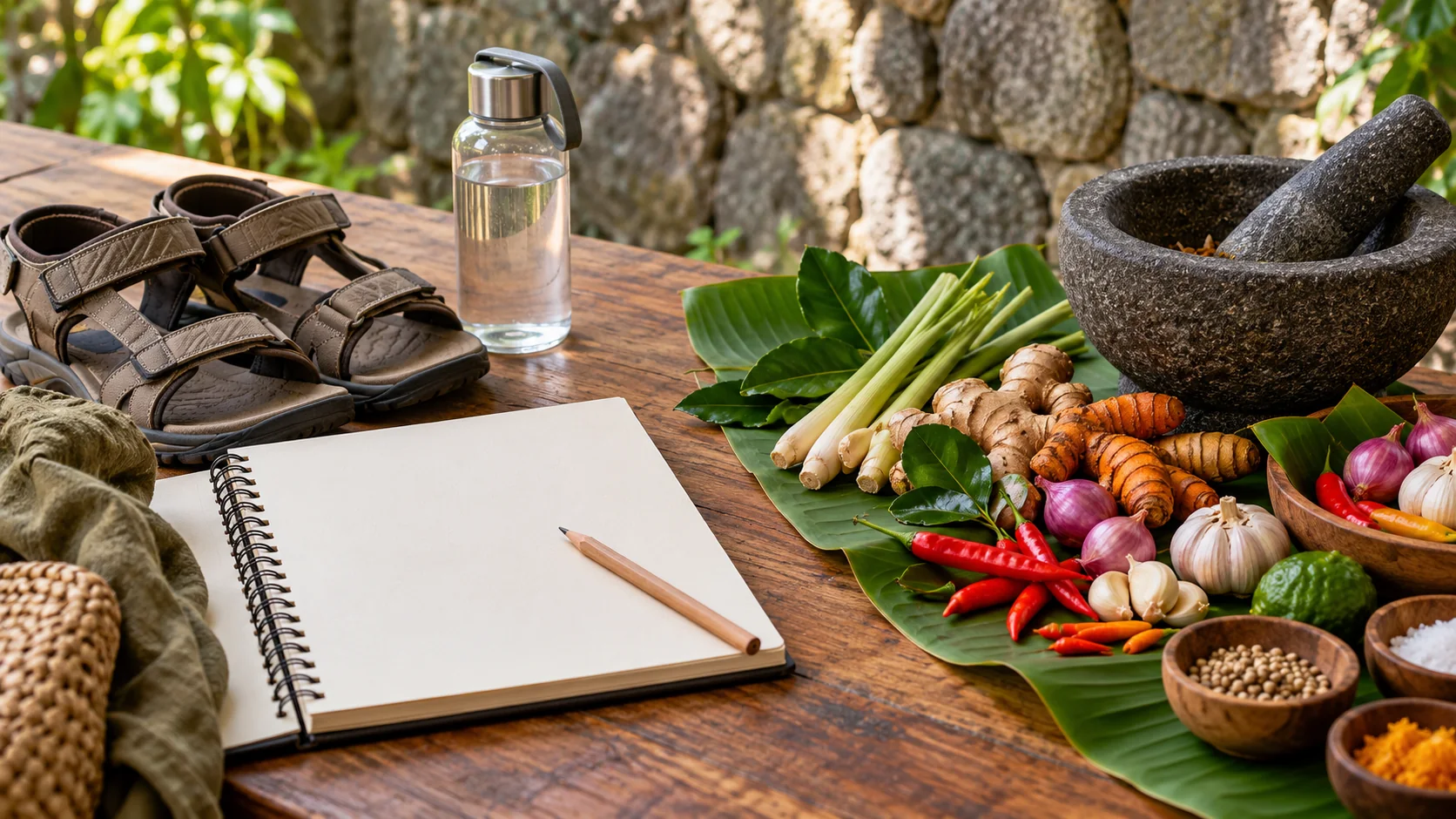
Can you plan cooking class after goa gajah without buying a fixed sightseeing package? Goa Gajah, also called Elephant Cave, introduces visitors to the archaeological and sacred heritage of the Bedulu area near Ubud. A private cooking class afterward takes place in another setting entirely: Putu's family kitchen in Pejeng Kangin. The combination can make sense because it moves from looking at traces of history to learning a living household skill, but it is not a single admission ticket or guided excursion. Plan the site visit independently, then confirm the cooking start time and travel arrangements with the host.
Why Goa Gajah is more than a quick cave photo
The entrance carvings attract attention, but Indonesia's official tourism information also describes bathing remains, archaeological material and surrounding landscape. Visitors who hurry through only the mouth of the cave may miss why the place matters. Give yourself time to look around respectfully and read what is presented on site. The historical interpretations belong to qualified sources and local custodians; your cooking host is not being sold as an archaeologist. Later in the family kitchen, the discussion can turn to how Balinese food is prepared today, a useful contrast with what is preserved in stone.
Respect the sacred setting while planning practical details
Goa Gajah is not simply a scenic backdrop. Appropriate clothing and locally posted rules matter, especially where religious practices are involved. Check whether a sarong or sash is needed under current visitor arrangements. If you are traveling with young children, explain that the carved figures and historic spaces should be treated carefully rather than as things to climb on. After visiting, allow time to change or freshen up before handling ingredients. The cooking session should be the welcoming, practical part of the day, not something for which the archaeological site must be shortened or treated casually.
Avoid guessing travel time just because both places are east of Ubud
Bedulu and Pejeng are both in Gianyar, but the length of a road transfer depends on the exact gate, traffic and meeting arrangements. Do not use a straight-line distance or a map screenshot to promise a fixed number of minutes. If you want to go directly from Goa Gajah to the cooking home, send the name of the exit or parking area where your driver can legally meet you. Confirm whether a pickup outside the usual hotel area is available and whether it costs extra. A standard free Ubud-area hotel transfer should not be presented as an unlimited sightseeing shuttle.
The natural transition from observation to participation
Watching stone carving and architecture encourages questions about skill and tradition; preparing a Balinese meal involves another kind of practical knowledge. A family cooking class might include a basic spice blend, vegetables, rice and dishes agreed in advance. Rather than equating a modern recipe with an eleventh-century ritual meal, ask the host which parts of the family's cooking are passed down at home today. Preparing food together gives children and adults something they can do, taste and discuss, which complements an earlier visit where the main role is to observe and learn.
Choose the booking format that fits a site-visit day
If sightseeing is already taking up the morning, the Cooking Class + Meal option may make the most sense. A market tour is a different component requiring a suitable early schedule and its own booking confirmation. Do not confuse the archaeological site with the ingredient market or assume that an afternoon market detour is automatically included. Families can ask about non-spicy adjustments, a vegetable-forward menu or easy dessert tasks. All menu requests and any allergy-related preparation need explicit confirmation before the class so ingredients can be planned appropriately.
Questions worth settling before you leave your accommodation
Confirm admission and opening information with the attraction, identify the exact party size for cooking, and decide whether everyone wants to join the hands-on part. Tell Putu if you are already using a driver for the day so pickup is not duplicated. Keep a WhatsApp contact active for meeting-point changes. If you need to return to a different villa afterward, ask about it in advance rather than presuming return transport can go anywhere in Bali. When these details are settled, the two separate experiences can feel like one coherent day without being marketed as one bundled tour.
Choose the class format independently of your sightseeing plans
The decision starts with the cooking format. Putu's private Cooking Class + Meal takes place at a Balinese family home in Pejeng Kangin, away from the attraction itself. Guests prepare an agreed set of dishes and then share the meal. A separate Market Tour + Cooking Class option is available subject to the relevant schedule and confirmation. Neither format includes entry, tickets, guided sightseeing or an all-day vehicle for Goa Gajah. The host can discuss flexible private timing, but actual availability and a workable pickup route must be confirmed before making fixed plans.
Confirm the exact meeting point and return journey
To request a practical arrangement, send the date, number of adults and children, preferred class session, accommodation name, and a Google Maps pin for your intended meeting point. Say clearly if the pickup would be at Goa Gajah rather than at your hotel. Included pickup is generally for the eligible Ubud area; attraction pickups or journeys outside the usual service zone may need a separate quote. A map pin is a starting point for coordination, not a promise a car can enter every lane or stop beside every entrance. Confirm the return destination too, particularly if you will not be going back to the same hotel. At Goa Gajah, identify a legal stopping area by the site access road or return to accommodation first; do not substitute a dropped pin on the cave structure for the driver meeting point.
Make the cooking experience comfortable for every guest
After visiting Goa Gajah, the private cooking format can suit mixed-age groups when the menu and activities are planned responsibly. Adults should supervise children throughout, with hot oil, knives and cooking flames managed by capable adults. Guests who prefer vegetarian, vegan, less-spicy or other modifications should communicate the exact needs before the visit so the host can say what is feasible. A severe allergy requires a specific discussion about ingredients and cross-contact risks rather than an unqualified guarantee. If a traditional dance or drink is promoted as a complimentary element of the booking, confirm the current arrangement for your group and date rather than treating it as admission to any unrelated performance venue. Visitors who spent time around the archaeological remains may have walked uneven surfaces. Give families time for a toilet stop and a change into comfortable kitchen clothing. Putu’s current class offer includes a complimentary traditional Balinese dance and a beer for each adult, with family-friendly drinks for children where arranged. These are part of the cooking hospitality, not tickets to a public performance; confirm your group’s practical details when booking.
Booking a cooking experience after Goa Gajah
First decide whether your group wants a quiet family-home session or a more extensive morning built around an ingredient market. Then choose the date and ask about an available slot at the kitchen. Before agreeing to a transport plan, state that you will be visiting Goa Gajah independently so there is no confusion about which business is responsible for tickets or travel. For the most direct overview of the cooking choices, see the Cooking Class + Meal page. If you are comparing an ingredient-focused option, the Market Tour + Cooking Class page explains that different format. Neither page should be read as a promise of sightseeing admission.
Questions visitors ask
Does Putu include a Goa Gajah guided tour?
No. Goa Gajah admission, guidance and transport to the archaeological site are separate from the private cooking booking.
Can we go straight from the cave to the kitchen?
Ask first. A direct pickup requires confirmation of an accessible meeting point and transport terms.
Which class format works best after sightseeing?
Cooking Class + Meal is usually simpler to plan after an independent attraction visit; availability and menu should still be confirmed.
After planning your visit to Goa Gajah, the private cooking class Ubud guide article offers additional Ubud-area logistics context. If you are starting from accommodation rather than an attraction, check the Putu family cooking class website for current experience choices and contact details.
After visiting Goa Gajah, choose the cooking format by the time and energy your group has left. A market-focused session needs an earlier start than a class focused mainly on cooking and eating. Keep entrance arrangements separate, account for the journey to the kitchen and ask Putu which session actually fits your preferred date.