Rice is the quiet timing center of many Balinese meals. It may look simpler than the spice paste, sambal, vegetables, or fried garnishes, but poor timing can leave the cook with perfect side dishes and rice that is still hard—or rice that has sat too long and become dry. A ubud cooking class can show how the rice pot is started early and then allowed to work while attention moves elsewhere.
The practical sequence is rinse, judge the water, cook with steady heat or a rice cooker, rest briefly, then fluff and serve. The exact water quantity depends on the rice, pot, washing, and cooking method, so a fixed ratio is best treated as a starting reference rather than a universal law.
The broader framework of traditional Balinese cooking methods explains why rice timing interacts with frying, steaming, and grilling. The guide to rice and side dishes in a traditional Balinese meal provides the serving context.
Rinse to Remove Surface Starch and Debris
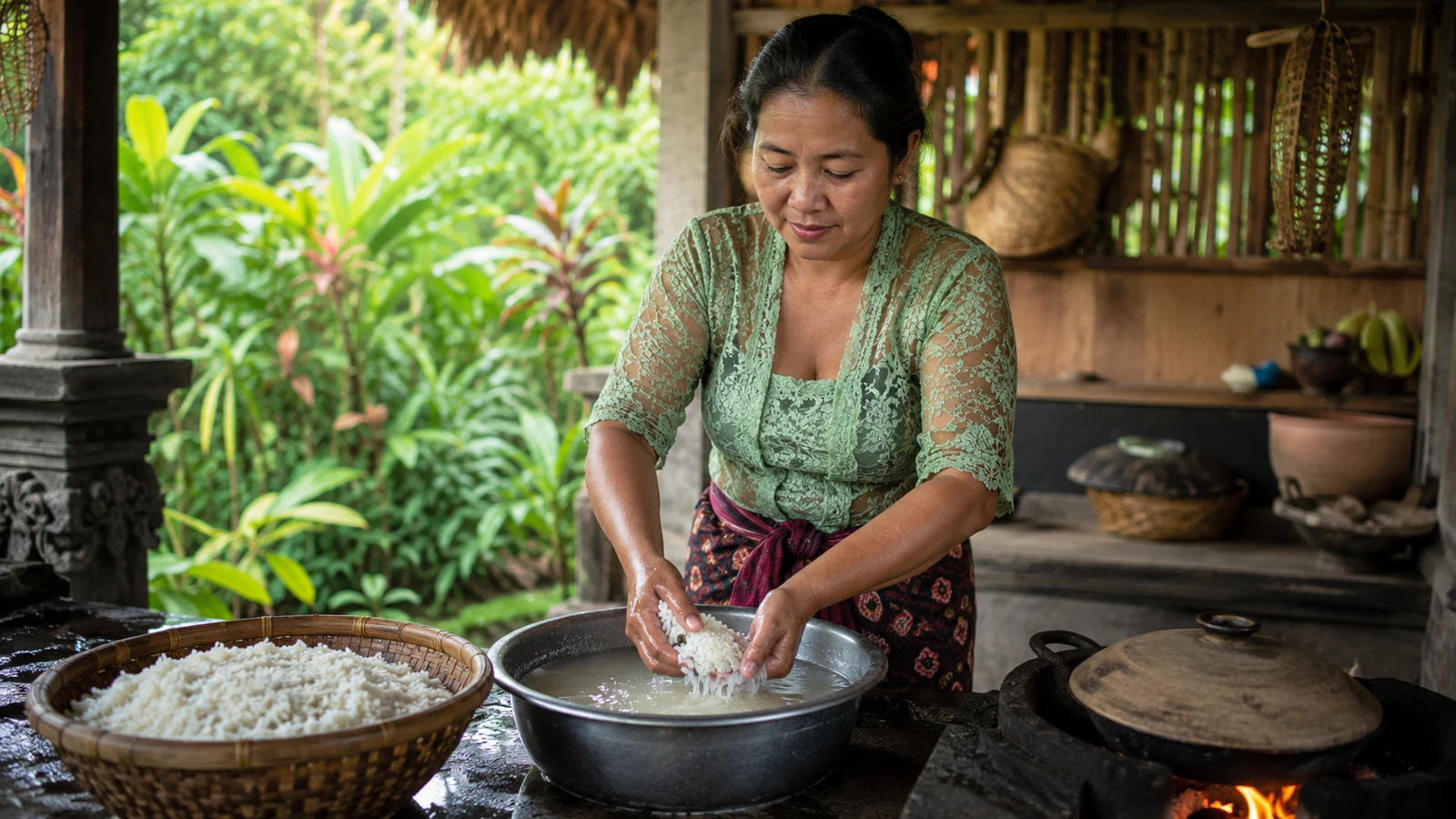
Place the measured rice in a bowl or pot, add clean water, stir gently with the hand, and pour off the cloudy water. Repeat until the water becomes noticeably clearer. It does not need to be perfectly transparent.
Rinsing practices vary by rice type and household preference. The point is consistent preparation. If one batch is washed heavily and the next barely rinsed, the same water ratio may produce different textures.
Judge Water for the Rice and the Vessel
Different varieties absorb water differently. Older rice can behave differently from very fresh rice. A wide pot loses moisture differently from a tightly sealed rice cooker. Follow the rice package or household method as a baseline, then adjust through experience.
Too much water can produce a soft wet texture; too little can leave a hard center. Small adjustments are more useful than dramatic changes after one imperfect batch.
Stovetop Cooking Needs a Controlled Transition
On the stove, the rice is typically brought up to heat, then cooked more gently once active boiling begins. A heavy pot and tight lid help distribute heat and retain steam. Stirring repeatedly during this stage can break grains and release extra starch.
Once the liquid is absorbed and the rice is tender, remove or reduce the heat according to the method and let the rice finish with retained steam.
A Rice Cooker Simplifies Attention, Not Judgment
A rice cooker can handle the heat transition automatically, which is valuable during a multi-dish cooking session. The cook still needs the correct rice, water, clean inner pot, and enough capacity.
Avoid opening the lid repeatedly during the cooking cycle. Escaping steam can interfere with the appliance’s intended process and makes timing less predictable.
Rest the Rice Before Fluffing
A short rest after cooking lets moisture redistribute. Open the lid carefully, then fluff with a rice paddle or fork without crushing the grains. This is also a good moment to check whether the bottom is excessively wet or dry.
If the rice will wait before serving, keep it safely hot according to the equipment guidance. Do not leave cooked rice sitting at room temperature for extended periods.
Coordinate Rice with the Longest Side Dish
Start by identifying which component needs the most unattended time. Rice can often begin before the final frying or garnish. A long-simmered dish may start even earlier. The objective is to avoid a last-minute pileup where everything needs attention at once.
A shared meal after cooking demonstrates the payoff: rice should arrive hot and ready when the side dishes are at their best, not become an afterthought after the rest of the table is finished.
Troubleshoot Texture by Looking at the Whole Process
Hard rice may need more water or cooking time. Mushy rice may have had too much water, too much agitation, or a variety that needs a different ratio. Burned bottoms can result from excessive heat or a thin pot.
Record what changed rather than changing several things at once. Keeping rice type and quantity constant while adjusting water slightly makes the next batch easier to evaluate.
Rice Is Part of the Meal Structure
The ingredients local cooks buy for a meal may vary by season, but rice provides a steady base for vegetables, tofu, tempeh, meat, sambal, and other side dishes. Its mildness makes stronger flavors easier to balance on the plate.
Once rinsing, water judgment, cooking, resting, and timing become routine, rice requires less mental attention. That frees the cook to focus on the techniques that genuinely need hands-on work at the end of the meal.
\n\n
Plan Leftover Rice with Food Safety in Mind
\n\n
Cooked rice should be handled like any other perishable cooked food. If it will not be eaten promptly, cool it using appropriate food-safety practices and refrigerate it rather than leaving a covered pot on the counter for a long period. Reheat only what is needed and follow reliable food-safety guidance for storage and reheating.
\n\n
From a cooking perspective, leftover rice also behaves differently from freshly cooked rice because the grains firm as they cool. That can be useful for some fried-rice preparations, but it does not mean old rice is automatically suitable. Freshness, storage history, smell, and temperature handling still matter.
A Repeatable Way to Practice the Technique
For how is rice washed, cooked, rested, and timed so it is ready with the rest of a balinese meal, the most reliable learning method is to change one variable at a time and observe the result. Keep the ingredient quantity manageable, prepare the work area before heat begins, and note which visual, aromatic, or textural cue tells you that the step is complete. This turns Balinese rice cooking into a repeatable skill instead of a single recipe memory. If equipment or ingredients differ at home, preserve the function of the step and adjust gradually rather than copying a movement that no longer fits the situation.
Use the Next Step as Your Quality Check
A useful final check for Balinese rice cooking is whether the technique made the next stage easier. Preparation should reduce long fibers before grinding, wrapping should contain food without fighting the leaf, heat should create the intended texture without forcing the cook to rescue the surface, and cleaning should leave the tool ready for another meal. When the next stage becomes harder, revisit the preceding decision instead of adding more complexity. This process-based approach keeps traditional methods practical for a modern home kitchen.