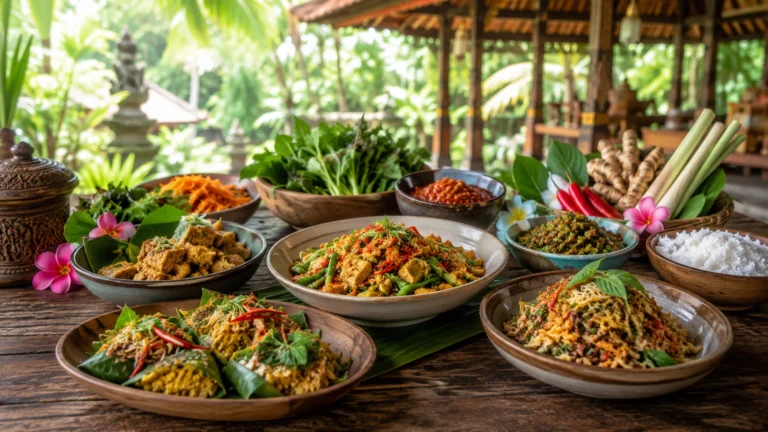
A satisfying plant-based meal needs more than removing meat from an existing plate. It should have a staple, a substantial protein-rich ingredient, several vegetables, an aromatic sauce or paste, and enough contrast to keep each bite interesting. Balinese cooking makes that structure easy to visualize because dishes are often served together around rice.
This subject is easier to understand during a traditional cooking class near Ubud, where ingredients and preparation can be checked before the meal is served. The broader vegetarian and vegan Balinese cooking guide explains how combining staple, protein, vegetables, seasoning, and contrast in a plant-based Balinese meal fits into the complete plant-based experience, while this article concentrates on one practical decision travelers can apply when booking, cooking, or ordering.
What the Ingredient or Dietary Label Really Means
Start with rice or another staple, then choose tofu, tempeh, beans, peas, lentils, nuts, seeds, or another suitable protein-rich food. Add vegetables in different colors and cooking styles. Finish with a sambal, herb, citrus note, or fruit. The exact portions depend on the person, but variety and adequacy are more useful goals than a rigid formula.
For combining staple, protein, vegetables, seasoning, and contrast in a plant-based Balinese meal, labels are only a starting point. The useful question is what the ingredient does in the recipe and what happens before it reaches the plate. That approach reveals hidden seasoning, texture changes, advance preparation, and shared equipment that a short menu description cannot show.
What to Check Before Cooking
Review the plate before cooking. If every dish is fried, add something fresh, steamed, or simmered. If coconut appears in several dishes, include acidity and lighter vegetables. If jackfruit or mushrooms provide texture, make sure a separate protein source is present. Check allergens and hidden animal ingredients at the same stage.
Checking combining staple, protein, vegetables, seasoning, and contrast in a plant-based Balinese meal early prevents awkward changes after the paste, broth, sauce, or protein has already been prepared. It also lets the host shop in the right quantities and explain which parts of the menu are naturally plant-based and which require a deliberate alternative.
A Practical Cooking Method
Plan the order so time and temperature work efficiently. Cook beans or dense vegetables first, prepare the spice paste thoroughly, keep crisp tempeh for later, and add delicate greens near the end. Taste the full group of dishes together because a sambal that seems salty alone may be balanced beside plain rice and vegetables.
The method for combining staple, protein, vegetables, seasoning, and contrast in a plant-based Balinese meal should be connected to a visible result: stronger aroma, firmer texture, better browning, smoother sauce, or safer separation. Participants learn more when they can compare the ingredient before and after the key step instead of receiving only a verbal instruction.
Ingredients and Pairings That Work
A practical combination might include rice, spiced tempeh, tofu in a coconut sauce, long beans with grated coconut, grilled eggplant, a mild vegetable soup, sambal served separately, and fruit. The menu can be smaller; the important point is that each dish contributes a different role rather than repeating the same texture and seasoning.
The article on the cooking class meal format offers a useful connection with content already available on the website. It helps readers place combining staple, protein, vegetables, seasoning, and contrast in a plant-based Balinese meal inside the wider Balinese meal, market, or spice system without repeating the same explanation in every article.
Questions to Ask Before Booking
Ask how many dishes are included and which one serves as the main protein component. Confirm whether participants eat the complete meal they prepare and whether spice levels can be adjusted. Guests with dietary needs should review soy, nuts, sesame, coconut, gluten-containing sauces, and shared equipment before the menu is finalized.
A second useful reference is the broader Balinese food guide. Reading it before confirming the activity helps travelers ask about the actual menu, preparation method, and limitations instead of assuming that every vegetarian or vegan class follows the same routine.
Common Mistakes to Avoid
A common mistake is relying on coconut-rich vegetables for the entire meal while providing little protein and little freshness. Another is serving three similarly sweet soy-glazed dishes. Balance also suffers when chili is reduced by removing the whole spice paste instead of adjusting only the heat source.
Most problems with combining staple, protein, vegetables, seasoning, and contrast in a plant-based Balinese meal come from making the decision too late, treating every substitute as equal, or focusing only on the visible ingredient. A better plan considers the paste, liquid, sauce, garnish, texture, and serving process together.
Allergy and Food-Safety Considerations
A balanced meal must also be safe. Wash produce appropriately, cook beans and other ingredients fully, keep perishable tofu, tempeh, and coconut products at suitable temperatures, and prevent cross-contact for allergies. Do not leave cooked food warm for long periods before the class sits down to eat.
Safety around combining staple, protein, vegetables, seasoning, and contrast in a plant-based Balinese meal depends on accurate information and continuous handling. A clean ingredient can still be affected by shared oil, utensils, work surfaces, storage, or serving spoons, so the agreed plan should continue from shopping through the final plate.
How to Apply the Lesson at Home
At home, begin with the smallest version of the method used for combining staple, protein, vegetables, seasoning, and contrast in a plant-based Balinese meal. Record the form of the ingredient, how it was cut, when it entered the pan, and what changed during cooking. Those observations are more transferable than copying a quantity without knowing the strength or moisture of the local product.
When substitutions are necessary for combining staple, protein, vegetables, seasoning, and contrast in a plant-based Balinese meal, preserve function. Replace acidity with acidity, body with body, aroma with a compatible aroma, and protein with another substantial protein source. Not every local ingredient has a perfect equivalent, and an honest simplified version usually tastes better than an overcrowded imitation.
The Main Takeaway
A balanced plant-based Balinese meal combines nourishment with contrast: staple and protein, fresh and cooked vegetables, rich and bright flavors, soft and crisp textures. Once the roles are clear, cooks can change individual ingredients while preserving the satisfying structure of the meal.
Once travelers understand combining staple, protein, vegetables, seasoning, and contrast in a plant-based Balinese meal, they can judge menus and recipes with greater confidence. They know which questions matter, which step controls the result, and how to keep the dish recognizably Balinese while respecting dietary needs and the realities of a home kitchen.