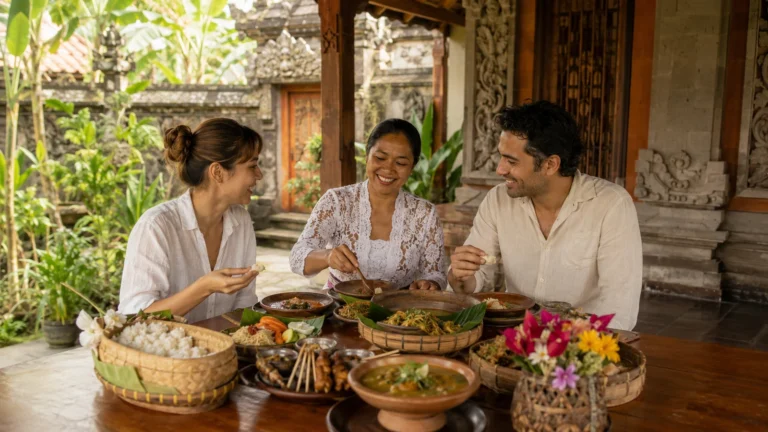
Children can enjoy Balinese food when new flavors are introduced at a comfortable pace. Rice, chicken, eggs, tofu, tempeh, noodles, soup, vegetables, grilled skewers, and fruit provide familiar starting points. The main questions are usually chili level, hidden ingredients, allergies, portion size, and whether sambal can be served separately.
A family joining an ubud cooking class can make the experience easier by explaining children’s ages, allergies, and food preferences before the session. Children do not need a completely separate menu, but they benefit from having at least one reliable food on the table.
Start with Rice and Familiar Textures
Plain rice gives children a neutral base for tasting small amounts of other food. Add a mild protein such as chicken, egg, tofu, or tempeh and one simply prepared vegetable. A small grilled skewer can feel familiar even when the seasoning is new.
Avoid filling the entire plate at once. Several small portions allow the child to try, pause, and return to foods they like without feeling overwhelmed.
Keep Sambal on the Side
Sambal can be extremely hot for a child, and even a small amount may spread across the plate. Ask that it be placed in a separate bowl and keep shared spoons away from the child’s food. Adults can taste it independently.
Some dishes contain chili in the spice paste before cooking. Ask which options are naturally mild rather than assuming visible sambal is the only source of heat.
Mild Does Not Have to Mean Plain
Children may enjoy garlic, shallots, turmeric, lemongrass, coconut, sweet soy, lime, or gently cooked ginger even when chili is removed. These ingredients introduce Balinese aroma without creating excessive heat.
Let the child smell a leaf or root before tasting the dish. Recognizing an ingredient can turn an unfamiliar meal into a small discovery rather than a surprise.
Approachable Foods to Consider
Possible starting choices include plain rice, mild chicken, grilled fish, tofu, tempeh, omelet, fried noodles with little chili, clear soup, steamed vegetables, corn, and fresh fruit. Satay can be child-friendly, but confirm the marinade and sauce.
Fried foods may be easy to accept, yet they should not become the only option. Pair one crisp item with rice and a small vegetable portion so the child experiences a broader meal.
Nasi Campur Works When Components Are Separated
A mixed rice plate offers variety, but the standard version may contain hot sambal or several items touching one another. Ask for rice and side dishes to be placed separately, especially for younger children or selective eaters.
Parents can then offer one bite at a time. This also makes it easier to identify which dish contains a strong flavor or allergen.
Watch for Peanuts, Shrimp Paste, and Soy
Peanut sauce, fried peanuts, shrimp paste, soy sauce, tofu, and tempeh are common. These ingredients are safe for most children but important for families managing allergies. Shrimp paste can be hidden inside sambal or seasoning paste.
Explain the allergy clearly and ask about sauces, stock, garnishes, shared oil, and utensils. A translated allergy card is useful when the reaction could be serious.
Check Fish Bones and Skewers
Whole fish and some fish portions may contain small bones. Adults should inspect the food before serving it to a child. Satay sticks can be sharp and remain hot after grilling, so younger children should have the food removed from the skewer.
Banana-leaf packets can also release steam when opened. An adult should unwrap them and allow the food to cool.
Choose Child-Sized Portions
Large servings can discourage a child before tasting begins. Ask for an extra plate and share from the adults’ dishes, or request a smaller portion. Rice and side dishes are easy to divide.
When a child wants more, add it gradually. This reduces waste and keeps the meal relaxed.
Use Sweetness Carefully
Some sauces and fried foods have a gentle sweetness from palm sugar or sweet soy. This can make a dish approachable, but it should not be used to hide every new flavor. Encourage the child to notice coconut, lime, grilled aroma, or mild spices as well.
Traditional sweets made with banana, coconut, rice flour, pandan, or palm sugar can be enjoyable after the meal. Check fillings and garnishes for nuts or other allergens.
Let Children Participate in a Cooking Class
Age-appropriate tasks may include washing vegetables, tearing leaves, measuring ingredients, stirring a cool mixture, shaping food, or arranging a plate. Knives, hot oil, fire, heavy mortars, and boiling liquids require close adult or instructor supervision.
The family guide to planning a cooking class with children explains why age, attention span, heat, and kitchen layout should be discussed before booking.
Do Not Turn Tasting into a Test
A child may reject a food because of smell, texture, fatigue, or an unfamiliar environment. Offer a tiny taste without pressure. Positive exposure still has value even when the child does not finish the portion.
Adults can model curiosity by describing what they notice rather than declaring that a food is strange. “This smells like lemongrass” is more inviting than “You probably will not like this.”
Plan Around Travel Fatigue
Children may be less adventurous when hungry, tired, overheated, or adjusting to a new time zone. Keep water available, avoid delaying meals too long, and choose a calm setting. A familiar snack can be useful during long transfers, but save enough appetite for the meal.
For cooking activities, a morning or early session may suit some families better than a late class. The best timing depends on the child’s routine.
Build a Comfortable Family Plate
When eating at a shared table, give the child a clean plate and serving spoon. This prevents a mild portion from being mixed accidentally with spicy sauces or foods containing an allergen.
A practical plate might include rice, mild chicken or tofu, a small vegetable portion, fruit, and sambal completely separate. Add one new aromatic dish for tasting. This provides nutrition, familiarity, and discovery without demanding that every item succeed.
The broader Balinese food guide explains menu words, common ingredients, serving styles, and spice levels. With advance communication and realistic expectations, families can enjoy local food together while keeping children safe and comfortable.