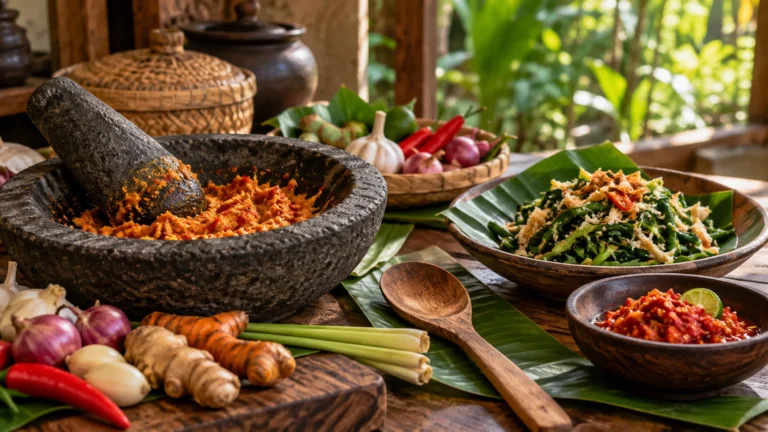
A private class can make food communication more direct because one booking group shares the conversation with the host. That is useful for vegetarian guests, people avoiding an ingredient, or travelers who need a milder menu. It does not automatically make a cooking class in Ubud safe for every allergy or medical restriction.
Our guide “Private Cooking Experience Ubud Guide” covers the general choice. Dietary planning begins by identifying what kind of requirement the guest actually has.
Separate Preference from Medical Risk
A preference describes what a guest chooses not to eat. An intolerance may cause symptoms without an immune reaction. A food allergy can be serious and may require strict cross-contact controls. These situations cannot be handled with the same vague request.
Use direct language. Name the ingredient, explain whether traces or shared equipment are a concern, and state what happens if exposure occurs. Do not use “allergic” casually for a simple dislike because it makes the safety conversation less precise.
Vegetarian and Vegan Requests
Vegetarian cooking can use vegetables, tofu, tempeh, coconut, rice, and Balinese spice pastes, but guests should ask about shrimp paste, fish sauce, stock, egg, and garnishes. A visually vegetarian dish may contain a seasoning derived from seafood.
The vegetarian cooking class information explains the available experience. Vegan requests require a more detailed discussion because several traditional components may need adjustment.
Allergy Questions Must Include Cross-Contact
Avoiding an ingredient in the recipe is different from preventing traces on knives, boards, mortars, pans, hands, or storage containers. A family kitchen may use the allergen regularly even when it is not part of the selected menu.
Ask what can realistically be separated and whether packaged ingredients have labels available. If the host cannot confirm the necessary controls, the guest should not treat the private format as a safety guarantee.
Spice Sensitivity and Chili Preference
A guest may want mild food because of comfort, health, or unfamiliarity. Explain whether the concern is chili heat, strong aroma, garlic, fermented seasoning, or another ingredient. Reducing chili does not remove the aromatic character of Balinese food.
When the group has different heat preferences, ask whether chili can be served separately or added to selected portions at the end.
Mixed Dietary Needs in One Group
A private group may include vegetarians, unrestricted eaters, and one person with an allergy. The host needs the complete picture to decide whether one shared menu, separated components, or a different package is practical.
Our guide “Custom Menu Cooking Class Ubud” explains why separate menus are not always the best solution. A coherent shared menu can be safer and more enjoyable when the restrictions allow it.
Send Requirements Before the Booking Is Confirmed
Do not wait until pickup or arrival. Ingredients may already be purchased, and the host may need time to evaluate substitutions. Send the restriction in writing with the date and group size.
Our guide “Dietary Requirements Cooking Class Ubud” provides a broader checklist for allergies, vegetarian requests, ingredients to avoid, and spice levels.
Carry Medication and an Emergency Plan
Guests with prescribed emergency medication should carry it and make sure their companion knows where it is. A cooking host is not a replacement for medical planning. Share essential information without expecting the kitchen to diagnose risk.
Know how to contact local emergency services and how to return to the accommodation. Travel activities should not interrupt normal allergy precautions.
Read the Final Confirmation Carefully
The final message should state what will be avoided, what substitutions are planned, whether cross-contact can be controlled, and any limits the host has explained. If the confirmation does not answer the key safety question, ask again.
Privacy improves communication and menu focus, but safety depends on accurate information, realistic controls, and an honest decision about whether the kitchen can meet the requirement.
Final Perspective
A guest with dietary needs can have a rewarding private cooking experience when the request is specific and discussed early. Treat preferences flexibly, treat allergies seriously, and choose a menu that the host can prepare confidently.
Make dietary information specific before the menu is agreed
‘Vegetarian’ or ‘allergic’ alone may not be enough detail for a host to plan responsibly. Explain the actual ingredient or group of ingredients that must be avoided, whether traces are a concern, and if equipment or shared surfaces present a risk. Balinese preparations can use ingredients such as shrimp paste, peanuts, soy or seafood in seasoning and accompaniments, even when the finished dish appears to be vegetable-based.
For preferences—less chili, no meat, or a disliked texture—ask what can realistically change while keeping the lesson coherent. For medically significant allergies, explain the severity early and ask for a clear account of preparation and cross-contact limitations before deciding whether to book. A private format is not an allergy-free certification.
Keep the agreed requirements together with the booking confirmation and repeat the essentials on arrival. If the answers are unclear or the risk cannot be managed to your standard, choose a different arrangement instead of relying on a reassuring but vague promise.