Private guidance should make a class easier to follow without removing the satisfaction of doing the work. In a Balinese cooking class in Ubud, guests can expect demonstrations, assigned tasks, corrections, and explanations that connect the ingredients to the finished dishes.
Our guide “Private Cooking Class Ubud Guide” covers package and booking choices. Pace is about how the host balances learning with the fixed timing needed to prepare a complete meal.
The Class Still Has a Cooking Sequence
Private does not mean unstructured. Rice, spice paste, vegetables, sauces, and grilled components may need to begin at different times. The host coordinates those stages so the meal finishes together.
Guests can ask questions and repeat a technique, but some pauses must wait until a safe or practical moment. A clear sequence protects both quality and safety.
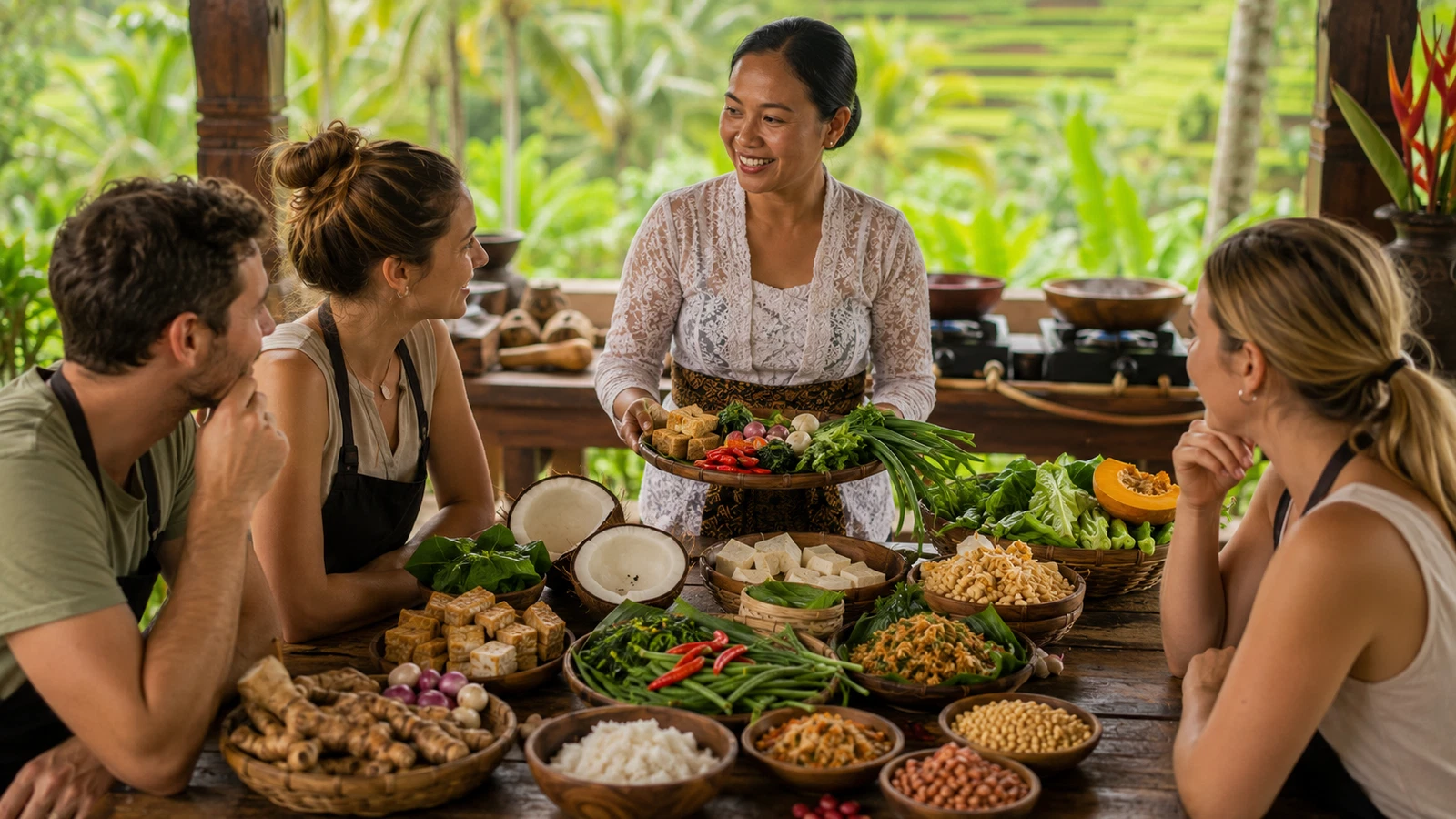
Demonstration Should Lead to Participation
A good host shows the essential movement, explains what to notice, and then allows guests to try. Too much demonstration turns the class into observation; too little leaves beginners uncertain.
Ask how much of the food guests prepare themselves. The answer should describe real tasks rather than only saying the class is hands-on.
Beginners Need Clear Checkpoints
A beginner benefits from concrete signals: how finely to cut an ingredient, what a paste should smell like, when oil is hot enough, or how texture changes during cooking. These checkpoints are more useful than technical vocabulary alone.
Private guidance allows the host to notice when a guest needs a slower explanation or a different task. Correction should feel practical, not like an examination.
Confident Cooks Can Ask Deeper Questions
Experienced home cooks may want to understand ratios, heat control, ingredient function, or substitutions outside Bali. A private class gives them space to ask without dominating a public group.
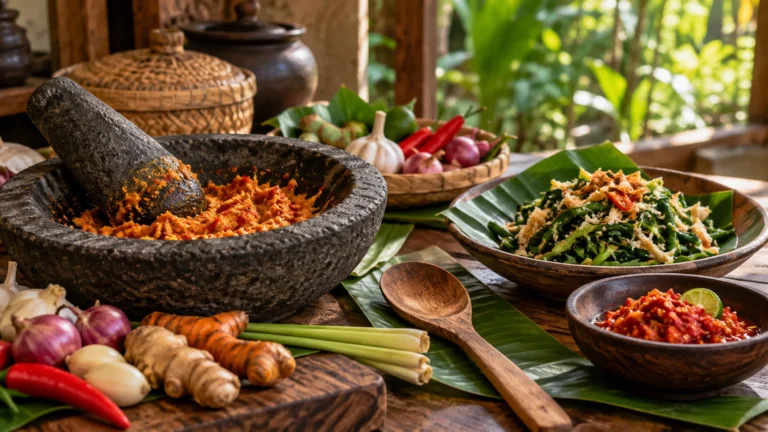
The traditional spice preparation guide can help guests arrive with useful background and more focused questions.
Mixed Abilities Require Task Rotation
When one guest is much faster, the host can assign different components rather than asking everyone to perform the same task. Rotation keeps the confident cook engaged while preserving meaningful work for beginners.
Our guide “Small Group Cooking Class Ubud” explains how a private group can prevent one person from taking over.
Questions Fit into Natural Waiting Time
Cooking includes moments when a sauce simmers, rice rests, or ingredients roast. These are good times for explanations about family recipes, farming, substitutions, and cultural context.
Save long questions for those pauses rather than interrupting a hot pan or knife demonstration. The host can give a better answer when attention is not divided.
Children and Older Guests May Need Adjustments
Children may need shorter tasks, visible boundaries, and breaks. Older guests may prefer seated preparation or less repetitive grinding. Mention mobility, stamina, or supervision needs before the class.
A private format makes adjustment easier, but the kitchen layout and safety limits still matter. Ask what can actually be arranged.
Photographs Should Not Control the Pace
Personal photographs are easiest during ingredient explanation, task changes, and after plating. Repeatedly recreating steps for the camera can disrupt timing and reduce hands-on learning.
Tell the host when photographs are important, then agree on suitable moments. Respect requests not to photograph private family or ceremonial activity.
Understand the Complete Duration
The cooking portion may last about 1.5 hours, but transport, a market visit, introductions, eating, and the return make the total experience longer. See “How Long Cooking Class Ubud” before planning the rest of the day.
A relaxed class should not be followed by a reservation that requires an exact departure. Leave time to finish the meal and ask final questions.
Final Perspective
Private guidance works best when guests participate actively, communicate their experience level, and respect the cooking sequence. Expect attention and flexibility, not an unlimited timetable. The result should be a structured meal that still feels personal.
A useful way to judge teaching time
The clearest sign of hands-on teaching is not how fast the dishes appear, but whether participants understand the steps between ingredients and the finished meal. When the host demonstrates a spice paste, ask to see its texture before and after grinding. When something goes into the pan, notice what changes in aroma, heat and consistency rather than simply following a timer.
New cooks may want the host to show one movement first, then try it themselves. More experienced guests may benefit from asking why a particular ingredient or cooking order matters. In a mixed-ability group, tasks can rotate while the essential explanations remain shared.
Before booking, distinguish the advertised cooking time from the total activity including pickup, an optional market visit and the meal. A comfortable pace is one that leaves room to ask questions safely and enjoy what you made, without making the next appointment impossible.