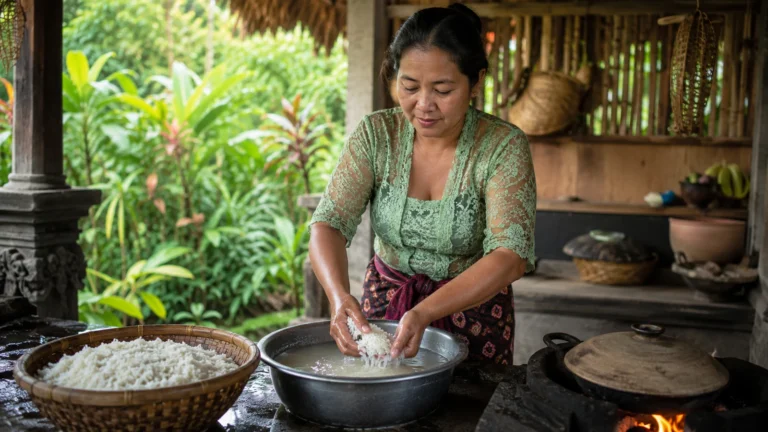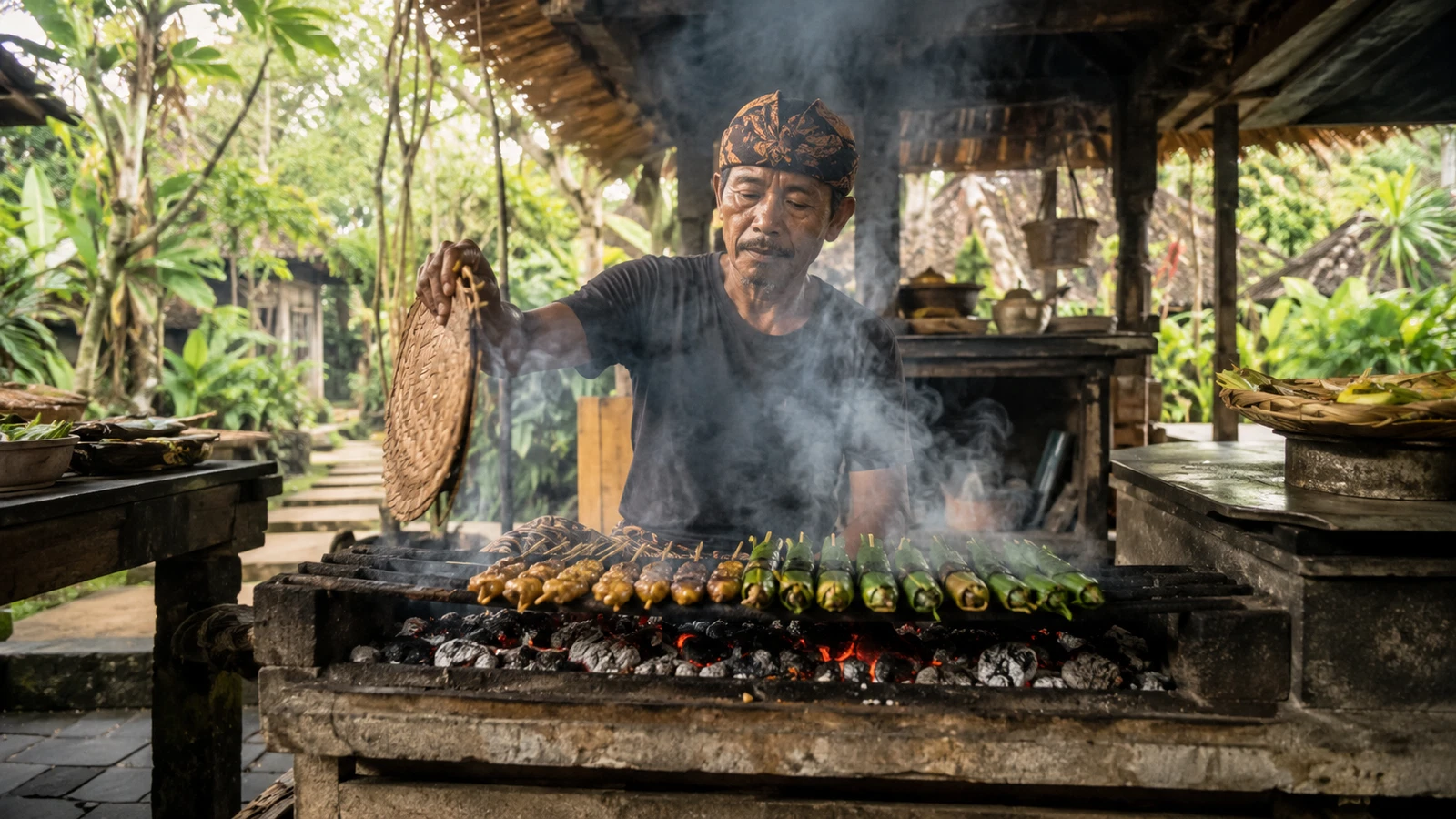
Charcoal grilling in Balinese cooking is about controlling a live heat source, not cooking in tall flames. A stable bed of glowing coals gives more predictable radiant heat, while different zones let the cook brown food quickly or finish it more gently. Travelers taking a Balinese cooking class Ubud may notice that experienced cooks spend as much attention on the fire as on the food.
The practical sequence is to light the charcoal safely, allow the fire to settle, arrange hotter and cooler areas, then place food only when the heat is usable. Turning, distance from the coals, marinade composition, and the thickness of the food all affect timing.
This method fits within the wider set of Balinese cooking techniques. For a meal-level view, the article on how grilled dishes fit a Balinese meal shows why grilling is usually one component among rice, vegetables, sambal, and other side dishes.
Wait for Usable Coals
Freshly lit charcoal often produces high flames and heavy smoke. Give it time to establish a glowing bed with a light ash layer. The exact appearance varies by fuel, but the goal is consistent heat rather than a dramatic fire.
Use a proper grill in a well-ventilated outdoor area and follow the fuel and grill manufacturer’s safety instructions. Charcoal should never be treated as an indoor heat source because combustion gases can be dangerous.
Create More Than One Heat Zone
A simple two-zone fire makes grilling easier. Concentrate more coals on one side and fewer on the other. The hotter zone can brown the surface; the cooler zone gives thicker food time to finish without burning.
Small skewers may need frequent turning over moderate heat. Banana-leaf parcels can tolerate some darkening on the outside but still benefit from a gentler zone once the wrapper begins to char.
Control Flare-Ups
Fat, sugary marinades, and dripping sauces can ignite when they hit hot coals. A short flare-up is different from cooking continuously in flame. Move the food, reduce dripping, or shift it to a cooler area rather than letting the exterior blacken.
Keep utensils and a clear work area ready before grilling starts. Reaching across the fire for a plate or sauce creates unnecessary risk and makes temperature control harder.
Smoke Should Add Aroma, Not Bitterness
A little clean smoke can contribute aroma, especially when the food is close to the coals for a short time. Thick acrid smoke from dirty grates, burning grease, or unsuitable fuel can make food unpleasant.
Use fuel intended for cooking and avoid painted, treated, or unknown wood. Clean old residue from the grill so yesterday’s burned marinade does not become today’s smoke source.
Match the Food to the Heat
Thin skewers cook quickly and can dry out if left over intense heat. Dense vegetables need more time. Wrapped foods may steam inside while the outer leaf takes on grilled aroma. A cook judges thickness, moisture, and desired browning rather than applying one timing rule.
A cooking class followed by a meal can be helpful because the finished grilled component is tasted beside other dishes, making it easier to understand how smoky flavor should support rather than dominate the plate.
Use Separate Tools for Raw and Cooked Foods
If meat, poultry, or seafood is involved, keep raw-food utensils and plates separate from cooked food unless they have been thoroughly cleaned. Wash hands after handling raw animal foods and avoid brushing cooked food with marinade that has contacted raw ingredients unless it has been safely handled for that purpose.
For doneness, follow appropriate food-safety guidance rather than judging only by exterior color. Browning can happen before the center reaches a safe temperature.
A Grill Pan Can Teach Heat Control Too
Charcoal is not available in every home. A grill pan, gas grill, or broiler can still teach the important ideas: preheat, control heat zones when possible, avoid crowding, turn deliberately, and stop before the food dries out.
The smoke profile will be different, but the cooking logic remains useful. Good technique is portable because it is based on heat, moisture, thickness, and timing.
Practice with a Simple Ingredient First
If you are learning, begin with an ingredient that is forgiving before attempting a complicated marinated protein. The broader list of hands-on cooking practice can help you choose a class where you can see the fire management rather than only the finished dish.
Once you learn to read the coals and move food between heat zones, charcoal grilling becomes less mysterious. The fire remains variable, but the cook is no longer reacting blindly to every flame.
\n\n
Reading Heat Without Specialized Equipment
\n\n
You can learn a great deal by watching how quickly the surface reacts after food reaches the grate. If marinade burns almost immediately, the food may be too close to the hottest coals. If there is little sound, little browning, and long waiting, the fire may be too weak. Experienced cooks keep moving between observation and adjustment rather than treating the first placement as permanent.
\n\n
Food shape also changes heat exposure. A thin satay skewer presents a small mass to the fire and benefits from frequent turning. A thicker piece or tightly wrapped parcel needs more time for heat to travel inward. Learning to connect shape with heat makes the grill easier to control even when the exact charcoal quantity changes from one session to another.
Allow for Wind, Ash, and Changing Fire Strength
Charcoal heat rarely stays identical from the first skewer to the last. A light breeze can make one side of the grill burn faster, while ash gradually reduces the exposed surface of the coals. Instead of chasing a fixed cooking time, watch how the food responds and adjust its position. Leave enough space between pieces for heat to circulate, and avoid stacking fresh charcoal directly beneath food that is already close to done. If the fire weakens, strengthen it deliberately rather than moving everything into the hottest spot at once. This small habit makes browning more even and gives the cook time to react before a marinade scorches or a delicate ingredient dries out.
A Repeatable Way to Practice the Technique
For how do balinese cooks control charcoal heat so food browns and takes on aroma without burning, the most reliable learning method is to change one variable at a time and observe the result. Keep the ingredient quantity manageable, prepare the work area before heat begins, and note which visual, aromatic, or textural cue tells you that the step is complete. This turns Balinese charcoal grilling into a repeatable skill instead of a single recipe memory. If equipment or ingredients differ at home, preserve the function of the step and adjust gradually rather than copying a movement that no longer fits the situation.