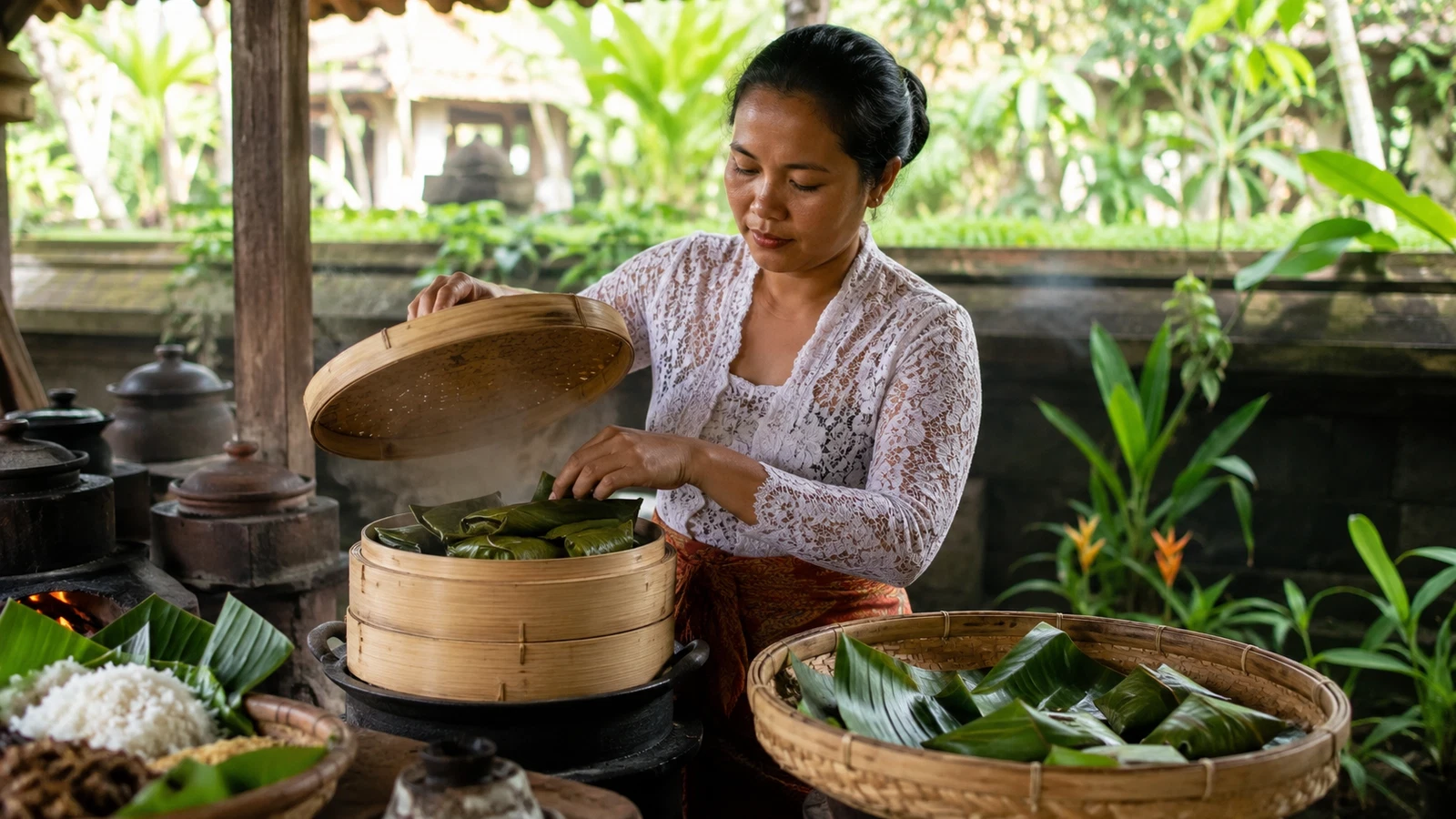
Steaming is one of the gentlest techniques in Balinese home cooking. Hot vapor cooks food without submerging it in water, making the method useful for wrapped parcels, rice-flour sweets, dumpling-like foods, vegetables, and reheating. A cooking class ubud can reveal that successful steaming depends on steam flow and timing, not simply placing a lid on a pot.
The essential setup is water below, food above, and a lid that keeps the steam circulating. Bring the water to a strong simmer or boil as appropriate, leave enough space for vapor to move, and avoid opening the lid repeatedly.
The technique sits naturally beside other traditional Balinese cooking methods. When banana leaves are used, the market guide to banana leaves used in local cooking provides useful ingredient context before the wrapping stage begins.
Build a Stable Steam Source
The water should not touch the food unless the recipe is designed for direct contact. A rack, basket, perforated tray, or stacked steamer keeps the food above the water line. Add enough water for the expected cooking time, but not so much that boiling splashes into the food.
If the water level drops during a long steam, add hot water carefully so the pot returns to temperature quickly. A sudden large amount of cold water can interrupt the cooking cycle.
Preheat Before Timing Delicate Foods
For many preparations, timing starts once the steamer is producing a reliable flow of steam. Putting a delicate cake or parcel into a barely warm pot can lengthen cooking and alter texture.
Dense foods may tolerate a slower start, but consistent practice makes results easier to compare. If the same recipe behaves differently each time, check whether the steam was equally strong at the beginning.
Leave Space Around Parcels
Steam needs pathways. Packing a basket tightly can create cooler areas and trap condensation between parcels. Arrange pieces with small gaps where possible, especially when they are thick or wrapped in multiple banana-leaf layers.
If a steamer has several levels, the heat can differ between them. Rotate trays only if the equipment and recipe make that necessary, and remember that opening the lid releases heat each time.
Manage Condensation
Water collecting on the underside of the lid can drip onto cakes or uncovered foods. Some cooks wrap the lid in a clean cloth to catch condensation, but this must be done carefully so fabric cannot fall toward a flame or heating element.
For banana-leaf parcels, a few drops may not matter because the wrapper protects the filling. Unwrapped rice-flour cakes are more sensitive to surface water.
Wrapped Foods Steam in Their Own Small Environment
Banana leaves hold aroma close to the filling and slow direct moisture loss. A well-folded parcel should stay closed without being compressed so tightly that the filling has no room to expand or release steam.
Fresh coconut is common in many steamed sweets and fillings. The article on fresh coconut in Balinese sweets helps explain why texture and freshness of the grated coconut matter before it enters the steamer.
Check Doneness by Texture and Food Type
A clock is useful, but doneness should match the food. Rice-flour mixtures may become firm and elastic; vegetables should reach the intended tenderness; wrapped protein needs appropriate safe cooking. Avoid relying only on the color of the leaf or the amount of steam escaping.
If a parcel is opened for checking, reseal it as well as possible and return it quickly so the rest of the batch does not cool unnecessarily.
Modern Steamers Still Teach the Same Principles
An electric steamer, rice-cooker steaming tray, bamboo basket, or metal insert can all work. The main questions remain the same: Is there enough water? Is the food above it? Can steam circulate? Is the lid containing heat?
Traditional technique survives adaptation when function is preserved. The material of the steamer changes, but moist heat and controlled circulation still do the cooking.
Plan Steaming Around the Rest of the Meal
Steamed components often need to finish alongside rice, fried garnishes, sambal, and other dishes. A Balinese cooking class meal shows why sequencing matters: a steamed cake that sits too long may firm up, while a hot parcel can often wait briefly before serving.
Once steam strength, spacing, wrapping, and condensation are understood, the method becomes predictable. That makes steaming especially useful for home cooks who want a gentle technique without constant stirring.
\n\n
Why Steam Strength Changes Texture
\n\n
Strong steady steam transfers heat efficiently, while weak intermittent steam lengthens cooking and can create dense or uneven textures. That is especially noticeable with rice-flour cakes and parcels containing several ingredients. Instead of simply adding more minutes, check whether the pot is actually producing enough vapor and whether the lid fits well.
\n\n
A steamer also responds to load. One small parcel and a full basket do not heat in exactly the same way. When scaling a recipe, leave circulation space and expect the system to recover after the lid is opened. This is a better adjustment than crowding the basket and relying on a much longer time to compensate.
A Repeatable Way to Practice the Technique
For what makes steaming useful in balinese home cooking, and how is it managed for wrapped foods and soft rice-based dishes, the most reliable learning method is to change one variable at a time and observe the result. Keep the ingredient quantity manageable, prepare the work area before heat begins, and note which visual, aromatic, or textural cue tells you that the step is complete. This turns Balinese steaming methods into a repeatable skill instead of a single recipe memory. If equipment or ingredients differ at home, preserve the function of the step and adjust gradually rather than copying a movement that no longer fits the situation.
Use the Next Step as Your Quality Check
A useful final check for Balinese steaming methods is whether the technique made the next stage easier. Preparation should reduce long fibers before grinding, wrapping should contain food without fighting the leaf, heat should create the intended texture without forcing the cook to rescue the surface, and cleaning should leave the tool ready for another meal. When the next stage becomes harder, revisit the preceding decision instead of adding more complexity. This process-based approach keeps traditional methods practical for a modern home kitchen.