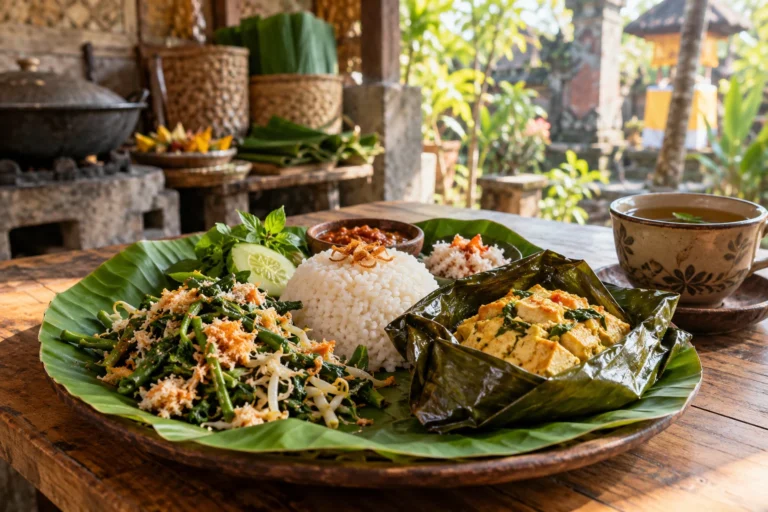
Knowing how to order breakfast in Bali does not require perfect Indonesian or a list of every traditional dish. It requires a few useful questions, patience and an understanding of how the seller works. Some stalls offer a short menu; others have ready-made packets or dishes on display. A visitor who looks first and orders second will usually have a smoother experience than someone who expects every warung to behave like a hotel restaurant.
If you are staying around Ubud, this approach is also a way to notice local ingredients and food habits without turning an ordinary breakfast into a staged cultural tour.

Understand what kind of place you are visiting
A warung may serve prepared meals from a display or cook dishes to order. A market stall may specialize in one snack, rice packet or breakfast item. A produce seller might not serve food at all. Look at what people are actually buying and ask before assuming an ingredient market will also have seating and a breakfast menu.
Opening times and food selection vary, and no website can promise that a named stall is open on your chosen morning without a current check.
Recognize a few everyday food words
Nasi means rice. Tipat refers to rice cakes in relevant Balinese dishes. Bubur is porridge. Ayam means chicken, ikan means fish, sayur means vegetables, and pedas means spicy. These terms help you interpret the broad components of a plate, but they do not reveal every ingredient in the sauce.
Learning the words is not a test. A polite question and a look at the finished food are often more practical than trying to recite an entire menu in a language you are still learning.
Start with what is available now
You can ask what the stall is selling or point politely to a displayed item and ask its name. A ready-made nasi jinggo packet is different from a tipat dish assembled when ordered. If you want a particular specialty such as bubur mengguh or nasi tepeng, ask first whether the seller prepares it.
Do not confuse a dish that exists somewhere in Bali with a dish the stall has today. That is especially important for regional specialties.
Ask about portion size before buying several things
A nasi jinggo packet is often modest in size, while a rice-cake meal or savory porridge may be more filling. Portions still vary by vendor. If you want to taste multiple snacks, order a small amount first rather than buying a full plate at every stop.
A practical traveler balances curiosity with appetite and food waste. Trying two well-chosen items can teach you more than collecting ten plates you cannot finish.
How to request less chili
Tidak pedas means not spicy; sedikit sambal asks for a little sambal. Requests may be possible when food is assembled individually. If the chili has already been cooked into the sauce, removing the garnish will not necessarily make the dish mild.
For children or people who are sensitive to chili, ask about the sauce itself and check whether a separate serving is possible. A packet prepared in advance may not be adjustable.
What to ask about ingredients
If you avoid meat, fish, peanuts, soy, coconut or particular seasonings, ask about the complete dish. Animal products can be present in a broth or spice mix even when vegetables are most visible. Allergens and cross-contact can involve shared preparation surfaces.
Do not depend on a stranger online to certify an individual warung. If you require strict avoidance, ask specific questions and choose a provider who can explain the process.
Prices and payment without awkwardness
Ask the price before ordering if it is not shown. Berapa? means how much? A menu or display may price a full serving differently from an extra topping. Small cash can be useful, but payment practices vary and some venues accept electronic methods.
Do not assume the cheapest listed price online still applies. Ingredient costs, portion size and venue type change what a fair comparison looks like.
Be considerate of market sellers
Morning food markets are workplaces. Let regular customers pass, keep narrow aisles clear and ask before photographing people closely. A seller busy serving breakfast may not have time for a long explanation, even if they are friendly.
If you would like to learn deeply about market ingredients, choose a guided visit designed for that purpose rather than asking a stallholder to interrupt business for a half-hour lecture.
Using a cooking class to go further
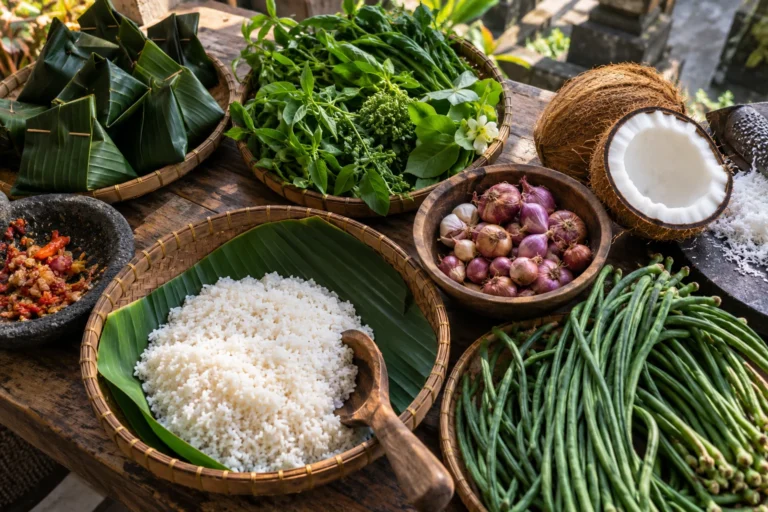
Putu’s Pejeng market package introduces seasonal produce and spices before a five-dish private cooking session at her family home. It is different from an all-you-can-eat breakfast tasting tour. The cooking-and-meal option skips the market when you prefer a simpler schedule.
You can view the Ubud cooking class and discuss a confirmed menu with Putu in advance. Ubud pickup and return are included; transport outside Ubud is quoted separately. Nothing on a general breakfast guide guarantees a named dish will be included in the class.
Useful phrases without pretending to be fluent
A few words can make a transaction easier: berapa harganya? asks the price; sedikit sambal asks for a small amount of sambal; tidak pedas means not spicy. A polite terima kasih means thank you. These expressions do not replace a full conversation when ingredients or allergies need to be explained.
If you have a strict restriction, show a clear written translation and ask the cook to confirm the preparation. If they are unsure, do not pressure them to guess. Accurate communication is more important than managing to order in Indonesian.
Many travelers remember food names before they remember ingredients. You will gain more by learning to ask one sensible question about a sauce or filling than by memorizing twenty names and assuming their recipes are fixed. A guide to Balinese breakfast foods can help you recognize names, but only the seller can confirm the ingredients in a particular serving.
A simple ordering sequence to remember
Look at the food, ask what it is, confirm price and portion, explain any ingredient restrictions, and request a reasonable spice level before the serving is prepared. Then eat without rushing. If you enjoyed it, ask the seller what makes their preparation different; the answer may teach you more than a long list of “best breakfast” places.
Being a considerate guest is part of learning local food culture. The goal is not to sound fluent or discover a secret stall. It is to have an enjoyable meal, ask respectful questions and leave knowing a little more about how Balinese everyday food works.