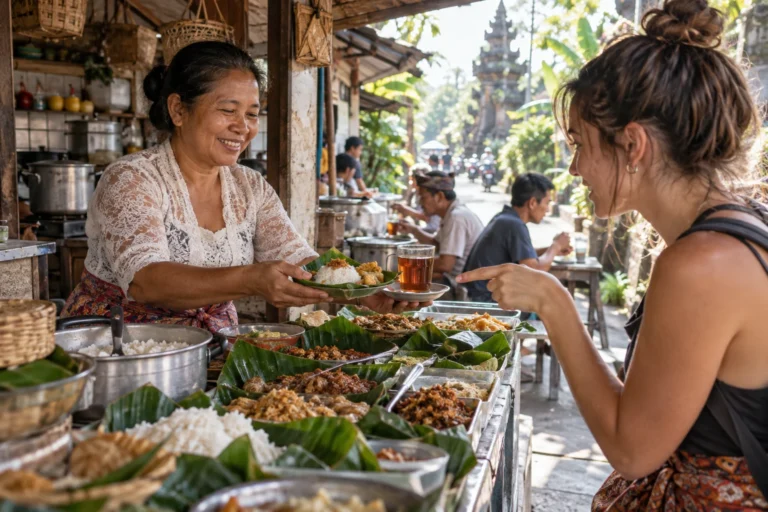
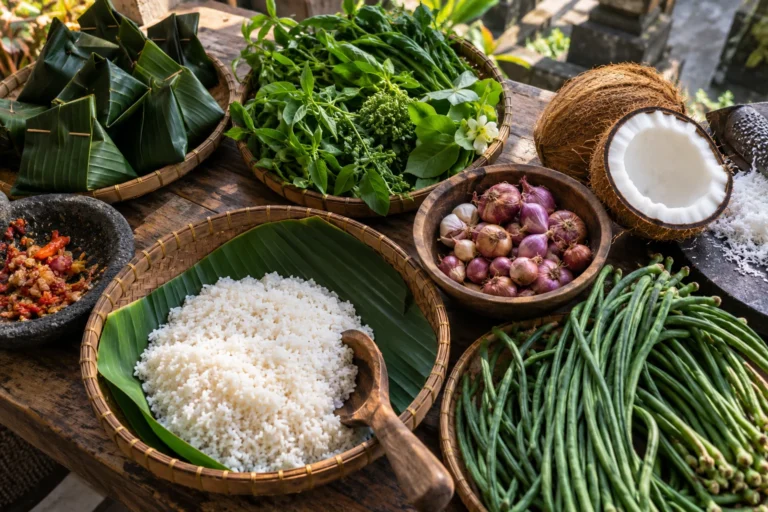
A vegetarian Balinese breakfast is possible to enjoy, but the safest starting point is not a long list of dishes labeled vegetarian online. It is a set of ingredient questions. Rice, rice cakes, vegetables, peanuts, coconut, tofu and tempeh provide plenty of plant-based possibilities. Yet a sauce made for a vegetable plate can still contain shrimp paste or a meat-based stock, and utensils may be shared.
That is why vegetarian travelers will often do better with a vendor who can explain how the dish is prepared than with a dish whose photograph happens to show no meat. Food names are useful clues, not dietary certifications.
Start with the staple
Rice and rice cakes are often the least complicated part of a breakfast plate, but even here there can be additions. A plain rice serving is different from rice cooked with flavored stock or served already mixed with other ingredients. Ask what the staple is cooked in when you need clarity.
Rice-based snacks are also varied. Something made with rice flour may contain coconut or palm sugar, while another preparation may add ingredients unsuitable for your diet. The form alone does not decide the answer.
Vegetable dishes need a sauce check
Tipat cantok is frequently described as rice cakes with vegetables and peanut sauce, making it an obvious dish to ask about. But the sauce is where uncertainty can enter. A vendor’s seasoning may differ from a published recipe, and the dish may be made with ingredients or equipment used for other foods.
If you do not eat shrimp paste, fish sauce or meat stock, say so directly. Merely requesting “no meat” might not communicate those restrictions clearly enough.
Tofu and tempeh can help, with questions
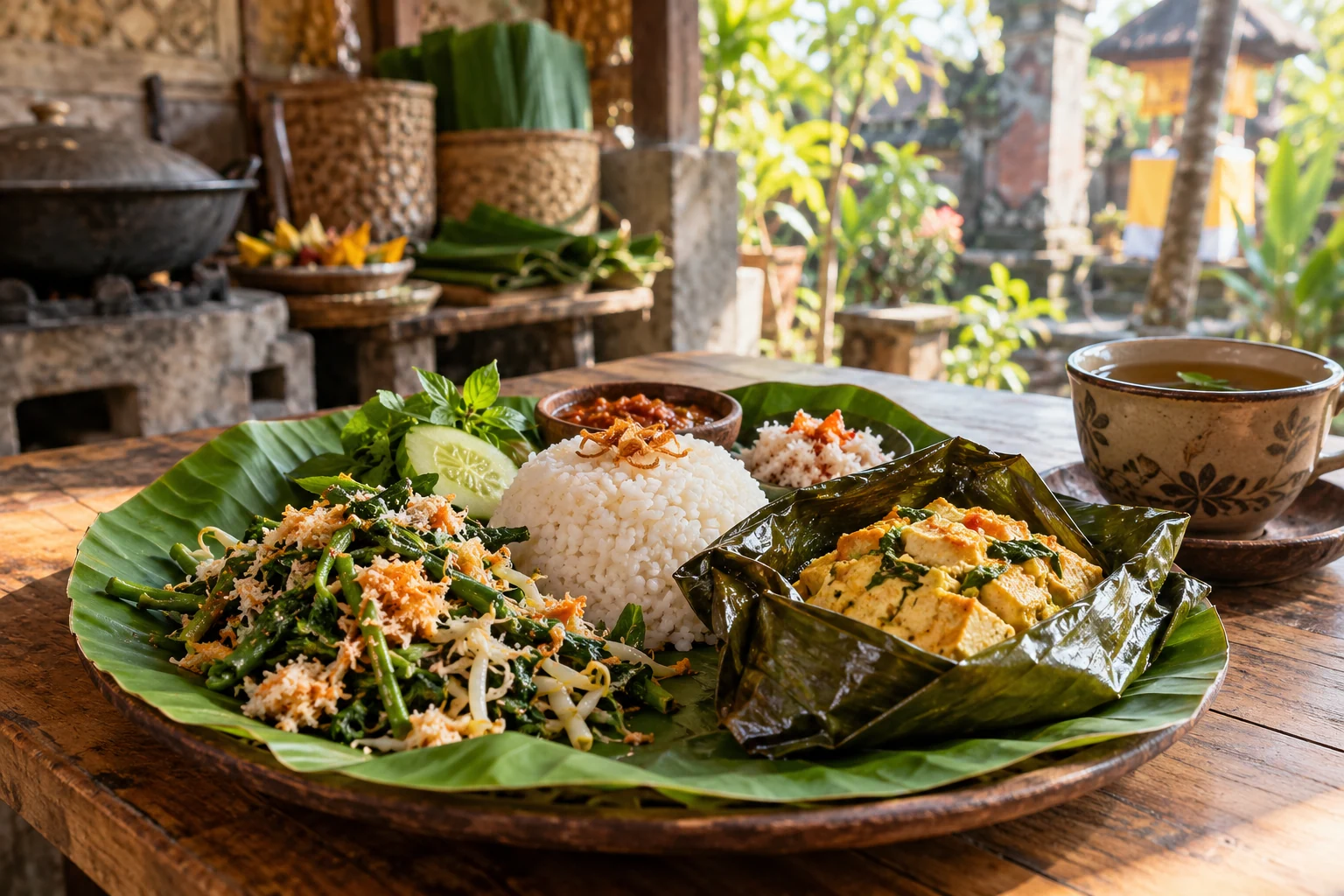
Tofu and tempeh are familiar plant-based ingredients in Indonesian food. They can work as part of a rice meal, including breakfast. The cooking oil, marinade, sauce and accompanying sambal still matter.
For someone following a vegan diet, a sweet-looking sauce or vegetable garnish cannot be assumed animal-free. Ask about preparation rather than treating tofu or tempeh as an automatic guarantee.
What about nasi jinggo?
A packet of nasi jinggo often comes ready-made with several small side dishes. Some packets include chicken, egg or another animal product, while others may offer alternative fillings. Because it is already assembled, removing one topping may not solve your dietary requirements.
Ask whether a suitable version is actually available. If not, choose a different food rather than expecting the vendor to remake every component of a prepared packet.
Sweet snacks are not always simple either
Jaje made with rice flour, banana, coconut and palm sugar may look suitable for vegetarian or vegan visitors. Ingredients, coatings, toppings and shared preparation areas can still vary. If you have an allergy, do not rely on a generic rice-flour description.
There is also a difference between vegetarian and vegan requirements. Butter, dairy or egg may be acceptable to some vegetarians but not to someone avoiding all animal products.
How to ask clearly at a warung
Begin with a short explanation of exactly what you do not eat. English may be understood in many visitor-facing places, but communication is not guaranteed everywhere. If the restriction matters for health or ethics, a translated written list can help you avoid ambiguity.
Useful questions include: Does the sauce contain shrimp paste? Is the stock vegetable-based? Are the vegetables cooked together with meat? Is the sambal prepared separately? These are concrete questions a cook can attempt to answer.
Why cross-contact matters
A dish made from plant ingredients can still come into contact with animal ingredients or allergens through shared tools, pans, storage or preparation surfaces. An article cannot certify an individual kitchen. A cook may not be able to meet a strict requirement, which is information worth knowing before you order.
If your restriction is medically significant, treat the decision more carefully than a general food preference and never assume that “vegetarian option available” means allergen-free.
Vegetarian cooking in a private Ubud class
Putu can arrange a vegetarian version of her five-dish private Ubud cooking class when the request is confirmed in advance. Guests cook in her family compound in Pejeng and share the finished meal. A market visit can be added with the relevant package.
Vegan requests and allergies should be explained with ingredient-level detail. A vegetarian menu is not a cross-contact guarantee, and specialty breakfast dishes are not automatically included merely because they appear in an article.
A sample conversation that is more precise than “vegetarian”
Tell the cook that you avoid meat and fish, then separately mention shrimp paste, fish sauce, stock and any other ingredients that matter to you. Ask whether the food has already been prepared and whether the sauce is mixed into the dish. If the vendor cannot answer, a different breakfast is a sensible choice.
For vegan visitors, confirm egg, dairy and honey where relevant. For allergies, ask about cross-contact and shared utensils as well. These questions can feel more involved than a simple menu order, but they prevent false reassurance.
A helpful seller may recommend a different dish rather than modify the one you wanted. That is still a useful outcome: you have made a choice based on actual information.
Keep food preferences separate from medical safety claims
Someone who avoids meat by preference and someone with a serious allergy may need very different levels of assurance. A vendor may be able to omit a visible meat topping but may not have separate equipment or full ingredient records. Do not turn an uncertain answer into a guarantee just to complete your breakfast plan.
When restrictions are strict, it is reasonable to arrange food ahead with a provider who can discuss the ingredients before the day begins. Even then, ask what practices are actually possible. Transparency about limitations protects both the guest and the cook, and it leads to better decisions than a generic promise of “suitable for everyone.”
A practical breakfast decision
First choose the kind of food you want: rice, rice cake, vegetables, tofu or a light sweet. Then ask about the full preparation. If the vendor can explain the ingredients and meet your needs, order what is actually available. If the answer is uncertain, choose another provider.
A good vegetarian food guide should make travel easier without giving false assurances. Balinese breakfast can be diverse and satisfying, but the responsible way to explore it is with clear questions and respect for each kitchen’s limits. Use the overview of Balinese breakfast foods for meal ideas, then confirm ingredients and preparation with each vendor.