A small group can combine the energy of cooking with friends and the attention of a private lesson. In a Balinese cooking class in Ubud, the group can divide ingredients, compare techniques, and sit down to a meal that everyone helped prepare.
Our guide “Private Cooking Class Ubud Guide” covers booking and logistics. The personal quality of a small group comes mainly from how space, tasks, and explanations are managed.
More Guests Can Participate Meaningfully
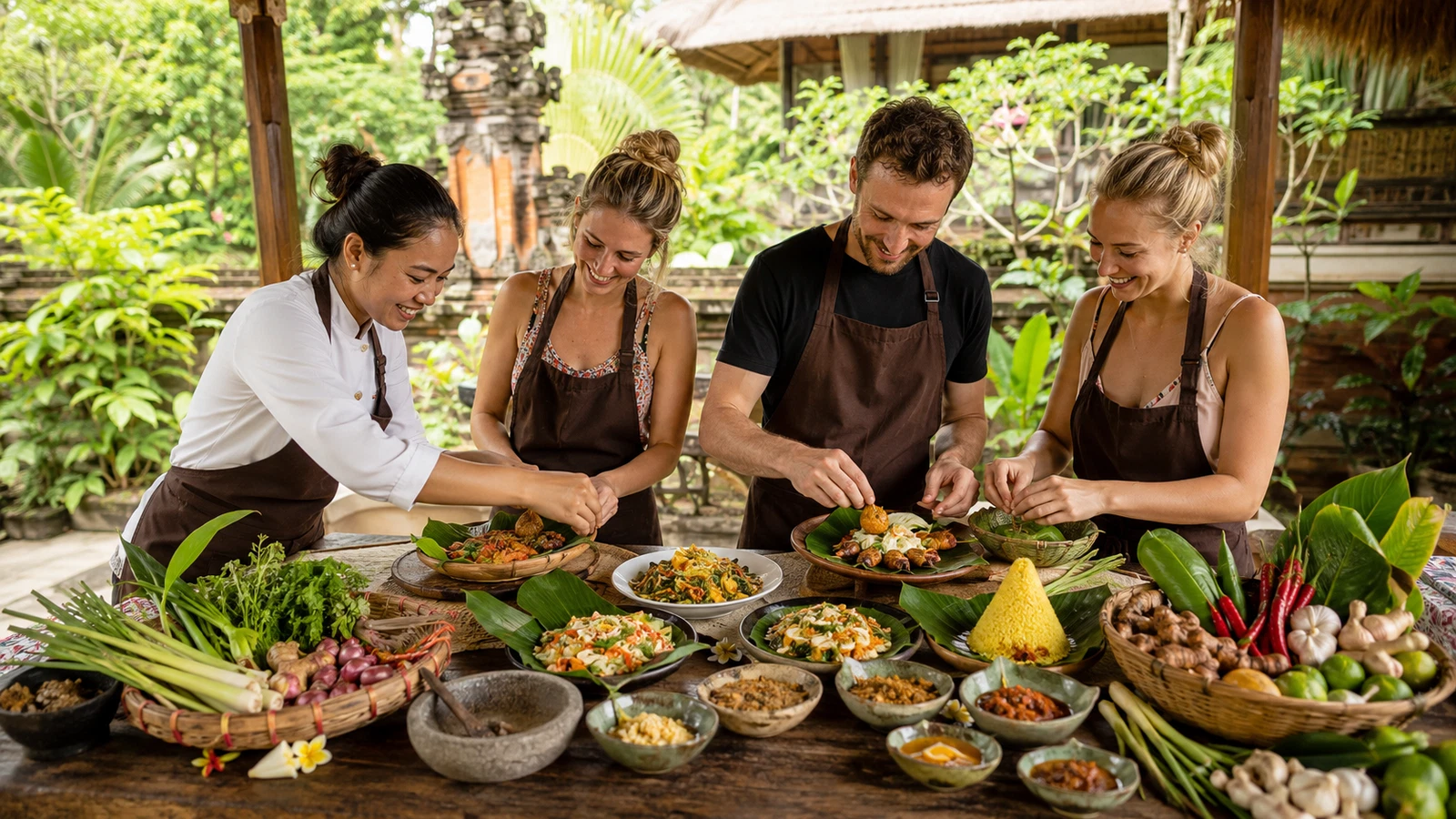
In a well-organized small group, each person receives a visible role. One guest may prepare aromatics, another handles vegetables, another manages a sauce, and another watches a grill under guidance. The work should rotate so no one becomes a permanent observer.
Ask how many active stations are available and whether the menu is prepared as one shared meal or divided into teams. A group can be private yet still feel passive if the workspace cannot support the number of guests.
Questions Become Part of the Conversation
Friends often notice different details. One asks about substitutions, another wants to understand farming, and someone else focuses on technique. A private host can respond to those interests without trying to keep pace with unrelated travelers.
The group should still respect the cooking sequence. Some questions can be answered while ingredients cook rather than during a time-sensitive step.
Mixed Ability Levels Are Easier to Manage
A small group may include confident cooks and complete beginners. Personal guidance can assign more technical work to willing guests while giving clear, achievable jobs to others. The aim is shared ownership, not a competition.
Our guide “Personal Guidance Cooking Class Ubud” explains how demonstrations, corrections, and task rotation can support different levels without making anyone feel tested.
The Group Can Set a Comfortable Social Tone
Friends already know how they communicate. They can joke, take photographs, and help one another without introductions to strangers. That familiarity can make the kitchen relaxed, especially for travelers who are shy in public group activities.
A private atmosphere is not permission to ignore the host or safety instructions. Respect for the family compound, equipment, ingredients, and cooking schedule remains essential.
Menu Planning Becomes More Focused
Collect dietary needs before sending the booking request. A group organizer should not guess on behalf of others. Ask every guest about vegetarian preferences, allergies, ingredients to avoid, and desired spice level.
When needs differ, the host can explain whether one shared menu, separated portions, or practical substitutions are possible. The earlier this is discussed, the easier it is to plan ingredients.
Private and Shared Formats Feel Different
A shared class can be sociable and sometimes less expensive, but a private group controls its own conversation and receives attention directed toward the reservation. Our guide “Private vs Shared Cooking Class Ubud” helps groups decide which benefit matters more.
For a reunion, family trip, or friends’ holiday, privacy can be valuable because the class becomes part of the group’s own story rather than one activity among strangers.
The Meal Strengthens the Group Experience
Sitting down after coordinated work gives the group time to compare what they learned. Guests can recognize their contributions and taste how separate components form a complete meal.
Review the cooking class and meal package when the group prefers a simpler schedule without an early market tour.
Organize the Booking Through One Contact
Choose one person to send the final guest count, package, accommodation, and food requirements. Conflicting messages from several guests can create confusion about pickup and menu decisions.
The organizer should share the confirmed details with everyone, including start time, meeting point, clothing, payment arrangement, and what is not included.
Final Perspective
A small group cooking class feels personal when each guest contributes, the host can respond to questions, and the schedule leaves time to enjoy the finished food. Group size matters, but thoughtful organization matters more. Confirm the workspace, participation, menu, and transport before booking.
Size alone does not tell you how hands-on a class will be
A group of four can still spend most of its time watching, while a carefully guided group of six may have meaningful work for everyone. Instead of judging the experience by the guest count alone, ask how preparation, cooking and tasting are shared. Who mixes the spice paste? Who works at the stove? Does everyone get a chance to understand the full dish even when tasks are divided?
For a private booking, describe your group honestly: friends who all want to participate, grandparents who may prefer a shorter stretch standing, or beginners who need more demonstration. Those details let the host discuss an achievable rhythm without promising a separate stove or complete individual menu for every guest.
The quality test is whether people leave knowing why the dishes were prepared as they were. A useful class allows questions about ingredients and technique, not just a photograph of a finished plate.