The most memorable cooking class menu is not necessarily the one with the longest list of recipes. A good menu gives guests several techniques, balanced flavors, and enough time to participate rather than watch the host finish everything. In Bali, that may include grinding aromatics, preparing vegetables, wrapping or shaping an item, making a sauce, and cooking a main dish.
Putu’s Balinese cooking class in Ubud prepares five dishes in her family compound in Pejeng. The exact menu can change with ingredients, the group, and dietary requirements, so guests should treat dish examples as possibilities rather than a fixed promise.
What Makes a Dish Suitable for a Cooking Class?
A class dish should teach more than a final recipe. It should reveal a preparation method that guests can understand and repeat: pounding a spice paste, balancing coconut and vegetables, forming satay around a skewer, seasoning tofu or tempeh, frying aromatics, or adjusting heat with chilies.
The menu also needs to work as one meal. Five rich dishes with similar textures would be tiring. A balanced class may combine a protein or soy-based main, vegetables, a coconut element, a sauce or sambal, and rice or another accompaniment. Putu confirms the combination rather than publishing a rigid daily menu that may not suit the ingredients available.
Base Genep and Spice-Paste Dishes
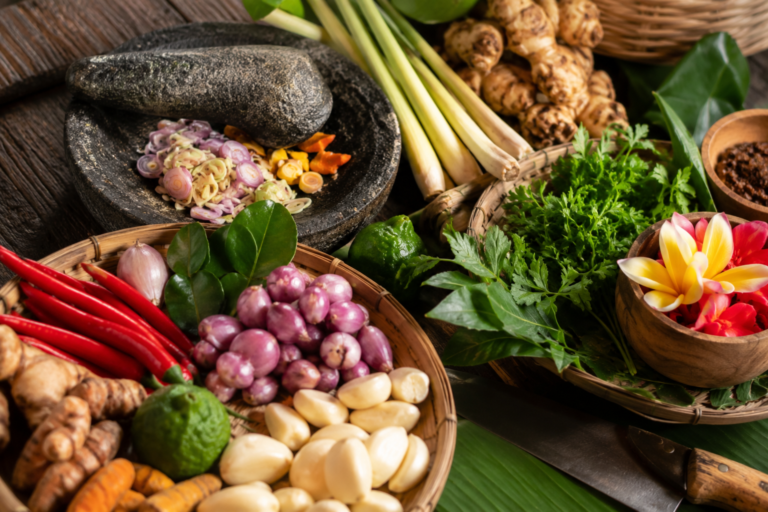
Many Balinese preparations begin with a layered spice mixture often called base genep. Common components include shallots, garlic, turmeric, ginger, galangal, lesser galangal, chilies, candlenut, coriander, pepper, lemongrass, citrus leaves, and sometimes shrimp paste. The exact combination and proportion depend on the dish and household.
Learning to prepare the paste helps guests understand why Balinese food tastes complex even when the final plate appears simple. The class may use a stone mortar, knife work, or another practical method to release the aromas before the mixture is cooked. The companion guide to traditional spices explains the role of each aromatic in greater detail.
Sate Lilit and Shaped Preparations
Sate lilit is a well-known Balinese style in which a seasoned mixture is wrapped around a skewer rather than threaded in separate pieces. Depending on the recipe, the mixture may use fish, chicken, meat, or a plant-based base. Coconut and spices can add moisture and fragrance.
It is useful in a class because guests can mix, shape, and compare texture before grilling or cooking. However, it should not be assumed to appear in every menu. Dietary needs, ingredient availability, and the host’s chosen five dishes determine whether it is included.
Lawar, Urab, and Vegetable Dishes
Balinese meals often use vegetables in ways that are more layered than a simple side salad. Lawar can combine chopped vegetables, coconut, spices, and other ingredients, while urab-style preparations mix cooked vegetables with seasoned coconut. Recipes vary widely by family and occasion.
These dishes are valuable in a class because they teach texture, moisture control, coconut seasoning, and the balance between fresh and cooked components. Guests with vegetarian or allergy requirements should ask about shrimp paste, meat, stock, or other ingredients that may be present in a traditional version.
Tofu, Tempeh, and Plant-Focused Options
Tofu and tempeh absorb spice pastes well and can be fried, grilled, simmered, or served with vegetables and sambal. They are familiar ingredients across Indonesia and can support a satisfying vegetarian menu when the surrounding condiments are also adjusted.
A plant-focused dish is not automatically vegetarian if the paste contains shrimp paste or the sauce uses fish-based seasoning. Putu needs advance notice to plan the full five-dish menu rather than changing only the visible protein at the last minute. The vegetarian cooking class page explains how the request is handled.
Sambal and the Question of Heat
Sambal adds heat, aroma, acidity, sweetness, or roasted flavor depending on the recipe. It can be made from fresh chilies, cooked chilies, shallots, tomatoes, shrimp paste, citrus, or other ingredients. Guests who do not enjoy strong heat can still learn the preparation while keeping their own portion mild.
Tell Putu whether your group prefers mild, medium, or spicy food. “Mild” should also be discussed in practical terms because tolerance differs. A useful class allows guests to taste carefully and adjust rather than forcing one heat level on the entire group.
Banana Leaf, Coconut, and Traditional Techniques
Banana leaf can be used to wrap, steam, grill, serve, or add aroma. Coconut may appear as milk, grated flesh, toasted seasoning, oil, or a base for sweets. These ingredients make the class tactile and connect the food with techniques used in homes and ceremonies.
Not every visitor can find the same materials at home. Putu can explain which elements are essential and which can be substituted. The goal is to understand the logic of the dish, not to leave believing that a recipe is impossible outside Bali.
Why the Exact Menu May Change
Seasonal produce, market quality, group size, religious or family activities, and dietary needs can all affect the menu. A responsible host confirms the experience—five dishes, hands-on guidance, and a meal—while allowing some flexibility in the specific recipes.
This is particularly important for private groups. One booking may include a vegetarian guest, a child who needs mild food, and an adult avoiding seafood. Another may want a more traditional level of chili. A fixed menu could create unnecessary conflict, while a confirmed adapted menu keeps the class coherent.
Questions to Ask Before Booking
- How many dishes will guests actively prepare?
- Is the exact menu fixed or confirmed closer to the date?
- Can the menu be vegetarian?
- Do any pastes or sauces contain shrimp paste, fish, nuts, soy, or gluten?
- Can the group choose a mild spice level?
- Will recipe guidance be provided after the class?
The broader guide to cooking classes in Ubud also covers prices, timing, transport, children, and cancellation terms.
What You Should Expect From Putu’s Five-Dish Class
Expect to chop, grind, mix, shape, cook, ask questions, and share the result. Do not expect five restaurant plates prepared entirely by the host while guests watch. Putu’s private format allows each booking group to work at its own pace and understand how the dishes connect.
Send dietary requirements and ingredients to avoid before confirmation. Once Putu knows the group, she can explain what menu is realistic. That honest flexibility is more valuable than a long fixed list that cannot be delivered safely or seasonally.