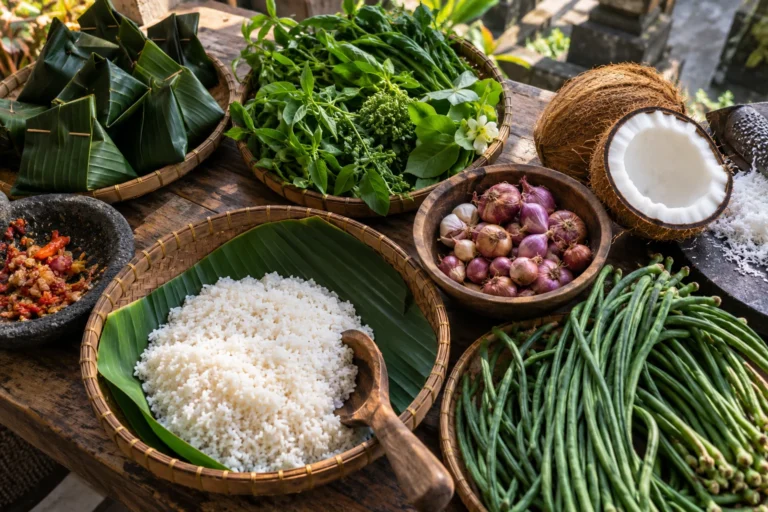
Balinese food often begins with a collection of fresh roots, bulbs, chilies, nuts, seeds, and fragrant leaves rather than a single powdered seasoning. Seeing the ingredients separately helps beginners understand how color, heat, citrus, earthiness, sweetness, and aroma are layered into a finished dish.
For travelers choosing a cooking class Ubud experience, spice preparation is one of the clearest differences between a hands-on lesson and a simple meal. Putu introduces ingredients in her family kitchen and guides the group through the preparation needed for the confirmed five dishes.
Base Genep Is a Family of Preparations, Not One Fixed Recipe
The phrase base genep is often translated as a complete Balinese spice paste. It may include shallots, garlic, turmeric, ginger, galangal, lesser galangal, chilies, candlenut, coriander, pepper, lemongrass, citrus leaves, and shrimp paste. However, the exact formula changes according to the dish, family, and purpose.
A beginner should avoid treating one internet recipe as the universal standard. The useful lesson is how the ingredients are balanced, cut, ground, and cooked. Putu can explain the version used for the class and which elements may be adjusted for taste or dietary needs.
Shallots and Garlic: The Savory Foundation
Small Asian shallots bring sweetness and depth when sliced, fried, or ground. Garlic adds a sharper savory note. Together they form the foundation of many spice mixtures, but the ratio changes. Too much raw garlic can dominate, while properly cooked shallot softens and supports the other aromatics.
Guests may learn that preparation matters as much as quantity. Thin slices used as a garnish behave differently from pieces ground into a paste. Frying until fragrant is different from browning aggressively. These small decisions are difficult to understand from a list of ingredients alone.
Turmeric, Ginger, Galangal, and Lesser Galangal
These roots may look related but contribute different qualities. Turmeric gives color and an earthy bitterness. Ginger brings warmth and a recognizable fresh sharpness. Galangal is firmer and more pine-like or citrusy. Lesser galangal, often called kencur in Indonesian, has a distinctive aroma that can be difficult to replace exactly.
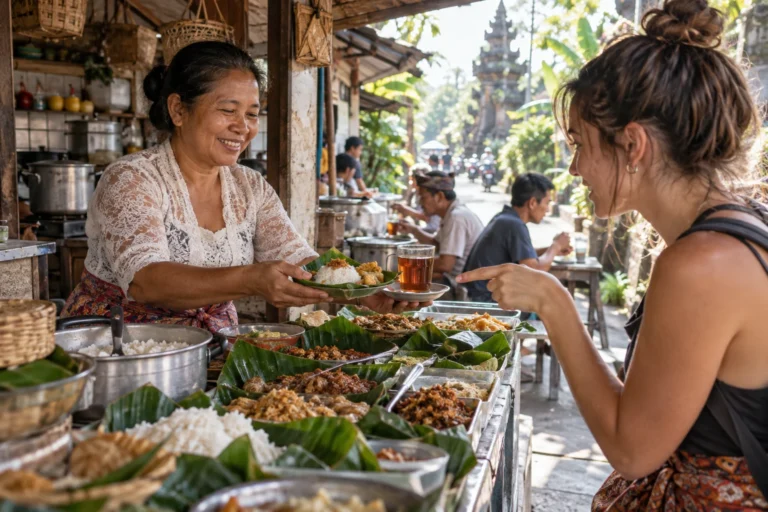
During a market visit, Putu can help guests compare their shapes and scents. In the kitchen, slicing, bruising, grating, or grinding changes how strongly each root appears in the dish. The Pejeng market tour is especially useful for seeing these ingredients before they become part of a paste.
Lemongrass and Citrus Leaves
Lemongrass can be bruised and simmered for fragrance, finely sliced for a mixture, or used in another form depending on the recipe. Citrus leaves add a bright aromatic quality without the same acidity as lime juice. Both can become unpleasant if cut or cooked carelessly, so the host’s technique matters.
A class should show which parts are used and which are removed before serving. Guests often leave with a better understanding of why a whole stalk in a soup behaves differently from finely sliced lemongrass in a satay mixture.
Candlenut, Coriander, and Pepper
Candlenut contributes body and richness to a paste. It should be treated as an ingredient that requires proper preparation rather than eaten raw. Coriander seed adds warm citrus and nutty notes, while pepper contributes a different kind of heat from fresh chilies.
These dry ingredients may be toasted or ground before being combined with fresh aromatics. The sequence changes aroma and texture. A beginner does not need to memorize every step immediately; the value is recognizing that the paste is constructed deliberately.
Chilies and Control of Heat
Fresh chilies provide heat, but their flavor also depends on variety and preparation. Removing some seeds does not always remove all heat, and a small amount can still be strong. A class can separate the base flavor from the final chili adjustment so guests with different preferences can eat comfortably.
Tell Putu whether the group prefers mild, medium, or spicy food before the class. Guests can still learn how sambal or a hot paste is made while keeping the shared meal balanced. Children and sensitive diners should taste gradually rather than assume a familiar color means a familiar heat level.
Shrimp Paste and Hidden Animal Ingredients
Shrimp paste can add deep savory flavor to spice pastes and sambal. It may be present even when a dish appears to contain only vegetables. Fish sauce, meat stock, or other animal-derived seasonings can create the same issue for vegetarian guests.
Advance notice allows Putu to replace or omit an ingredient where feasible and to design the five dishes as a complete menu. The guide to vegetarian requests and allergies explains why the word “vegetarian” should be supported by a specific list of ingredients to avoid.
Grinding, Chopping, and Cooking the Paste
A stone mortar can crush fibers and combine aromas in a way that differs from quickly blending everything with water. Knife chopping produces another texture. Modern tools can be useful, but the host should explain the result rather than claim that only one method is legitimate.
After grinding, the paste is often cooked until the raw smell changes and the oils and aromatics become integrated. This stage can determine whether the dish tastes harsh, flat, or fragrant. Watching the color and smelling the transition is one of the most valuable parts of a live class.
How to Recreate the Flavor at Home
Write down functions, not only names. If lesser galangal is unavailable, ask what character it contributes and whether a partial substitute is realistic. If fresh turmeric is difficult to find, learn how powdered turmeric changes strength and moisture. If candlenut is unavailable, ask whether another nut can provide body without pretending to be identical.
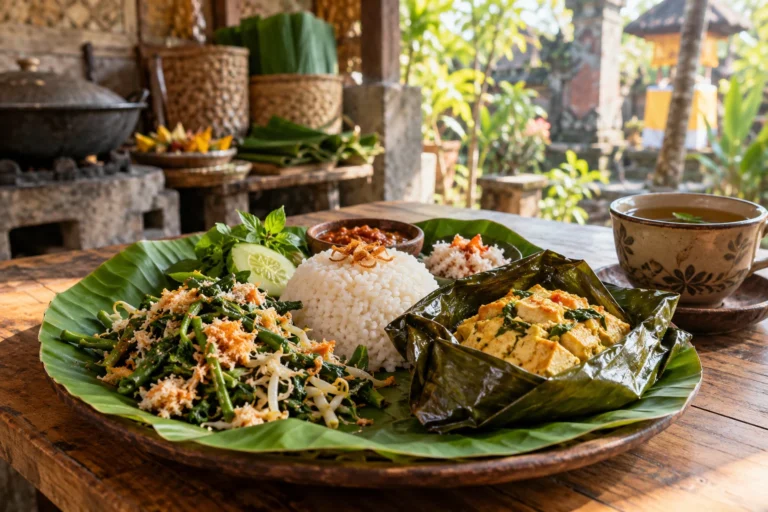
The article on dishes taught in a cooking class shows how these ingredients are applied across vegetables, satay-style mixtures, sauces, and mains.
What a Beginner Should Remember
Do not worry about memorizing a dozen ingredients on the first morning. Focus on recognizing the main roots, smelling the leaves, understanding the difference between chili heat and pepper heat, and seeing how a paste changes when cooked. Recipe notes become much more useful after that sensory experience.
The Ubud cooking experience guide explains how the spice lesson fits with market tours, prices, timing, transport, and menu planning. Putu’s private format gives the group time to ask practical questions instead of rushing through a fixed demonstration.