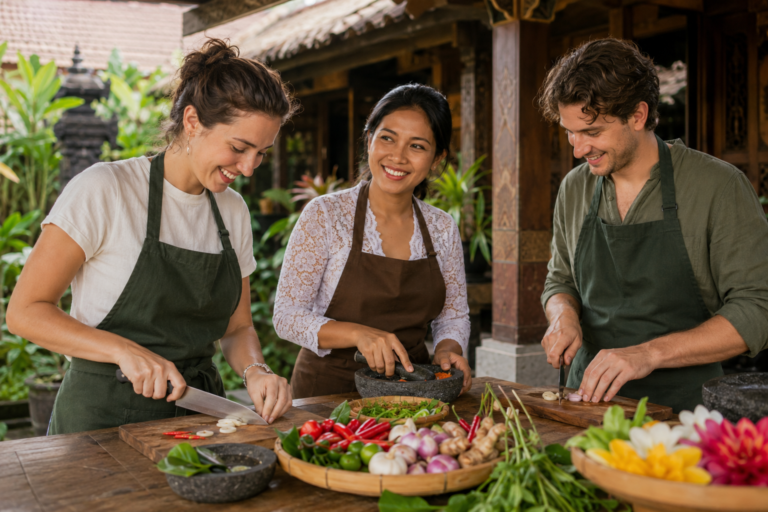
A cooking class can be one of the most personal ways to understand Bali because it places everyday ingredients, family habits, and local hospitality in the same experience. Instead of only tasting a finished dish, you see how aromatics are prepared, how spice is balanced, how coconut and vegetables are used, and why a family recipe may be handled differently from restaurant food.
This guide explains what to compare before booking an ubud cooking class, including prices, morning market visits, class-only options, private group formats, transport, children, vegetarian requests, allergies, and the real amount of time to reserve in your itinerary. It also describes Putu’s direct experiences in Pejeng, near Ubud, so you can decide whether the format matches your trip.
What an Ubud Cooking Class Usually Includes
Most hands-on classes combine an introduction to local ingredients with guided preparation and a meal at the end. The exact structure varies. Some programs begin with an early market visit, others start directly at a family home or cooking school, and some add a farm, rice-field, or compound tour. The important distinction is whether the advertised duration covers only the cooking session or the entire experience from pickup to return.
Putu’s direct classes take place in her family compound in Banjar Pesalakan, Pejeng Kangin. Guests prepare five Balinese dishes as a private booking group, then eat the meal together. Round-trip transport from accommodation in Ubud is included, while guests staying outside Ubud receive a separate transport quote. Vegetarian menus can be requested in advance, and the exact dishes may change according to ingredients and confirmed dietary needs.
There are two core formats. The market package includes a typical pickup around 7:00am, a short visit to Pejeng market, the cooking class, an introduction to the compound, and the shared meal. The cooking-class-and-meal option skips the market and goes directly to Putu’s home. A broader comparison of Putu’s direct cooking class packages is useful when you are deciding between a fuller cultural morning and a more flexible cooking session.
Direct Prices and What Changes the Cost
Cooking class prices are shaped by group size, transport, the number of activities, ingredients, platform fees, and whether the experience is private. A low headline price may exclude pickup or apply only to a larger group. A higher private price may include transport and more personal guidance. Compare the full package rather than only the first number displayed.
| Direct package | 1 adult | 2–4 guests | 5+ guests |
|---|---|---|---|
| Market Tour + Cooking Class + Meal | USD 70 | USD 57 per person | USD 50 per person |
| Cooking Class + Meal | USD 60 | USD 45 per person | USD 40 per person |
Children aged 5–11 pay 50% of the applicable adult price, while infants aged 0–4 are free. Alcohol, when available and confirmed, is USD 3 per person. Transport outside Ubud costs extra because the quote depends on the exact hotel or villa location. The detailed explanation of cooking class prices covers what should be confirmed before you compare one offer with another.
Market Tour or Cooking Class Only?
A morning market visit is valuable when you want context before entering the kitchen. You can see how local produce is displayed, notice unfamiliar varieties of ginger, turmeric, chilies, leafy vegetables, coconut, tofu, tempeh, fruit, and palm sugar, and ask how families choose ingredients. Markets are usually most active early, so these packages require an earlier start and a larger block of time.
The cooking-only format is better for travelers who already have morning plans, prefer a later pickup, are traveling with a child who does not enjoy crowded markets, or simply want to spend their energy on preparation and conversation in the kitchen. Skipping the market does not make the class less hands-on; it changes where the experience begins.
When timing is the main concern, compare morning and afternoon sessions rather than assuming one is universally better. Putu’s market package is a morning experience, while the direct cooking session can be arranged more flexibly after availability is confirmed.
What Happens During a Local Market Visit
A useful market tour is not a shopping race. The host should help you identify ingredients, explain how they are used, and connect what you see to the dishes prepared later. At Pejeng market, Putu’s visit lasts about 30 minutes. That is enough for an introduction without turning the entire morning into a long retail walk.
Wear secure footwear, keep valuables close, and expect a working local market rather than a staged attraction. Floors may be uneven or damp, aisles can be narrow, and the atmosphere changes according to the day and season. The local market tour guide explains what guests are likely to see, how to behave respectfully, and why early timing matters.
Which Balinese Dishes Might Be Prepared?
Balinese cuisine uses layered aromatics, toasted or ground spices, coconut, vegetables, soy products, meat or fish depending on the menu, and several textures within one meal. Visitors often recognize dishes such as sate lilit, lawar, urab, vegetable curries, tempeh preparations, sambal, or foods cooked with banana leaf. However, a responsible host does not promise a fixed menu when ingredient quality, season, or dietary requirements may require adjustments.
Putu confirms five dishes for the group and adapts the exact selection when needed. The goal is not to rush through as many recipes as possible. It is to understand the preparation, participate in each stage, and finish with a balanced meal your group has cooked. The article on Balinese dishes explains what makes a menu suitable for a hands-on class and how to ask about substitutions without losing the character of the food.
Why the Spice Preparation Matters
The foundation of many Balinese dishes is built before the main ingredient reaches the pan. Shallots, garlic, turmeric, ginger, galangal, lesser galangal, chilies, candlenut, coriander, pepper, lemongrass, citrus leaves, and shrimp paste may appear in different combinations. The complete mixture often described as base genep is not one universal formula; families and dishes use their own proportions and methods.
Grinding, slicing, bruising, frying, and simmering release different aromas. A class is most useful when the host explains those decisions instead of handing guests a finished paste. Learning about traditional Balinese spices before your visit also makes the market and kitchen easier to follow.
How to Choose the Right Class
Start with the kind of experience you actually want. A large social class may suit travelers who enjoy meeting strangers. A private home class is better for a couple, family, or group that wants personal pacing and time for questions. A market tour adds context but requires an early start. A cooking-only package is easier to fit around temples, rice terraces, spa appointments, or hotel checkout.
Then verify the operational details: location, pickup area, group format, number of dishes, active cooking time, total duration, child pricing, dietary flexibility, cancellation policy, and what happens when the accommodation is outside Ubud. The guide to choosing the right class provides a practical list of questions to send before paying.
Can Beginners and Children Join?
Beginners can join when the class is taught step by step and tasks are divided according to confidence. You do not need professional knife skills or knowledge of Indonesian ingredients. A private class also allows Putu to slow down, demonstrate again, or give different tasks to different guests.
Children can enjoy washing vegetables, mixing, arranging ingredients, shaping simple items, or helping with supervised preparation. Adults remain responsible for their children around knives, hot pans, flames, animals, and working areas in the family compound. The practical guide to cooking with children explains age, attention span, food safety, spice levels, and how to prepare a family for the session.
Vegetarian Menus, Allergies, and Ingredients to Avoid
Vegetarian food is possible, but advance notice is essential because Balinese condiments and spice pastes may contain shrimp paste, fish-based ingredients, meat stock, or garnishes that are not obvious from appearance. A vegetarian preference is also different from a medically significant allergy. Guests should state every ingredient to avoid and explain the seriousness of the request before confirmation.
Putu can prepare a vegetarian version of the five-dish experience when informed in advance. Not every combination of allergies or restrictions can be guaranteed, especially where a family kitchen handles multiple ingredients. Read the detailed guidance on vegetarian menus and allergies, then send Putu a clear list rather than waiting until pickup.
How Much Time Should You Reserve?
The hands-on cooking portion at Putu’s home is approximately 1.5 hours. That number does not include every part of the outing. Transport from Ubud, introductions, the market visit, the family compound, eating the meal, photographs, and the return drive all add time. Guests should avoid scheduling another activity immediately after the estimated finish.
The market package requires the largest time block because it begins with early pickup and includes the market before cooking. The class-and-meal option is shorter and more flexible, but the total still depends on traffic, group pace, and how long guests spend over the meal. Use the class duration guide to build a realistic itinerary.
Pickup, Meeting Points, and Outside-Ubud Transport
Round-trip pickup is included from accommodation in Ubud. Guests normally share the hotel or villa name, a map pin, and a contact number, then receive the exact pickup arrangement before the experience. A hotel concierge or clear lobby is usually easier than waiting beside a busy road.
“Ubud” can be used broadly on travel platforms, while properties may actually be in Tegallalang, Sayan, Payangan, Mas, Lodtunduh, Tampaksiring, or another surrounding area. Putu therefore needs the exact location before confirming whether pickup is included. The guide to Ubud pickup arrangements explains how to share the right details and avoid delays.
What to Send Before Booking
A concise first message makes confirmation faster. Include your preferred date, selected package, number of adults, ages of children, accommodation name and map link, vegetarian request, allergies, ingredients to avoid, spice preference, and any mobility concern. Ask for the final total and payment instructions in writing.
- Preferred date and an alternative date
- Market package or cooking class and meal
- Number of adults, children, and infants
- Hotel or villa name with map pin
- Dietary requirements and allergy details
- Mild, medium, or spicy preference
- Any question about stairs, walking, or supervision
A booking is confirmed only after the date, package, group size, transport, final price, and payment are accepted. Under Putu’s direct terms, a guest who cancels a confirmed booking receives a 50% refund of the total payment; the remaining 50% is non-refundable. Date changes depend on availability and are not guaranteed until confirmed.
How Direct Booking Differs From a Marketplace Listing
Direct booking gives the guest and host a single conversation about availability, transport, dietary requirements, and payment. It can make the final arrangement clearer because the person preparing the class receives the details without a separate platform message. The guest should still request written confirmation and keep a record of the agreed package, total, pickup, and cancellation terms.
A marketplace can be useful for comparing formats and reading verified customer feedback, but its displayed price, cancellation option, or pickup wording may reflect platform rules rather than Putu’s direct terms. Compare the same package on the same basis. A lower listing is not equivalent when it excludes private instruction, transport, or the activities you want.
Final Checklist Before You Reserve
Choose the market package when you enjoy early starts and want ingredient context. Choose the cooking-class-and-meal option when flexibility matters more. Confirm the exact location, private format, number of dishes, total time, transport boundary, child price, dietary requirements, and cancellation terms. Leave space after the experience so the meal does not feel rushed.
Most importantly, select a class whose scale and setting match the kind of memory you want. A clear agreement before pickup protects both the guest’s time and the host’s preparation.
Because the session is private to the confirmed booking group, guests can also ask questions at a comfortable pace and spend more time on techniques that interest them. That may include balancing sambal, recognizing aromatic roots, preparing coconut, adjusting heat, or understanding which ingredients can be replaced after returning home. Arrive ready to participate rather than simply observe, and wear comfortable clothing suitable for an active kitchen. Clear communication, realistic timing, and curiosity will help turn the class into a relaxed cultural experience instead of another rushed stop on the itinerary.
Putu’s experience is not a large culinary school. It is a private visit to a Balinese family compound where five dishes, local ingredients, conversation, and a shared meal are the center of the day.