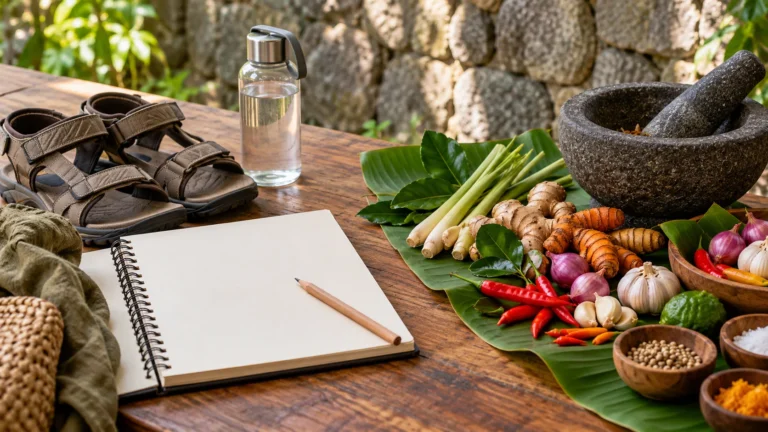
A cooking class may advertise ninety minutes, four hours, or half a day because providers measure different parts of the experience. One number may describe only active cooking, while another includes hotel pickup, a market, introductions, eating, and return transport. Before adding the class to an itinerary, ask which clock is being used.
For a cooking class Ubud plan, the safest approach is to reserve a time block rather than schedule the next driver at the estimated finishing minute. Bali traffic, group pace, photographs, and a relaxed meal can all extend the experience.
Putu’s Active Cooking Time
The hands-on cooking portion at Putu’s family home is approximately 1.5 hours. During that time, the private booking group prepares five Balinese dishes with her guidance. The exact pace depends on group size, questions, children, dietary adaptations, and how tasks are divided.
This 1.5-hour figure is not the total door-to-door duration. Guests also need time for transport, arrival, ingredient introduction, eating the meal, and returning to their accommodation.
Time Needed for the Market Package
The market tour package usually begins with pickup from accommodation in Ubud around 7:00am. The group visits Pejeng market for about 30 minutes, then continues to Putu’s compound for cooking, cultural introduction, and the meal.
Travel time varies with the pickup location and traffic. The complete morning is therefore much longer than the cooking session. Do not plan a spa, checkout, airport transfer, or distant tour immediately after the expected return.
Time Needed for Cooking Class and Meal
The cooking-class-and-meal option skips the market and goes directly to the family home. It is shorter and easier to arrange around another activity, but it still includes pickup, travel, introductions, cooking, dining, and return transport.
This format is suitable when you want the hands-on experience without an early market start. The cooking class and meal page explains the direct package and pricing.
Why the Meal Should Not Be Rushed
The meal is part of the class, not an optional few minutes at the end. Guests taste how the separate preparations work together, compare spice levels, ask final questions, and enjoy what they made. Eating slowly also gives the kitchen activity a natural conclusion.
If you tell the driver or next tour that you must leave immediately after the last pan is turned off, you may miss the most relaxed part of the visit. Allow time to sit, drink, and photograph the finished dishes without making the family feel hurried.
Group Size Changes the Pace
A solo guest may move quickly but ask more one-to-one questions. A couple can divide tasks efficiently. A family with children may need demonstrations repeated or separate safe tasks. A group of five or more has more hands but also more coordination, photographs, and conversation.
Putu’s private format keeps the pace within the booking group. That is different from a large shared class where the schedule must continue even when one participant needs help.
Dietary Requirements Can Add Preparation Time
A vegetarian adaptation or mild-spice version can be planned smoothly when confirmed in advance. Multiple separate menus or last-minute allergy information may disrupt the sequence. This is another reason to provide complete dietary details before booking.
The article on dietary requirements cooking class Ubud explains how to state preferences, allergies, and cross-contact concerns clearly.
Pickup Location and Traffic
Central Ubud, Sayan, Mas, Tegallalang, Tampaksiring, and other surrounding areas can produce very different travel times even when a listing uses the word Ubud. Putu includes round-trip transport from accommodation in Ubud, but the exact property must be shared to confirm the arrangement.
Hotels usually offer a clear lobby or concierge meeting point. Villas may require a map pin, gate description, or nearby landmark. A driver who cannot find the entrance can delay the entire experience.
How Much Buffer Should You Leave?
Leave at least a practical buffer after the estimated return rather than booking activities back to back. The ideal amount depends on the distance and importance of the next plan. A casual walk near the hotel is low risk; a boat transfer, airport journey, or prepaid tour is not.
If the next commitment cannot move, share it with Putu before confirmation. She can explain whether the package is realistic, but no host can guarantee traffic conditions minute by minute.
Work backward from a fixed appointment
When another activity has a firm start time, work backward from the time you must be there rather than forward from the advertised cooking duration. Start with the appointment time, allow travel from your confirmed drop-off point, then allow a margin for the class meal, the return journey, and unexpected delays. If that calculation leaves no margin, the two activities are too close together even if the hands-on cooking itself takes only about ninety minutes.
For a hotel checkout, boat, or flight connection, send the exact deadline to the host before booking and ask for a realistic return window. Do not convert an estimate into a guaranteed drop-off time. A change to the market route, family pace, or road conditions can affect the wider day without changing how long the cooking itself takes.
Sample Itinerary Thinking
| Plan | Practical approach |
|---|---|
| Morning market class | Treat it as the main morning and lunch activity; keep the afternoon light. |
| Cooking class and meal | Pair it with one nearby, flexible activity rather than a distant timed tour. |
| Hotel checkout day | Confirm luggage storage and pickup before booking. |
| Airport or port transfer day | Avoid unless there is a very generous buffer. |
| Family with young children | Plan around breakfast, naps, and attention span. |
Questions to Ask About Duration
- What is the pickup window from my exact accommodation?
- Does the stated time include the market?
- How long is active cooking?
- Is the meal included within the estimate?
- What is the likely return window?
- Could outside-Ubud transport add significant travel time?
The Ubud cooking class guide combines timing with prices, menu choices, children, and booking terms.
Do Not Use the Class as a Tight Transfer Window
Travelers sometimes try to combine the class with hotel checkout, luggage collection, and a transfer to another part of Bali. That plan can work only when every step is confirmed and there is a generous margin. A cooking experience should not carry the same timing pressure as an airport shuttle.
When the next destination is far from Ubud, consider returning to the hotel first and arranging a separate transfer. This keeps luggage logistics outside the class and reduces pressure on the host, driver, and other members of the group.
The Best Answer Is a Time Range
For Putu’s experience, remember the firm operational detail: active cooking is about 1.5 hours. The total package is longer and depends on market inclusion, pickup location, traffic, group pace, and the meal. Ask for a realistic range after providing your accommodation.
Building a relaxed buffer is not wasted holiday time. It allows the class to remain personal and gives you room to enjoy the food you prepared instead of watching the clock.