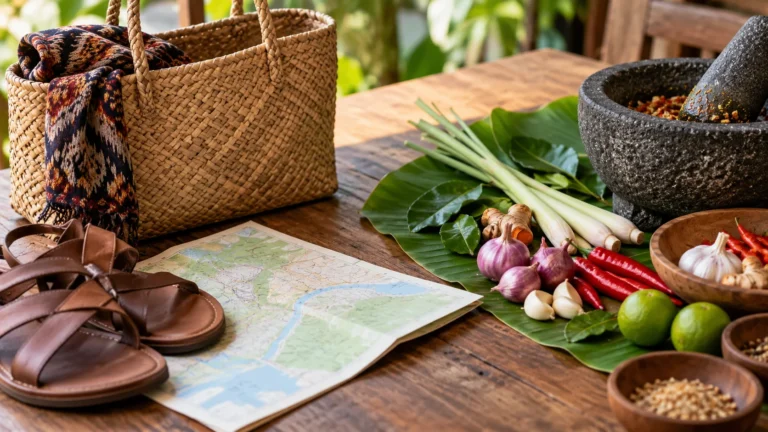
Dietary planning should happen before a cooking class is confirmed, not after the ingredients are prepared. Balinese food can be rich in vegetables, coconut, tofu, tempeh, herbs, and spices, but a dish that looks plant-based may still contain shrimp paste, fish sauce, meat stock, egg, or another ingredient that matters to the guest.
Putu can prepare a vegetarian version of her cooking class in Ubud when informed in advance. The exact five dishes depend on the full dietary request and ingredient availability. Guests with allergies should provide more detail than a broad menu label.
Vegetarian, Vegan, Intolerance, and Allergy Are Different
A vegetarian guest may avoid meat and fish but eat eggs or dairy. A vegan guest avoids animal-derived ingredients. An intolerance may cause digestive symptoms without being an allergy. A food allergy can cause a serious reaction and may require avoiding cross-contact as well as the ingredient itself.
The host needs the practical rule, not only the label. For example: “No meat, fish, shrimp paste, or fish sauce; eggs are acceptable” is clearer than “vegetarian.” For an allergy, state the ingredient and seriousness, such as: “Severe peanut allergy; cannot eat food prepared with peanut ingredients or shared utensils.”
Hidden Animal Ingredients in Balinese Cooking
Shrimp paste is commonly used to deepen the flavor of sambal or spice mixtures. Fish-based seasoning, meat stock, or a garnish may also appear in a dish that otherwise contains vegetables. Removing a visible piece of meat does not make the entire preparation vegetarian.
Advance notice allows Putu to plan the paste, sauce, and side dishes together. The vegetarian cooking class follows the selected package pricing unless a special request changes the confirmed cost.
Common Allergens to Mention Clearly
Guests should state any concern about peanuts, tree nuts, soy, wheat or gluten, eggs, dairy, fish, shellfish, sesame, coconut, or another ingredient relevant to them. Do not assume a host will interpret “nut allergy” in the same way you do; specify the exact nuts and whether coconut is included in your restriction.
Soy is especially important in a class that may use tofu, tempeh, or soy-based seasoning. Shellfish matters because shrimp paste can be hidden in a spice mixture. Gluten concerns require checking sauces and packaged ingredients as well as flour.
Cross-Contact in a Family Kitchen
A family kitchen may prepare different ingredients on the same day and use shared knives, mortars, cutting boards, pans, or surfaces. Cleaning can reduce risk, but it may not meet the needs of every severe allergy. Putu should know the seriousness before accepting the booking.
Guests with a medically significant allergy should carry prescribed emergency medication and follow advice from their healthcare professional. A cooking class website cannot determine whether a shared home kitchen is safe for a particular person. Honest discussion may lead to an adapted plan or the decision that the class is not suitable.
Vegetarian Menu Planning
A satisfying vegetarian class should be designed as a complete meal rather than replacing meat in one dish and leaving the rest unchanged. Tofu, tempeh, coconut, vegetables, rice, legumes, and spice pastes can create varied textures and protein sources. The condiments must also match the request.
Putu confirms five dishes according to available ingredients. The class may use plant-focused versions of Balinese techniques without claiming that every adaptation is the ceremonial or household standard for every family. Guests still learn how aromatics, coconut, vegetables, and seasoning are balanced.
Spice Preference Is Also a Dietary Detail
Mild, medium, and spicy can mean different things to different travelers. State whether you avoid chili entirely, tolerate a small amount, or simply do not want a very hot sambal. Putu can separate a spicy component or adjust the group’s portion when this is discussed before cooking.
Spice preference is not the same as an allergy, but it affects enjoyment. Children, guests with sensitive digestion, and people unfamiliar with bird’s-eye chili should taste gradually.
Market Tour Considerations
A market may contain open seafood, shrimp paste, nuts, eggs, soy products, and many other ingredients in close spaces. A guest with a serious airborne or contact concern should discuss the market route before choosing the package. The cooking-only option may be more appropriate for some people, though the kitchen still requires its own assessment.
The Ubud market tour cooking class explains the working environment and practical clothing. Dietary information should be shared before the pickup, not introduced while standing beside a stall.
A dietary message that separates preferences from risk
A concise pre-booking message can prevent ambiguous phrases such as ‘no seafood’ from hiding a serious shellfish allergy. State who the restriction applies to, whether it is a preference, intolerance, or medically diagnosed allergy, the specific ingredients to avoid, and whether cross-contact is a concern. For example: ‘Two adults: one vegan; the other has a medically diagnosed peanut allergy and needs to avoid cross-contact with peanuts. Can your kitchen reliably accommodate both?’
The host must be able to answer each part before payment. Ask whether shared utensils, sauce bases, or pre-prepared pastes could create a problem. If the kitchen cannot meet the requirement reliably, choose a safer alternative rather than relying on a friendly but non-specific reassurance. Never treat a private class as a guarantee of an allergen-free environment.
How to Write a Clear Dietary Message
Use a short list that separates preference from medical risk:
- Diet: vegetarian / vegan / no pork / another preference
- Allergy: exact ingredient and seriousness
- Cross-contact: whether shared utensils or surfaces are a concern
- Acceptable ingredients: eggs, dairy, coconut, soy, gluten, seafood
- Spice level: no chili, mild, medium, or spicy
- Medication: carried by the guest as directed
Ask Putu to confirm what can and cannot be accommodated in writing. Do not rely on an assumption based on a photo or a general “vegetarian available” statement.
Pricing and Special Requests
A standard vegetarian menu uses the same direct group pricing as the selected package. A complex request, separate ingredients, or a significant menu change may require discussion before the final price is confirmed. Outside-Ubud transport remains separate, and child pricing follows the normal age policy.
The broader Ubud cooking class guide covers package prices, timing, transport, and booking terms so dietary planning can be considered alongside the rest of the experience.
Confirm the Plan Again on Arrival
Even after advance confirmation, briefly review the dietary plan before cooking begins. Point out the guest concerned, repeat the ingredient to avoid, and ask which sauces or pastes have been prepared separately. This is not a substitute for advance planning, but it helps everyone begin with the same understanding.
When the Safest Answer May Be No
A trustworthy host should not promise a request that cannot be managed reliably. If the kitchen setup, market environment, or ingredient uncertainty does not fit a severe allergy, declining the booking may be the responsible choice. That honesty protects the guest and the host.
For vegetarian travelers without a severe allergy, advance planning usually creates a flexible and enjoyable class. Send the complete details early, confirm the menu approach, and arrive ready to ask questions about ingredients rather than assuming every traditional paste is automatically plant-based.