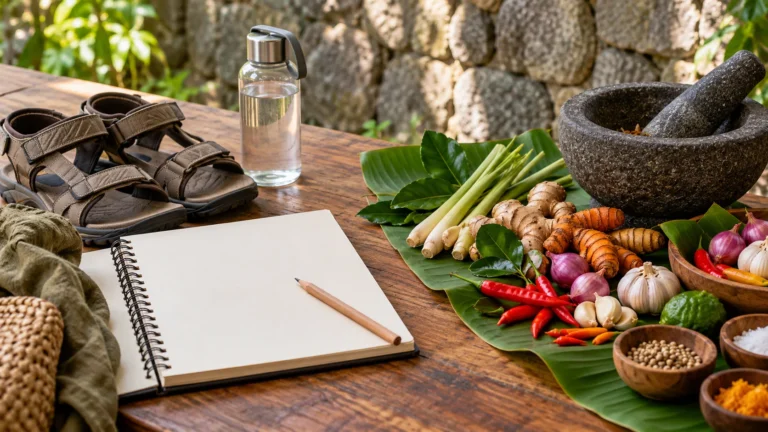
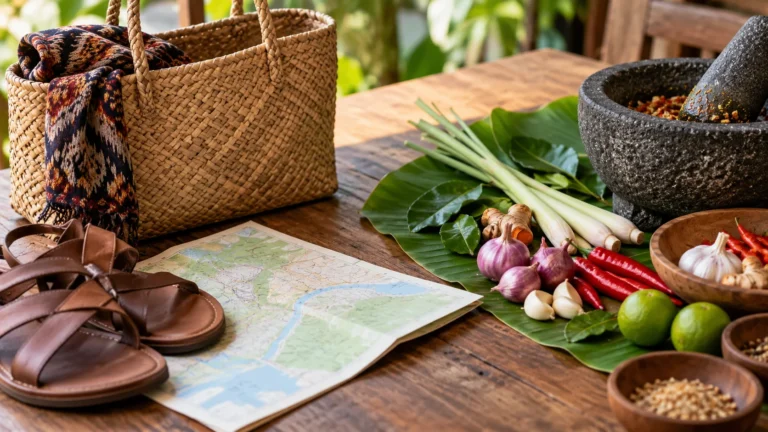
A cooking class can work well for families because children participate in a real activity instead of only observing a landmark. They can smell herbs, touch vegetables, mix ingredients, shape simple items, and see the meal change from raw components to something the family eats together. The experience is most successful when the pace, tasks, and schedule match the child.
Putu’s ubud cooking class is private for the booking group, which allows families to move more slowly and divide tasks according to age. Parents and guardians remain responsible for supervision around knives, heat, flames, animals, and working areas in the family compound.
What Age Is Best for a Cooking Class?
There is no single perfect age. A calm five-year-old who follows instructions may enjoy mixing and arranging ingredients, while an older child who is tired or hungry may lose interest quickly. Attention span, experience in a kitchen, and comfort with unfamiliar food matter as much as age.
Putu’s pricing treats children aged 5–11 at 50% of the applicable adult rate, while infants aged 0–4 are free. Free infant admission does not mean the host provides childcare. An adult must remain available to supervise and may participate less if the child needs constant attention.
When siblings are at very different ages
A three-year-old and a ten-year-old are not two interchangeable places at the cooking station. The younger child may enjoy identifying herbs, mixing cool ingredients, or watching a short demonstration with an adult nearby. The older child may be ready for more detailed preparation, but knives, burners, and hot oil still require direct instruction and supervision. The host should know both ages before the task plan is discussed.
If one child needs a rest or loses interest, agree which adult will step away with them rather than expecting the instructor to become the babysitter. Tell the host about mobility needs or a child who finds crowds and heat difficult. A private booking offers a more flexible group pace, but it does not remove the family’s responsibility for supervising children.
Safe Tasks for Younger Children
Children can wash vegetables, tear suitable leaves, mix cool ingredients, arrange items on a plate, count portions, shape a soft mixture, or help with a mortar under close guidance. Tasks should be chosen by the adult and host based on the actual kitchen setup.
Young children should not be placed beside hot oil, open flames, sharp knives, or unstable cookware. Food safety guidance also emphasizes clean hands, separation of raw and ready-to-eat ingredients, thorough cooking, and prompt handling of perishable foods. The class remains an adult-supervised environment, not an independent children’s workshop.
Knife and Heat Safety for Older Children
An older child may be able to use a small knife or stir a warm pan, but only when Putu and the parent agree that the task is appropriate. The adult should stand close enough to intervene and should not become distracted by photography or another cooking station.
Loose sleeves, long hair, hanging bags, and slippery footwear create avoidable risk. Secure clothing and shoes help children move safely. A simple reminder before the class—stop, listen, and ask before touching—can make the session much smoother.
Should a Family Choose the Market Tour?
The market is colorful and educational, but it begins early and may be crowded, noisy, damp, or unfamiliar. Children who enjoy markets and wake easily may love it. A child who becomes overwhelmed or needs a slow breakfast may arrive at the cooking stage already tired.
The direct cooking-class-and-meal option skips the market and preserves attention for the kitchen. Families can compare morning vs afternoon cooking class Ubud before deciding which rhythm suits the child.
Spice Levels and Picky Eaters
Tell Putu in advance whether the child eats chili, strong aromatics, coconut, tofu, tempeh, eggs, meat, or vegetables. A mild preference can be accommodated more easily when known before the paste and sambal are combined. The child can still learn how a spicy element is prepared without having it mixed into their portion.
A cooking class should not become a battle over finishing every dish. Children often try more when they helped prepare it, but they may still dislike a flavor. Bring a simple backup snack for the journey if needed, while keeping it separate from the class meal and respecting the family home.
Allergies Require More Than “Kid-Friendly”
A family-friendly menu is not automatically safe for a child with an allergy. Parents must list the specific ingredient, the seriousness of the reaction, and any concern about shared utensils or surfaces. Balinese pastes and condiments may include shrimp paste, nuts, soy, eggs, or other ingredients that are not visible.
Share the information before booking and carry prescribed emergency medication. Putu will explain what can reasonably be accommodated, but a family kitchen cannot promise every type of separate environment. The dietary requirements cooking class Ubud helps parents prepare a clear message.
Timing, Naps, and Total Duration
The hands-on cooking portion is around 1.5 hours, but transport, the market, introductions, the meal, and the return drive make the outing longer. A family should plan around naps and avoid another fixed tour immediately afterward.
For an infant or toddler, the free price does not reduce the logistical needs. Ask about a child seat, stroller practicality, carrying the child through the market, and where the child can rest. A private booking helps, but the family should still arrive prepared.
Animals and the Family Compound
Putu’s compound is a living family environment and may include animals, plants, temple areas, and spaces not intended for guests. Children should not chase, feed, or touch animals without permission. They should also avoid entering temple or private family areas unless invited.
This is part of the cultural value of the visit. Parents can explain that the group is visiting someone’s home, not an amusement venue. Respectful behavior gives children a more meaningful understanding of hospitality.
How to Calculate the Family Price
The child rate is 50% of the adult rate that applies to the booking group. The adult rate changes according to package and group size. Infants aged 0–4 are free, and alcohol for adults is USD 3 per person when available. Outside-Ubud transport may add another charge.
Send the number of adults and each child’s age so Putu can calculate the total correctly. Do not describe everyone simply as “four people” when two may qualify for child pricing.
Family Booking Checklist
- Share every child’s age
- Choose market or cooking-only based on energy and attention
- Explain spice preference and familiar foods
- List allergies and ingredients to avoid
- Ask about the pickup point and child seat needs
- Dress children in secure shoes and fitted clothing
- Keep one adult responsible for supervision
- Leave time after the class for a relaxed return
The broader Ubud cooking class guide also covers prices, packages, transport, and booking terms. With realistic expectations, the class can become a shared family memory rather than another activity the children are asked to watch quietly.