Jukut undis is a Balinese soup made with pigeon peas, known locally as undis, kacang gude, or kacang kayo. The dark peas used in familiar versions give the cooking liquid its distinctive color. The dish is closely associated with Buleleng and Singaraja in northern Bali, where it belongs alongside other regional foods such as sudang lepet.
For a visitor, the name provides a useful starting point: look for the pea itself, then ask how the broth has been seasoned. A bowl may contain vegetables or other additions, and the seasoning can include ingredients that are easy to overlook when ordering. Understanding those details is more useful than assuming every dark bean soup follows the same recipe.
What Is Undis?
The ingredient is pigeon pea, Cajanus cajan. It should not be identified simply as a black soybean or treated as interchangeable with every packet labeled black beans. Those descriptions may help someone recognize a color, but they lose the identity of the legume that gives the dish its name.
This distinction matters when buying ingredients outside Bali. A seller may understand pigeon pea better than the Balinese name; a recipe written in Indonesian may instead say kacang gude. Bring both names when checking a shop or seed supplier. If the product is already cooked or split, ask whether the recipe was written for that form before following its preparation instructions.
Color alone cannot settle the question. A dark coating does not make another species undis, and pale pigeon peas do not necessarily reproduce the appearance of a bowl made with dark local peas. When the ingredient is unavailable, describe any substitution honestly. A soup made with a different bean can be enjoyable while remaining a different preparation.
A North Bali Connection
Buleleng’s food culture provides an important setting for this soup. Local government material identifies jukut undis and sudang lepet as regional culinary attractions, including coverage of the pairing in Sangsit. This gives a traveler a more specific reference than the broad label Balinese soup.
There is also a place for the dish in contemporary local food activity. Buleleng’s agriculture department included jukut undis and sudang lepet in reporting about a local food competition. The point is not that a visitor needs to attend an event to understand the dish. Rather, the soup remains connected with regional cooking and public efforts to present that cooking to a wider audience.
Keep that geography in mind when planning meals around Ubud. A restaurant serving general Balinese food may have a different menu from a business specializing in Buleleng dishes. Ask whether jukut undis is being prepared that day, instead of assuming it will appear wherever nasi campur or other familiar dishes are sold. A menu’s regional focus can be a better clue than its length.
How the Soup Takes Shape
Published preparations begin with the peas and then build the broth around them. A culinary monograph from Poltekkes Denpasar describes soaking undis overnight, boiling it, and adding seasonings such as shallot, garlic, chili, and spring onion. Its account presents a relatively simple preparation, which helps explain why the pea can remain the central ingredient.
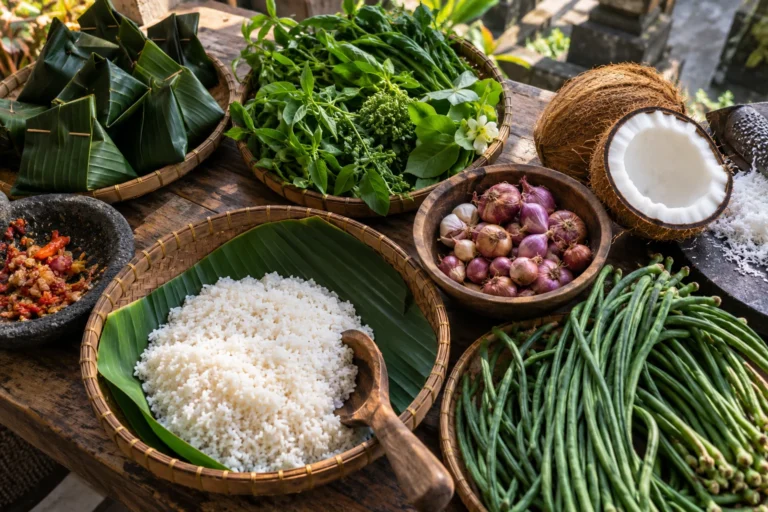
Other descriptions use lemongrass, salam leaf, galangal, or terasi. A home-cooking account reported by RRI includes a coarsely ground seasoning and those aromatics. These are examples of documented variations, rather than a requirement to combine every ingredient mentioned in every account.
For someone learning the dish, separate two decisions: how the peas are prepared, and how the broth is flavored. A long list of spices does not answer the first question. Ask the cook whether the peas have been soaked, how they judge tenderness, and when they add the seasoning. The answers explain the sequence more clearly than copying a list without understanding its order.
This guide describes the dish rather than providing a tested recipe with fixed quantities or a cooking time. If you want to make it at home, choose one complete recipe and keep its ingredient quantities and method together. Combining the water quantity from one version with the pea quantity from another can produce a result neither recipe intended.
Vegetables and Seasonings Can Vary
Beautiful Bali describes a version using young jackfruit and also mentions a preparation with spinach. The examples show why a bowl containing more than peas need not be a mistake. The vegetables are part of the particular preparation, and should be identified individually when discussing what is in it.
A useful question is, “What vegetables are in today’s jukut undis?” It gives the cook room to explain the actual bowl. Asking whether it is the authentic version is less precise, especially when different published accounts already record different additions.
Likewise, do not assume base genep is compulsory because it is widely discussed in Balinese cooking. The simpler seasonings documented for this soup deserve their own explanation. If a cook uses a fuller spice paste, ask what goes into that paste and how it fits their preparation. Keep the answer attached to that version rather than turning it into a rule for the whole island.
Ordering with Dietary Requirements
Peas and vegetables do not establish that a finished soup is vegan. Terasi, a shrimp paste used in some versions, is a particularly important ingredient to check. Ask about the seasoning as well as any meat or fish served beside the bowl. A dish’s main ingredient is only part of its composition.
You can ask: “Is there shrimp paste, fish, meat, or animal stock in the soup or seasoning?” For an allergy, name the ingredient you need to avoid and ask how the kitchen handles it. A brief label such as vegetable soup cannot answer questions about the broth, paste, garnishes, or shared preparation equipment.
The same care applies when the soup is part of a set meal. Identify which components are included and which are separate. Someone avoiding seafood needs to check the soup and any accompanying fish or condiment. For a vegetarian meal, discuss the complete plate rather than requesting a change to the visible peas alone.
Learning the Dish During a Bali Visit
If you are considering a Balinese cooking lesson, jukut undis offers useful questions about ingredient identification, regional dishes, and the timing of seasoning. Confirm the class menu before booking: this guide does not mean that jukut undis is included in Putu’s standard class.
When the dish is available, a practical learning goal is to recognize the peas, follow the preparation sequence, and understand the cook’s particular additions. Write down the local ingredient names alongside the names you will use when shopping at home. Ask which steps apply specifically to that recipe and which can change with the ingredients.
For tasting, start with the information the kitchen can actually provide: which peas were used, what flavors the broth, and what accompanies it. Those answers make a small bowl of soup a clear introduction to a regional part of Balinese cooking.