A local market visit gives a cooking class context before the first knife touches a cutting board. Ingredients that may look anonymous in a finished curry become recognizable as roots, leaves, fruit, chilies, coconut, tofu, tempeh, and spice bundles. The market also shows how daily food shopping fits into village routines.
Putu’s ubud cooking class market package begins with a typical pickup around 7:00am from accommodation in Ubud, followed by a visit of about 30 minutes to Pejeng market. The group then continues to her family compound to prepare five dishes and eat the meal together.
Why the Market Visit Starts Early
A traditional market is most active in the morning. Vendors arrange produce, local shoppers buy ingredients for the day, and the selection is easier to understand as part of a living food system. Later visits can still be interesting, but they may not show the same rhythm or range.
Early timing also allows the market, cooking, and meal to flow naturally. Guests see ingredients first, then handle related items in the kitchen. This sequence turns the visit into preparation for the class rather than a separate sightseeing stop.
When a ceremony changes the usual market rhythm
Local market activity can differ on ceremony days and during periods of heavy rain. Some vendors may arrive later, change their stock, or not trade at their usual spot. A responsible market experience focuses on explaining what is actually happening that day rather than promising that every stall or ingredient will be available.
If the market visit is the reason you are booking, ask in advance whether any local observance is likely to affect the route. If the usual market is unusually quiet, discuss the options with the host before the visit; these might include adjusting the explanation or choosing the cooking-only format, but alternative stops should never be presented as guaranteed. The value of a local guide is the context, not a staged shopping checklist.
What You May See at Pejeng Market
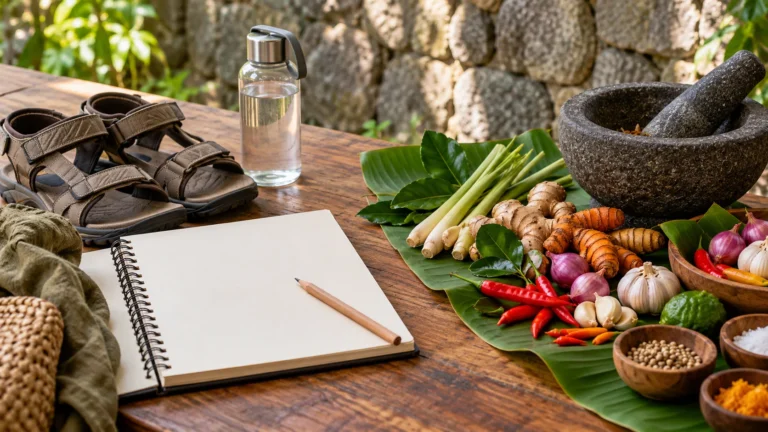
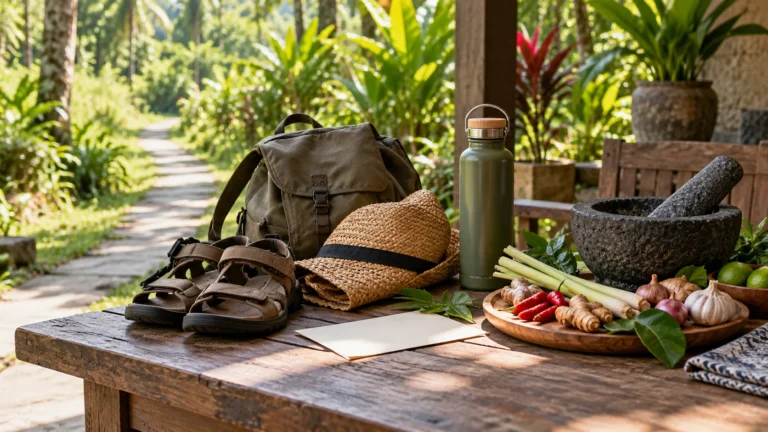
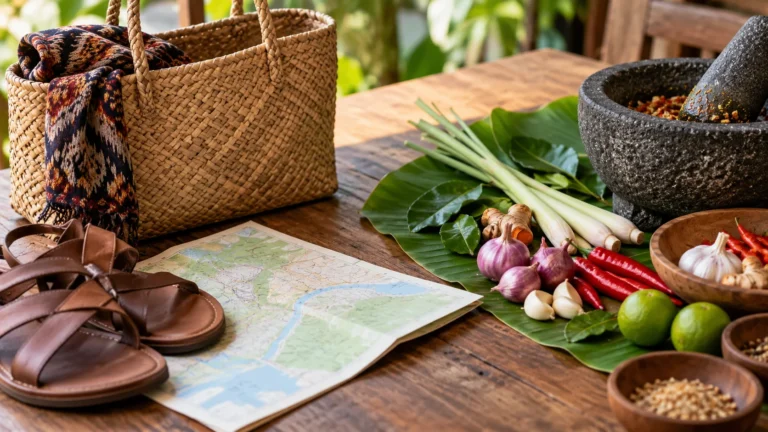
The exact selection changes by day and season. You may see shallots, garlic, turmeric, ginger, galangal, lesser galangal, lemongrass, chilies, citrus leaves, candlenuts, coriander, pepper, palm sugar, coconut, bananas, leafy vegetables, long beans, eggplant, tofu, tempeh, fruit, rice products, and prepared spice mixtures. Not every ingredient will be purchased or used in the class.
The purpose is to recognize what is available and learn how Putu chooses or describes it. Some items have several local names or varieties. Rather than trying to memorize everything, focus on a few ingredients that will appear later in the five dishes.
How the Host Adds Value
Walking through a market alone can be visually exciting, but a host turns observation into understanding. Putu can explain whether an ingredient is used for fragrance, heat, color, texture, ceremony, a drink such as jamu, or everyday family cooking. She can also point out substitutions for guests who may not find the same item at home.
A helpful tour does not require constant purchasing. The market visit supports the cooking class by giving names and stories to the ingredients. The later article on Balinese spices cooking class can help you recognize the roots and aromatics more easily.
What the Market Is Not
Pejeng market is a working local place, not a studio designed around visitor photography. Aisles may be narrow, floors may be wet, and vendors are serving regular customers. The atmosphere may be busy, noisy, and unfamiliar. That is part of its value, but it requires awareness.
The visit is also not a guarantee that guests will taste every fruit or buy souvenirs. Putu’s route is short and connected to the class. Travelers seeking a long shopping trip should plan that separately rather than delay the group.
Respectful Market Etiquette
Follow Putu’s lead when entering narrow areas or stopping beside a stall. Avoid blocking shoppers, handling produce without permission, or photographing people at close range before asking. A simple smile and patience matter when a vendor is busy with a customer.
Keep your group together and listen before moving to the next stall. If you want to purchase something personal, ask whether there is time. The class schedule includes transport and cooking, so an unplanned shopping stop can affect the rest of the morning.
- Ask before photographing vendors or private moments
- Do not place bags on food displays
- Keep valuables secure in busy aisles
- Let local customers pass
- Use Putu’s guidance when asking questions
What to Wear and Bring
Secure footwear is more practical than loose sandals because surfaces may be uneven or damp. Wear light clothing that is comfortable for both walking and cooking. Avoid long, flowing sleeves that can approach flames or pans later in the kitchen.
Bring only what you need: a phone or camera, water if desired, a compact rain layer, and any personal medication. Large bags are cumbersome in narrow aisles. Sunscreen is useful for the journey and compound, although much of the market may be shaded.
Food Allergies and the Market
A market tour can expose guests to seafood, shrimp paste, nuts, eggs, soy, spices, and other ingredients even when the final menu is adjusted. Anyone with a serious allergy should tell Putu before confirmation and carry personal emergency medication as directed by their healthcare professional. The host must understand the restriction before choosing a route or menu.
Vegetarian guests should also clarify whether they avoid fish sauce, shrimp paste, or other animal-derived seasonings. The article on dietary requirements cooking class Ubud explains why a clear list is better than a broad label alone.
How the Market Connects to the Kitchen
After the visit, the group continues to Putu’s family compound in Banjar Pesalakan. The market memories become practical when ingredients are washed, cut, ground, bruised, mixed, fried, grilled, or simmered. Guests can compare the fresh roots they saw with the aromas released during cooking.
This connection is the main reason to add the market. The experience is not simply two attractions placed together; the first prepares you to understand the second. Putu’s market tour and cooking class includes five dishes, a compound introduction, and the meal after cooking.
How Much Time to Reserve
The market itself lasts around 30 minutes, but the complete outing is much longer. Pickup from Ubud, travel to Pejeng, the market, cooking, the compound introduction, eating, and the return drive all require space in the itinerary. Avoid treating the 30-minute market duration as the full package length.
The Ubud cooking class guide explains the difference between active cooking time and total experience time. Leave a buffer after the expected return, especially when traffic or weather could slow the drive.
Who Will Enjoy the Market Package Most?
Choose it when you like early mornings, local ingredients, food photography, markets, and cultural context. The cooking-only package may be better when you dislike crowds, have limited mobility, travel with a tired young child, or need a later start. Neither option is automatically more authentic; they simply place the emphasis differently.
Before paying, send your date, group size, accommodation, children’s ages, and dietary needs. Putu can then confirm the pickup, market schedule, final price, and whether the experience suits your group.