The part of a banana plant used in jukut ares is not the fruit or the leaf wrapped around food. It is the tender inner material from a young banana shoot, prepared as a vegetable in a seasoned soup. This ingredient gives the Balinese dish its name and makes its preparation worth understanding before treating it as an ordinary vegetable soup.
Banana plants have several culinary uses, and each involves a different part. Recognizing which part is on the plate is the first useful step. For ares, the questions then become practical: how was the shoot selected and trimmed, which seasoning was used, and what else went into the broth?
The Ingredient Behind the Name
A banana’s apparent trunk is a pseudostem, formed by overlapping leaf sheaths. Descriptions of jukut ares often use the more familiar expression banana stem. In the kitchen, however, the relevant material is the young, tender inner part, rather than a whole mature trunk cut into pieces.
Ethnobotanical research on bananas in Bali records jukut ares among uses of the stem as food. That is a useful reminder that the plant is more than its bunches of fruit. It does not mean every part of every banana plant can be used in the same way, or that a shopper can replace the specified ingredient with whatever banana material is available.
When reading a recipe, check whether it describes a young shoot, the inner core, or another prepared form of the ingredient. Banana blossom is a separate ingredient. A recipe for blossom should not be followed as if it describes ares, even if both are sold near the same produce stall.
For a visitor buying ingredients, asking the seller to identify the part and explain its intended preparation is more useful than asking only for banana. If you cannot establish what you are buying, choose another cooking project until an experienced cook can explain the ingredient.
Trimming Comes Before the Pot
Preparation starts before the broth is made. Published descriptions explain removing the outer layers to reach the pale inner material, then slicing and attending to the fibers. This is one reason a prepared portion looks different from the plant standing in a garden.
The trimming deserves attention during a demonstration. Ask the cook to show the part they retain, the parts they discard, and the texture they are looking for. Watching that selection can answer a question that a finished-bowl photograph cannot: what counts as usable ares in this particular preparation?
RRI’s account describes treating sliced ares with salt and coconut oil before adding it to the soup. It also discusses removing fibers and selecting young shoots. Treat this as one documented approach. The account should not become a promise that every household uses identical treatment, or a reason to invent an exact preparation time.
This guide is not a tested harvesting or cooking recipe. For hands-on preparation, follow the complete method of someone familiar with the ingredient. A list of spices cannot replace instructions for selecting and cleaning the shoot, and a short description of trimming cannot establish whether unfamiliar plant material is suitable.
What Goes into the Broth?
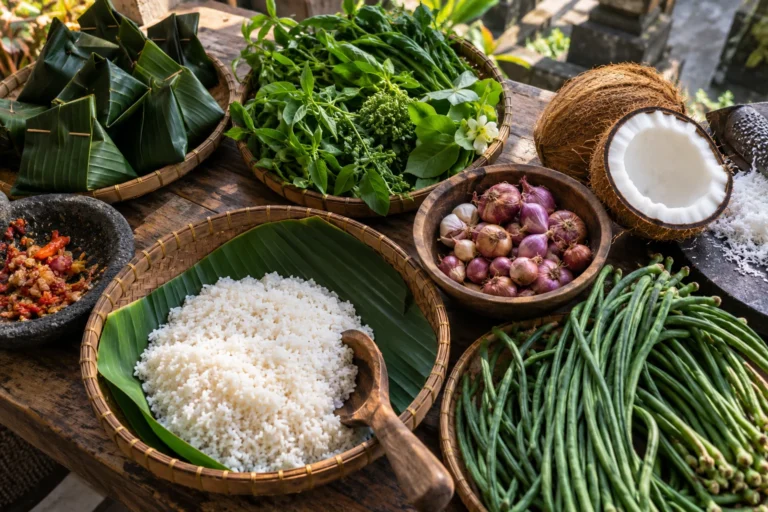
Base genep, the Balinese mixture of fresh aromatics and spices, appears in descriptions of jukut ares. Ingredients discussed in RRI’s preparation include shallot, garlic, chili, galangal, ginger, turmeric, and kencur. Salam leaf and lemongrass also appear in the cooking method.
The paste connects the prepared vegetable with the rest of the soup. Ask whether the kitchen makes its seasoning from individual ingredients or uses a paste prepared earlier. If you want to reproduce that version, record the contents of the paste as well as the ingredients added separately to the pot. Otherwise, an instruction to add seasoning can hide several important decisions.
Some descriptions include coconut milk. Indonesia Travel presents a coconut-milk preparation with aromatics and notes chicken or duck additions. Other accounts describe cooking the vegetable with meat and bones. These descriptions support variation; they do not establish one required liquid or a universal meat choice.
Choose a complete recipe when cooking at home. Follow its liquid, seasoning, and main-ingredient quantities together, rather than combining isolated steps from several descriptions. If the recipe leaves the main ingredient or its preparation unclear, resolve that gap before beginning.
The Same Name Can Include Different Animal Ingredients
Jukut ares should not automatically be ordered as a vegetarian dish. Accounts include chicken, duck, Muscovy duck, or pork, depending on the preparation. The fact that the named ingredient is a vegetable tells you what makes the dish recognizable, rather than everything the cook has put into it.
A documented variant is jukut ares kakul. Research published in Journey examines this preparation with rice-field snails, alongside another snail dish, jukut roroban kakul. The additional word matters: it identifies an animal ingredient that an unfamiliar reader could easily miss.
For someone avoiding pork, meat, or snails, ask directly which version is being served. If the answer is simply vegetable soup, follow up about the broth and seasoning. A meat-free appearance does not establish how the liquid was prepared, and removing visible pieces cannot explain the ingredients already cooked into it.
For allergies, ask about every ingredient that matters to you, including anything in a premade paste. Describe the restriction clearly and allow the kitchen to explain what it can accommodate. General labels such as traditional or homemade do not provide an ingredient list or information about cross-contact.
Eating and Learning with Context
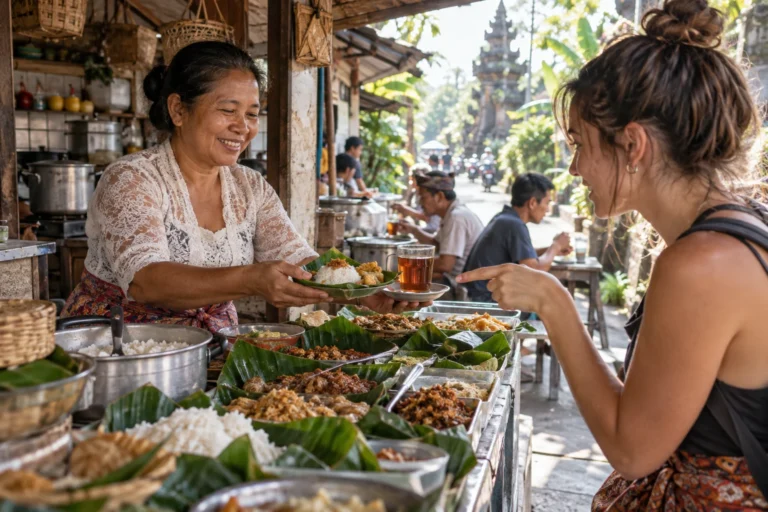
Indonesia Travel describes jukut ares as an accompaniment at customary occasions and in everyday meals. That range is a reason to keep claims about serving context specific. A bowl available at a warung and a pot prepared for a gathering can share a name without having identical quantities, ingredients, or purpose.
For a meal, ask what comes with the soup and whether the listed price includes rice or other dishes. For a cooking demonstration, ask which stages you will see. Selection and trimming of the young shoot may be as informative as adding ingredients to the pot, particularly if you have previously used only banana fruit or leaves.
An Ubud cooking class can provide a setting for questions about local ingredients and their preparation. Confirm the day’s dishes with the host before booking. Jukut ares is discussed here as a Balinese food guide, and is not promised as part of Putu’s standard menu.
If you want to learn this dish specifically, name it in your request and ask whether the ingredient and instruction are available. If they are not, ask which dish will teach the preparation skills you are interested in. A confirmed alternative is more useful than arriving with an unspoken expectation.
The clearest way to understand jukut ares is to follow its main ingredient from the selected shoot to the prepared vegetable, then ask how the broth completes that particular version. That keeps attention on the cooking while leaving room for the variations found in Balinese kitchens.