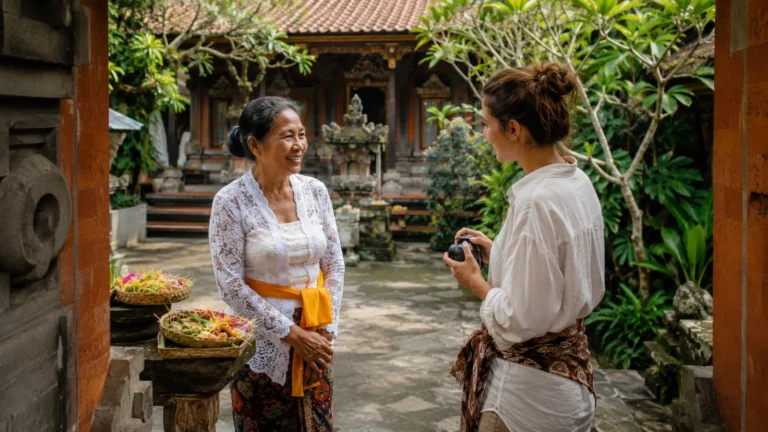
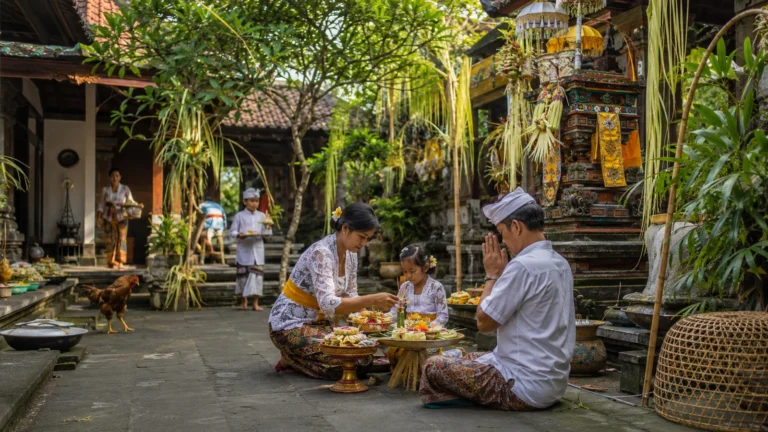
A garden inside a Balinese family compound may be small, abundant, or almost entirely ornamental, depending on available land. Even a modest area can hold a useful mix of fruit, herbs, flowers, shade plants, and leaves used in household life. A Balinese cooking class Ubud becomes more tangible when guests can see the plant behind an aroma they are using. The complete guide to a Balinese family compound places these gardens within the wider rhythm of the home.
Homegrown ingredients supplement rather than replace the market. Rice, vegetables, tofu, tempeh, meat, spices, and coconuts may still be purchased, while the compound supplies a few fresh leaves, chilies, fruit, or flowers. This mixed system allows a cook to use what is immediately available and buy the rest from familiar vendors.
Fruit Trees Provide More Than Fruit
Banana, papaya, coconut, citrus, mango, guava, or other tropical fruit trees may appear in family gardens, but no household grows everything. Trees create shade, privacy, leaf material, and seasonal food. A productive tree can also become part of family memory because relatives remember who planted it or when it began bearing fruit.
Market availability still matters. The guide to tropical fruits found near Ubud helps visitors recognize varieties that may not be growing in the compound they visit.
Aromatic Plants Are Useful in Small Spaces
Pandan, lemongrass, turmeric, ginger, galangal, chili, citrus leaves, or other aromatic plants can be useful when space permits. Some spread easily, some need regular moisture, and some are harvested only when mature enough. A cook may explain that the same plant is used differently when young, old, fresh, bruised, sliced, or ground.
The article on fresh Balinese herbs expands the comparison between garden-fresh material and bundles sold by market vendors.
Flowers Connect Beauty and Household Practice
Flowers can contribute color, fragrance, hospitality, and offering materials. Their presence should not be reduced to decoration, especially when family members are selecting blooms for devotional use. Guests should ask before picking anything, even when a flower appears abundant.
A garden may be tended with practical priorities rather than formal landscaping. Fallen leaves, composting, watering containers, and mixed plant heights are signs of use. The space can be productive without looking like a resort garden.
Leaves Have Culinary and Practical Roles
Banana leaves may support wrapping, lining, covering, or serving food. Coconut leaves can be woven for household and ceremonial purposes. Other leaves add aroma or color. The correct leaf depends on flexibility, maturity, cleanliness, and the task, so a cook may reject a leaf that looks perfectly green to an inexperienced guest.
When harvesting, families consider how much the plant can spare. Taking one leaf for a lesson is different from gathering enough for a large ceremony. This is another reason guests should not pick independently.
Seasonality Changes What the Garden Offers
Rain, heat, pruning, pests, flowering cycles, and the age of a plant affect availability. A class menu cannot always depend on a tree producing fruit at the right moment. Flexible cooks substitute a market ingredient or adjust a garnish while preserving the dish’s main character.
Seasonality also creates conversation. Guests can compare what is growing now with what the household uses at another time. This makes the garden a teaching resource even when little is ready to harvest.
Garden, Market, and Kitchen Work Together
A household may begin with a few items from the garden, add the rest during a local market tour before cooking, and finish preparation in the family kitchen. Each source contributes something different: immediacy from the garden, range from the market, and skill from the cook.
Travelers should avoid romantic assumptions that every ingredient was grown a few steps from the stove. Honest sourcing is more valuable. A host who explains what came from home and what came from the market gives guests a clearer picture of contemporary Balinese cooking.
A Small Garden Can Carry Many Meanings
The plants in a family compound can support food, shade, fragrance, offerings, craft, privacy, and memory at the same time. Their value is not measured only by harvest quantity.
Visitors learn most by asking what a plant is used for and who cares for it. That opens a practical conversation about household life without treating the garden as a collection to be picked or staged for photographs.
Learning From the Plant Before Using It
Seeing a living plant helps a learner understand details that a market bundle hides. Lemongrass has tough outer layers and a tender aromatic base. Pandan leaves vary in size and fragrance. Turmeric stains the hands and soil. Citrus leaves release more aroma when torn or bruised. These observations make later cooking decisions easier to remember.
A host may invite guests to smell or touch a leaf without harvesting it. That restraint is useful. Plants need enough foliage to keep growing, and some are being saved for family use or offerings. The educational value does not depend on picking everything that is discussed.
Gardens also reveal household adaptation. Containers can turn a paved corner into a herb area, and climbing plants can use a fence or simple support. Productive gardening in a compound is often opportunistic, using available light, water, and space rather than following a formal landscape plan.
Responsible Use of Homegrown Ingredients
Homegrown food is not automatically free of practical concerns. Leaves and fruit still need inspection, washing, and appropriate preparation. Fallen produce may be overripe, damaged, or exposed to animals. The host decides what is suitable for the recipe.
Guests can support the garden by taking only what is offered and returning tools after use. Avoid pulling plants for roots, breaking branches, or collecting seeds as souvenirs. A small harvest feels generous because the family has chosen to share it, not because the garden has become public.
A garden conversation can continue at the market. After seeing a plant at home, guests can recognize its leaves, roots, or fruit among vendor displays and understand why the cook selects one bundle over another. The connection between compound and market shows that local food systems are networks, not a romantic claim that every ingredient grows beside the kitchen.