Ceremonies can transform a Balinese family compound from a familiar household space into a center of preparation, prayer, cooking, decoration, and extended-family activity. A booking for a traditional cooking class near Ubud may occasionally need to move when an important family or village obligation affects the home. The overview of daily life in a Balinese compound explains why ceremony and ordinary life are closely connected in the compound.
Not every ceremony has the same scale, and visitors should avoid treating all events as interchangeable. Some are household observances, some involve a family temple, some connect with life-cycle responsibilities, and others relate to wider community or village schedules. The practical impact depends on the event, timing, and family role.
Household Spaces Gain Temporary Functions
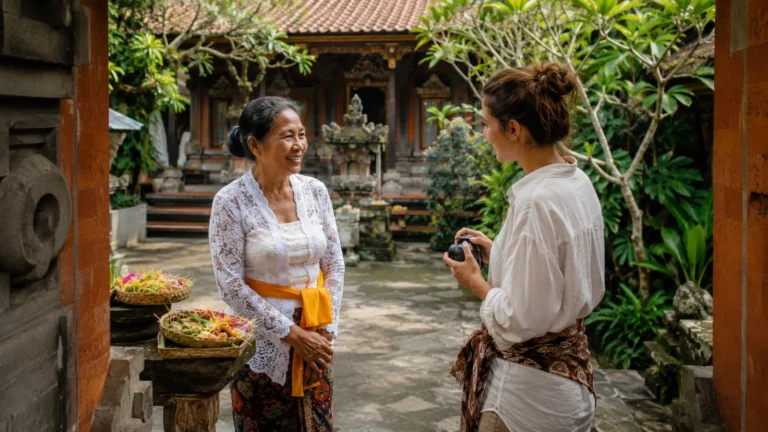
A courtyard used for everyday movement may become a place for weaving decorations, arranging offerings, receiving relatives, or sorting cooking equipment. A pavilion may hold materials or provide space for people who have arrived to help. The kitchen can expand into covered outdoor areas when quantities are larger than usual.
These temporary changes are organized around need. Guests should not expect the household to preserve a normal visitor route during an active ceremony.
Food Preparation Becomes a Coordinated Project
Ceremonial cooking can require more ingredients, more hands, and stricter timing than an ordinary meal. Tasks are divided according to experience and availability. Some items may be prepared in advance, while others must be finished close to serving or offering.
Sweets can also appear in ceremonial and social contexts. The article on ceremonial sweets and family gatherings provides food context without suggesting that every ceremony uses the same menu.
Offerings and Decorations Take Time
Palm leaf, flowers, fruit, cloth, bamboo, and other materials may be prepared and arranged over many hours. The finished visual result can hide the labor behind it. Family members may be balancing this work with jobs, school, transport, and ordinary household responsibilities.
Visitors should not request that materials be rearranged for photographs or interrupt someone who is counting, tying, cutting, or carrying items. A quiet observation from the place suggested by the host is more appropriate.
Schedules Can Change for Valid Reasons
A ceremony may affect when the host can visit the market, receive guests, cook, or arrange pickup. Roads can also be busier or temporarily affected by local activity. A responsible operator communicates early and offers a practical alternative rather than pretending that the household commitment does not exist.
Travelers should read the proposed new date carefully and confirm whether transport, menu, and package remain the same. Flexibility is helpful, but clear written arrangements protect both sides.
Guest Access May Be Limited
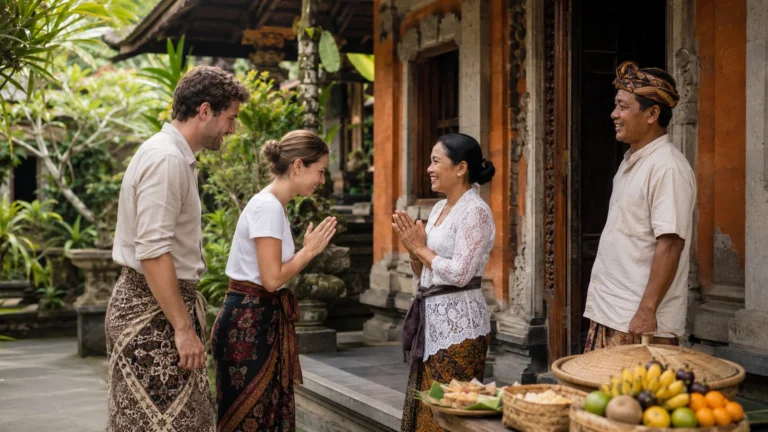
A family may welcome guests to observe part of a preparation, or it may keep the event private. Permission can change as prayer begins or more relatives arrive. Do not assume that paying for a cooking class gives access to an unrelated ceremony.
The general principles in respectful behavior in local settings also apply: ask before photographing people, avoid blocking work, and accept local direction without argument.
Children and Noise Need Extra Attention
Ceremonial days can involve tools, fires, crowded paths, breakable objects, and unfamiliar movement. Parents should keep children close and follow any request to avoid a preparation area. The excitement of the setting does not remove ordinary safety responsibilities.
Guests should also manage their own volume. Music and conversation may be present, but loud joking or calls during prayer can still be disruptive. Watch the family’s cues.
How to Respond to a Necessary Reschedule
When a household explains that an important ceremony affects the booking, respond by checking your itinerary and asking for available alternatives. Understanding the household behind the cooking experience makes it easier to see why the request is personal and operational at the same time.
Confirm the revised date in writing and keep the conversation practical. A respectful reschedule protects the quality of the cooking class and allows the family to meet obligations that cannot simply be delegated to a tourism schedule.
Ceremony Is Part of Living Culture
Ceremonies reveal that a family compound is not a static attraction. Its spaces and schedules respond to religious, social, and family responsibilities.
Visitors show respect by accepting boundaries, listening to rescheduling explanations, asking before observing, and allowing the household to decide how much of the event can be shared.
Why Ceremony Work Extends Beyond One Household
Ceremonial responsibilities often connect relatives, neighbors, and community groups. A family member may need to help at another compound before receiving help in return. Time is therefore shaped by relationships beyond the property where the visitor’s class would normally take place.
Transport and ingredient supply can also be affected. People may shop earlier, order larger quantities, borrow equipment, or coordinate vehicles. A host managing these responsibilities may have less flexibility than on an ordinary day, even when the cooking class itself requires only a few hours.
Visitors should avoid ranking ceremonies by whether they appear visually impressive. A quiet household observance can be deeply important, while a large event may include long periods of practical work. The family’s explanation of significance deserves priority over the visitor’s expectations.
Supporting the Household During a Busy Period
When a ceremony affects a confirmed class, quick communication helps everyone. Reply to messages, choose among the proposed dates, and mention any fixed flight or hotel transfer that limits flexibility. The family can only solve the scheduling problem when it understands the guest’s real constraints.
If the class continues near a smaller household observance, keep belongings contained and stay within the cooking area. Do not follow relatives carrying offerings or assume that additional food is part of the guest meal. The booked activity and the family event can share a property while remaining distinct.
A respectful guest also avoids complaining publicly before giving the host a chance to explain or correct the arrangement. Ceremonial obligations are genuine, but clear service still matters. Direct, calm communication is the best way to protect both cultural respect and the booking.
After a ceremony, the compound may need time to return to its usual rhythm. Equipment must be cleaned, borrowed items returned, decorations handled, and relatives seen off. A date immediately after the main event can still be busy. Accept the host’s honest recommendation about when the kitchen and family will be ready to welcome guests again.