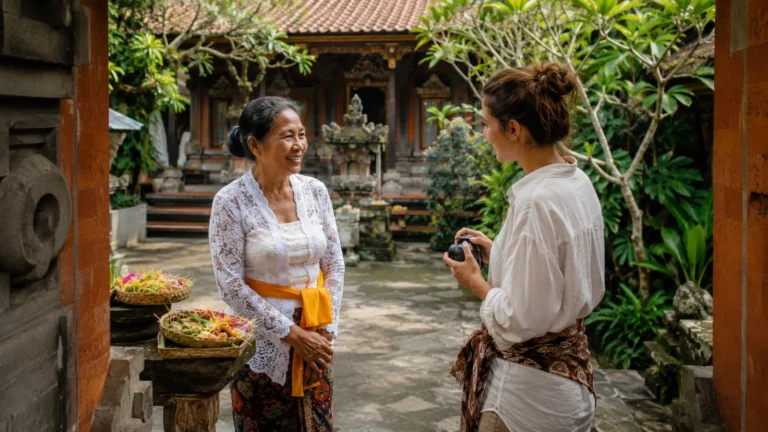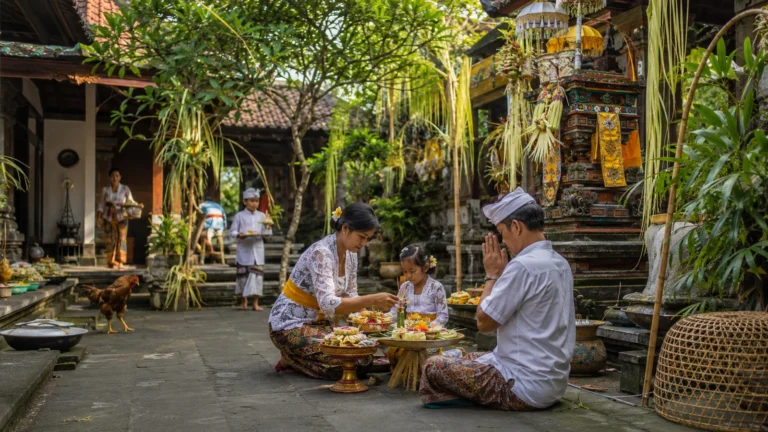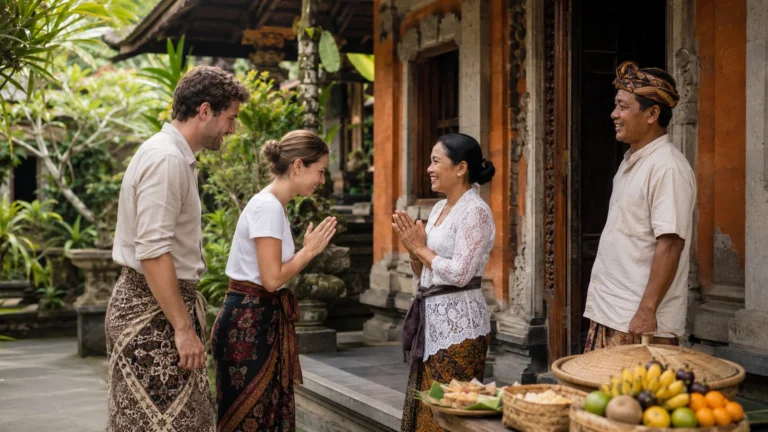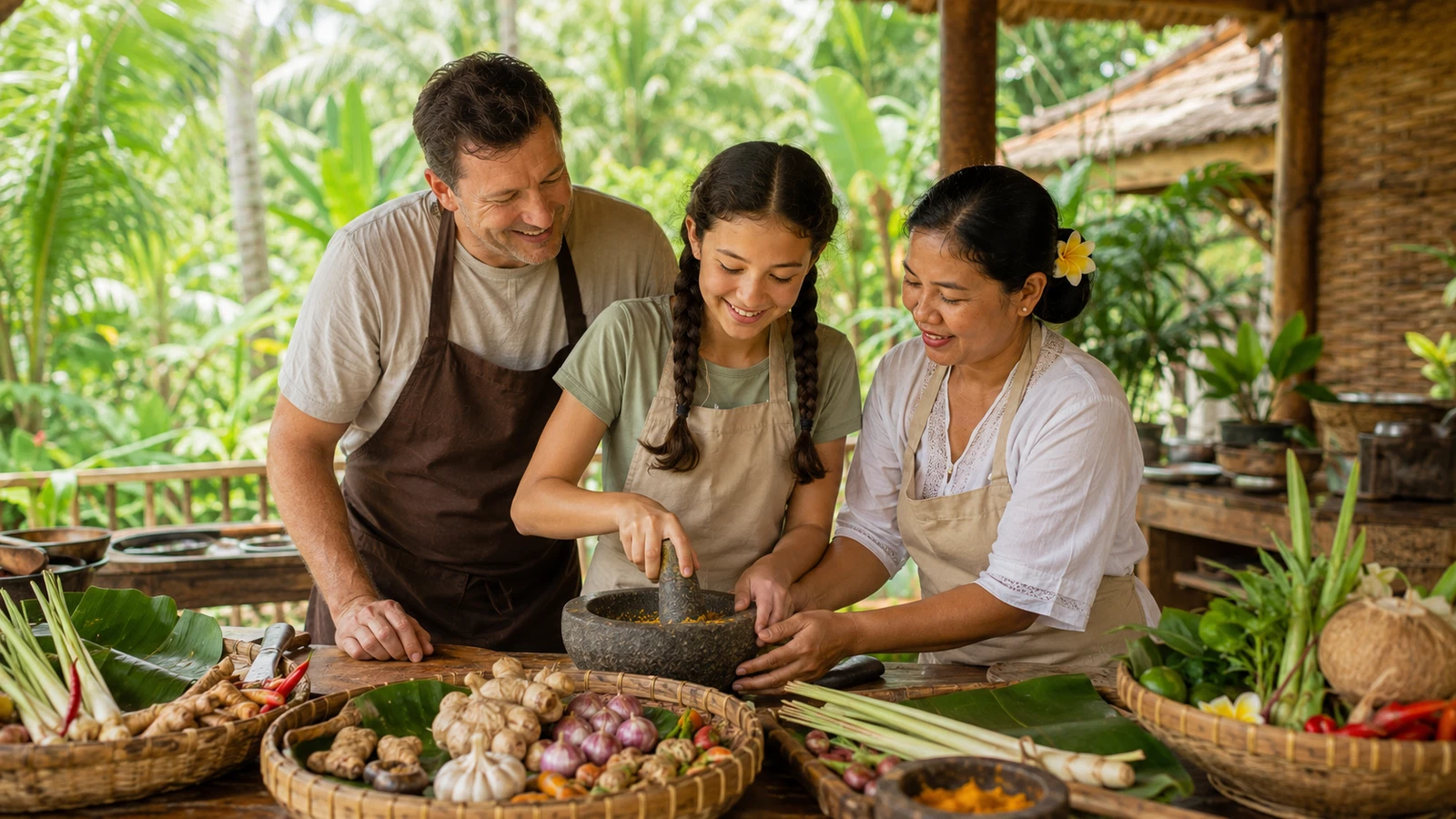
A Balinese family compound and a private villa may both offer courtyards, gardens, carved gates, and attractive architecture, yet they are built around different purposes. A villa is generally designed to accommodate paying guests. A family compound is organized around the household’s relationships, sacred practices, work, and daily routines. A cooking lesson Ubud in a family home therefore feels different from an activity brought into rented accommodation. The guide to the Balinese family compound experience provides the full cultural context.
This is not a competition in which one setting must be better. Travelers should choose according to the experience they want, their need for privacy, accessibility, service, and comfort, and their willingness to enter a lived-in environment with boundaries.
Purpose Shapes the Space
A villa usually prioritizes bedrooms, bathrooms, leisure areas, guest circulation, and staff service. A family compound prioritizes the needs of the people who live there, which may include several generations, a family shrine, practical storage, cooking areas, garden work, vehicles, pets, and ceremonial responsibilities.
Similar visual elements can therefore function differently. A pavilion in a villa may be a lounge for guests; a pavilion in a compound may serve family, sleeping, preparation, or ceremonial needs depending on the day.
Sacred Space Is Not an Amenity
A family shrine is an active sacred area connected with the household. It is not included for atmosphere. Access and photography remain under family guidance. A villa may have decorative elements inspired by temple architecture without serving the same devotional role.
Travelers should avoid assuming that all carved or raised structures have identical meaning. Ask the host rather than interpreting architecture from appearance alone.
Household Rhythm Remains Visible
In a family compound, relatives may move between pavilions, make offerings, prepare food, leave for work, return from school, tend plants, or organize a ceremony. A well-run activity manages guest comfort while allowing the household to remain real.
A villa experience is usually more controlled. Staff movement is designed around guest service, and unrelated household routines are largely absent. Some travelers value that privacy; others prefer the context of a lived-in home.
Food Carries Different Context
Cooking in a family home connects ingredients and techniques with the kitchen, garden, household stories, and the meal that follows. The private home-cooking class is structured for guests while remaining rooted in that setting.
Cooking in a villa can also be excellent, especially with a skilled instructor, but the cultural context comes through the teacher rather than the property’s daily life. The difference is setting, not an automatic difference in culinary quality.
Privacy Means Different Things
A private villa generally gives the booking party exclusive use of agreed guest areas. A private class in a family compound can mean that no unrelated guests join the class, while the household itself continues around it. Guests should confirm what private means before booking.
Do not expect access to every part of the compound or silence from all family activity. Likewise, do not assume a villa class includes the personal interaction or household access associated with a home-based experience.
Comfort and Accessibility Should Be Confirmed
Villas may offer standardized bathrooms, pool access, level paths, air-conditioned rooms, and accommodation services. Family compounds vary in steps, surfaces, weather exposure, seating, and bathroom arrangements. Travelers with mobility or comfort requirements should ask specific questions before booking.
Clear information is more useful than romantic language. A host should explain the cooking area and access honestly, while guests should state what they need rather than assuming every traditional setting is difficult or every villa is accessible.
Choosing the Experience That Fits
Choose a family compound when you value household context, local hospitality, and a cooking lesson connected with real family life. Reading about the local host and home setting can help clarify what is offered.
Choose a villa-based activity when private accommodation, controlled facilities, or staying in one place is the priority. Before deciding, review first-hand guest impressions and ask concrete questions about group format, transport, menu, timing, and access.
Different Settings, Different Strengths
A family compound offers cultural context because it is a functioning home. A villa offers guest-centered privacy and facilities because hospitality is its main purpose. Both can support a memorable cooking experience when expectations match reality.
The best choice is the one that fits the traveler’s priorities without asking either setting to become something it is not.
Questions to Ask Before Choosing the Setting
Ask whether the class takes place in the host’s family home, a dedicated studio, a restaurant, or your accommodation. Confirm who else will be present and which areas are part of the activity. The answer clarifies both privacy and cultural context.
Ask about seating, toilets, steps, weather protection, parking or pickup, and the expected duration. These practical details matter more than broad promises of authenticity. A setting can be culturally meaningful and still need to match the guest’s physical requirements.
Finally, ask what the host hopes guests will learn. A family-home class may emphasize recipes, household stories, ingredients, and the shared meal. A villa class may prioritize convenience and private group time. Clear goals make comparison fair and help travelers choose without disappointment.
Avoiding the Word Authentic as a Shortcut
Travel descriptions often call a family compound authentic and a villa commercial, but that shortcut can be misleading. A family can run a professional tourism activity, and a villa instructor can teach deeply rooted recipes. Quality depends on honesty, skill, hospitality, and the relationship between the setting and the lesson.
Instead of asking which place is more authentic, ask what is actually included and who is teaching. A family-home class offers household context; a villa class may offer privacy and facilities. Clear description is more useful than a label that different travelers interpret in different ways.
The setting should also be valued without idealizing hardship. Modern bathrooms, safe gas stoves, and improved paths can make a family compound more comfortable while preserving meaningful cultural relationships. Adaptation is part of living tradition.
Travelers can combine the strengths of both settings during one trip. A villa can provide private rest and familiar facilities, while a separate visit to a family compound can offer household context and personal teaching. Choosing one experience does not require criticizing the other; it requires understanding what each place is designed to provide.