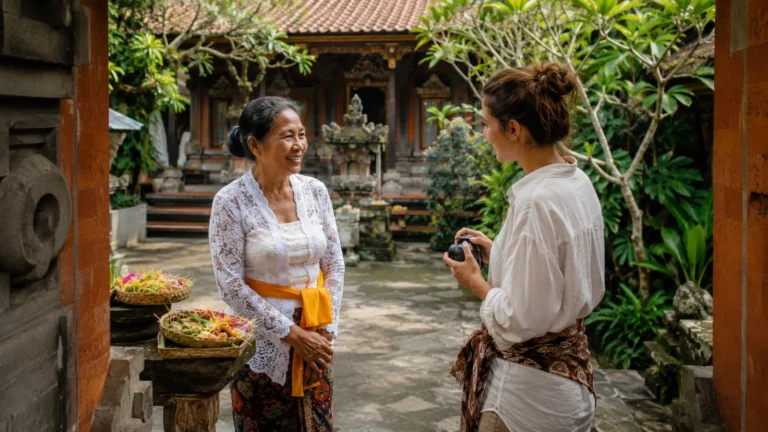
Entering a Balinese family home is different from entering a hotel lobby. The welcome may be warm and informal, but the property still contains private rooms, sacred areas, family belongings, and routines that are not part of the visitor experience. Guests attending a Balinese cooking class in Ubud should combine friendliness with awareness. The visitor guide to a Balinese family compound gives the broader cultural setting for these practical manners.
Etiquette varies between households, so direct guidance from the host is more reliable than a long list memorized from elsewhere. A few habits apply widely: arrive at the agreed time, pause at the entrance, follow the host, ask before taking photographs, and avoid touching offerings or entering a shrine.
Pause at the Entrance
Do not assume that an open gate means you should walk through and search for the kitchen. Send the agreed message, call if instructed, or wait where the host can see you. A household may be finishing prayer, managing a dog, moving a vehicle, or preparing the safe route for guests.
When greeted, use a calm tone and allow introductions to unfold naturally. A simple smile and thanks are more useful than trying to perform unfamiliar gestures.
Follow the Household Rule on Footwear
Some areas may require shoes to be removed, while others may be used with footwear. Look for cues and ask. Do not leave shoes where they block a doorway, touch an offering, or create a trip hazard.
Kitchen footwear can also be a safety issue. If the cooking area is outdoors or has hot, wet, or uneven surfaces, the host may prefer guests to keep suitable shoes on. Follow the rule for that specific space.
Choose Practical, Modest Clothing
Wear clothing that allows comfortable movement and covers the body appropriately for a family setting. Loose sleeves, trailing fabric, and expensive accessories can be inconvenient near heat, knives, turmeric, and oil. Tie back long hair and secure anything that may fall into food.
A sarong or sash is not automatically required for ordinary cooking. If a visit includes a sacred area or ceremonial participation, the host should explain the necessary clothing. Do not enter based on guesswork.
Respect Shrines, Offerings, and Private Rooms
Stay on the route shown to you. Do not step into the household shrine, open doors, sit on a structure, or explore sleeping areas. Watch for offerings near entrances and paths, and keep children from touching them.
The principles behind Balinese dining customs are helpful here: observe the host, handle food and shared items carefully, and avoid creating unnecessary discomfort over small uncertainties.
Ask Before Photographing People
Permission to photograph food does not include every family member in the background. Ask before photographing adults, children, prayer, shrines, offerings, or private rooms. If someone declines, accept the answer without asking for a reason.
Put the camera away during introductions and urgent cooking instructions. Eye contact and participation build trust more effectively than documenting every minute.
Communicate Dietary and Family Needs Early
Allergies, vegetarian or vegan requirements, mobility limitations, and the ages of children should be discussed before arrival. A family kitchen can adapt only when the host has time to confirm ingredients, tools, and safe alternatives.
During the class, speak up promptly if you feel unwell or unsafe. Politeness does not require hiding a serious allergy concern or pretending a task is within your ability.
End the Visit With Clear Gratitude
Thank the host and family directly, help with the simple cleanup requested, and collect personal belongings without entering other areas. The host and family-home setting explains why the experience is personal rather than anonymous.
Later, a thoughtful review can describe the food, teaching, and atmosphere without exposing private family details. Existing guest experiences in the family home show how visitors can be warm and specific without treating household life as a spectacle.
Good Manners Are Mostly Attentive Manners
Respectful hospitality does not depend on perfect knowledge of every custom. It depends on paying attention, asking before crossing a boundary, and remembering that the people hosting the activity also live in the space.
Arrive prepared, follow the host, keep sacred and private areas undisturbed, and participate generously in the cooking. Those habits make the visit comfortable for everyone.
Small Actions That Make a Visit Easier
Keep bags compact and place them where the host suggests. Large backpacks can block narrow paths or touch household items. Silence unnecessary phone alerts, especially when prayer, introductions, or detailed cooking instructions are taking place.
Ask before offering food to pets or children. A friendly animal may have dietary restrictions, and parents decide what their children can eat. The same care applies to gifts: a simple, thoughtful item is acceptable when appropriate, but it should not create an obligation or be presented inside a sacred area.
Use names as introduced and avoid overly personal questions about income, property, religion, or family matters. Cultural curiosity is welcome when it respects privacy. Conversation about food, ingredients, farming, local places, and the cooking process usually creates a natural starting point.
If you make a mistake, respond calmly. Step back, apologize briefly, and follow the correction. A sincere adjustment is more respectful than a long explanation about why you did not know the rule.
When Plans or Boundaries Change
A host may adjust the route through the compound because of rain, prayer, children sleeping, maintenance, or family activity. Follow the new instruction without comparing it with photographs from another guest. A home is allowed to change from day to day.
If part of the advertised experience is unavailable, ask calmly what alternative is offered. Respect does not require silence about a booking problem, but the conversation should stay focused on the agreed activity rather than demanding access to private areas.
Guests who are uncertain about a rule can ask quietly instead of copying another visitor. One person may have received specific permission for a photograph or space. Boundaries are personal and situational, not automatically transferable to the whole group.
Good guest etiquette also includes time awareness. Arriving very early can interrupt preparation, while arriving late compresses a class and meal that depend on several coordinated steps. Use the confirmed pickup or meeting time, notify the host promptly about delays, and avoid adding unplanned companions without asking first.