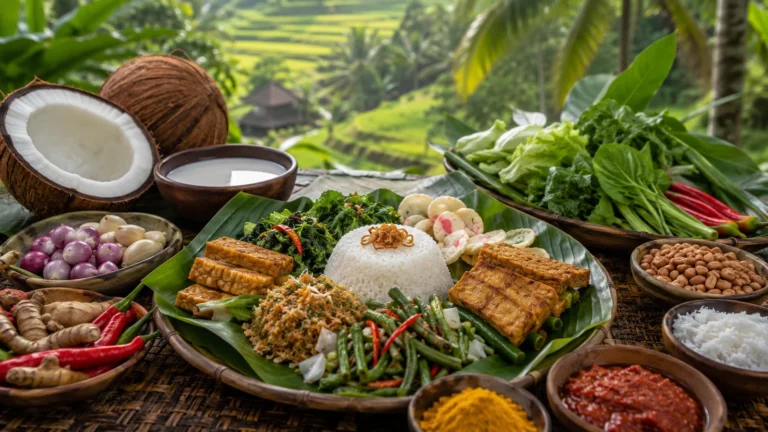
Balinese and Indonesian food menus become much easier to read once travelers recognize a small set of common words. Many terms describe the main ingredient, cooking method, or style of dish. Others refer to a complete preparation whose recipe can vary between cooks. Learning the basics helps with ordering, but it does not replace asking about chili, meat, shrimp paste, nuts, or other dietary concerns.
A menu glossary is especially useful before visiting a warung, market, or cooking class ubud. The words below are written in their common Indonesian forms because these are widely used on menus in Bali, even when the food itself is specifically Balinese.
Nasi Means Rice
Nasi refers to cooked rice. Nasi putih is white rice, while nasi merah is red rice. Nasi goreng is fried rice, and nasi campur is rice served with a mixture of side dishes. The contents of nasi campur vary widely, so ask what is included rather than expecting one fixed plate.
Rice is often the center of the meal. Strongly seasoned vegetables, meat, tofu, tempeh, and sambal are eaten in smaller amounts with it.
Mie Means Noodles
Mie or mi means noodles. Mie goreng is fried noodles, while mie kuah is noodles in broth. The noodles may be made from wheat, rice, or another starch depending on the dish and supplier.
Vegetarians should ask whether the seasoning, stock, or garnish contains meat, egg, seafood, or shrimp paste. A vegetable noodle dish can still use chicken stock or fish-based sauce.
Ayam, Bebek, Babi, and Ikan Identify Proteins
Ayam means chicken, bebek means duck, babi means pork, and ikan means fish. Daging generally means meat and may refer to beef in some menu contexts, but it is safer to ask. Telur means egg.
These words are often combined with a method. Ayam goreng is fried chicken, ikan bakar is grilled fish, and telur rebus is boiled egg. The seasoning and sauce may be as important as the cooking method.
Tahu and Tempe Are Soy Foods
Tahu means tofu, and tempe refers to fermented soybean cake, usually written tempe in Indonesia. Both are common, affordable sources of protein and can be fried, grilled, braised, or mixed with vegetables.
They are useful vegetarian choices, but the surrounding sauce may contain shrimp paste, fish sauce, meat stock, or egg. Shared frying oil may also matter to strict vegans or people with allergies.
Sayur Refers to Vegetables or Vegetable Dishes
Sayur can mean vegetables generally or a prepared vegetable dish. Sayur may be stir-fried, served in broth, cooked with coconut milk, or mixed with grated coconut. Sayur hijau indicates green vegetables.
The word does not guarantee a vegetarian recipe. Ask whether the broth, spice paste, or garnish contains animal ingredients.
Goreng, Bakar, Rebus, and Kukus Describe Cooking Methods
Goreng means fried. Bakar means grilled or roasted over heat. Rebus means boiled, and kukus means steamed. Tumis means stir-fried or sautéed. Panggang can also describe roasting or grilling.
A method gives clues about texture but not the full flavor. Ikan bakar may arrive with a rich spice paste, while a steamed banana-leaf packet can be highly aromatic.
Kuah Means Broth or Liquid
Kuah refers to the liquid part of a dish or indicates that a food is served with broth. Mie kuah is noodle soup. A menu may describe a curry, soup, or sauce by its kuah.
People with dietary restrictions should ask what the broth is made from. Clear liquid may still contain chicken, beef, fish, shrimp, or a prepared seasoning paste.
Sambal Is a Chili Preparation
Sambal refers to a chili condiment or mixture, not one universal sauce. Sambal matah is a fresh Balinese sambal commonly made with sliced shallots, chilies, lemongrass, citrus leaves, and oil. Other sambals may be fried, tomato-based, or made with shrimp paste.
Ask whether sambal is served separately or mixed into the dish. “Tanpa sambal” means without sambal, while “sambal terpisah” asks for it separately.
Pedas Means Spicy Hot
Pedas describes chili heat. Tidak pedas means not spicy, and sedikit pedas means a little spicy. Because heat tolerance is subjective, travelers who cannot eat chili should add a clear explanation rather than relying only on “tidak pedas.”
Aromatic warmth from ginger, pepper, or galangal may still be present in food prepared without chili.
Manis, Asin, Asam, and Gurih Describe Taste
Manis means sweet, asin means salty, asam means sour, and gurih describes a savory, rich, or pleasantly seasoned quality. Gurih can come from coconut, stock, fried aromatics, nuts, or other ingredients.
These words may appear in a dish name or be used when discussing preference. “Tidak terlalu manis” means not too sweet.
Sate Refers to Skewered Food
Sate or satay generally means food cooked on a skewer. Cubes of meat are common across Indonesia. Balinese sate lilit uses a seasoned minced mixture wrapped around a stick or stalk, creating a different texture.
The sauce is not always peanut-based. Some skewers are served with sambal, a separate sauce, or no sauce because the mixture is already highly seasoned.
Lawar Is a Chopped Mixed Preparation
Lawar is associated strongly with Bali. It can combine chopped vegetables, grated coconut, spices, and meat. Some traditional versions may contain fresh blood, while others do not. White lawar, vegetable lawar, chicken lawar, and pork lawar are among the possible descriptions.
Because versions differ, ask about meat, blood, shrimp paste, and spice level. The name alone is not enough to determine whether it suits a vegetarian or cautious first-time diner.
Urab Is a Vegetable and Coconut Mixture
Urab usually contains cooked vegetables mixed with grated coconut and seasonings. It can be mild, spicy, fresh, or toasted depending on the recipe. It often provides texture and balance beside rice and richer foods.
Confirm whether the seasoning includes shrimp paste or other animal ingredients when ordering a vegetarian meal.
Betutu Describes a Deeply Seasoned Preparation
Ayam betutu and bebek betutu are chicken or duck prepared with a complex Balinese spice mixture and cooked until flavorful and tender. Methods vary: the bird may be wrapped, steamed, roasted, or slowly cooked.
Betutu can be aromatic and spicy. Ask about heat level and serving size, especially when ordering for children or diners who prefer mild food.
Useful Phrases for Dietary Requests
- Tanpa daging: without meat.
- Tanpa babi: without pork.
- Tanpa udang: without shrimp.
- Tanpa terasi: without shrimp paste.
- Tanpa telur: without egg.
- Tanpa kacang: without nuts or peanuts, although allergy details should be explained carefully.
- Vegetarian: commonly understood in tourist areas, but ingredients should still be confirmed.
For serious allergies, a translated card is safer than relying on a short phrase. Ask about spice paste, stock, sauces, garnishes, and shared utensils.
Menu Names Are a Starting Point
The same named dish can differ between a family home, warung, hotel, and cooking class. Recipes adapt to local produce, family preference, dietary needs, and the cook’s own method. Use menu words to narrow the possibilities, then ask what is included that day.
The guide to questions to ask before choosing a class helps travelers confirm menus and dietary arrangements in advance. The broader Balinese food guide explains how these words connect with ingredients, meal structure, spice levels, and first-time choices.