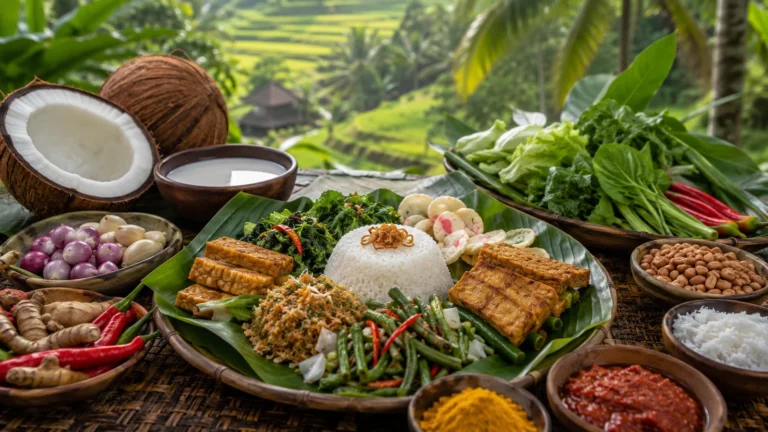
Balinese food can be spicy, but the heat level is not the same in every dish. Some recipes include chilies in the main seasoning paste, some depend on a spoonful of sambal at the table, and others are naturally mild. Aromatic ingredients such as ginger, galangal, pepper, lemongrass, and turmeric can also create warmth without producing the burning sensation associated with chili.
Travelers with a low tolerance for heat can still enjoy the island’s cooking. The key is to ask how the dish is seasoned, keep sambal separate, and choose preparations that can be adjusted. A traditional cooking class near Ubud can also show how flavor remains complex when the quantity of chili is reduced rather than every aromatic ingredient being removed.
Why “Spicy” Can Mean Different Things
In English, spicy may describe chili heat or simply a food containing many spices. Balinese dishes can be strongly aromatic because they use roots, seeds, leaves, and cooked seasoning pastes. A meal may taste warm, peppery, earthy, or citrusy even when it is not painfully hot.
When asking a server or cook, be specific. “Does this contain chili?” and “Is the sambal mixed in or served separately?” give clearer information than “Is it spicy?” If chili causes a medical problem rather than discomfort, explain that directly.
Sambal Often Controls the Final Heat Level
Sambal is a chili condiment, but it is not one standard sauce. Sambal matah uses raw sliced shallots, chilies, lemongrass, citrus leaves, and oil. Other sambals may be fried, roasted, blended with tomato, or seasoned with shrimp paste. Each version has a different heat and aroma.
When sambal is served on the side, start with a tiny amount. Mix it with rice rather than tasting a full spoon. The heat can build slowly, so wait before adding more. Diners who do not want any chili should keep their spoon away from a shared sambal bowl to avoid accidental mixing.
Chili May Already Be in the Spice Paste
Some dishes are prepared with a seasoning base that includes chili from the beginning. Once the paste has been cooked into meat, soup, or vegetables, the heat cannot simply be removed. A restaurant may have a milder batch, but this depends on how the kitchen prepares food.
Ask which dishes are naturally mild instead of requesting that every recipe be changed. Grilled foods with sauce on the side, clear soups, plain rice, eggs, tofu, tempeh, and lightly seasoned vegetables may be easier options.
How to Request a Comfortable Heat Level
Useful phrases include “no chili,” “very little chili,” and “sambal on the side.” Because personal definitions of mild differ, adding “I cannot eat hot chili” can make the request clearer. A translation app or written card is helpful when the need is strict.
Confirm the request when ordering and again when food is served if several plates look similar. For group meals, ask that the mild portion be placed separately rather than relying on memory after all dishes reach the table.
Mild Food Can Still Taste Balinese
Reducing chili does not require removing shallots, garlic, turmeric, ginger, galangal, lemongrass, citrus leaves, coriander, coconut, or toasted spices. These ingredients create the aroma and depth that make the dish distinctive. A small amount of mild chili can sometimes provide color and fruitiness without overwhelming heat, although people who avoid chili completely should say so.
Cooking the seasoning paste slowly is especially important. Proper frying softens raw sharpness and brings the ingredients together. The guide to Balinese spices and flavor building explains how technique produces richness beyond chili.
Dishes That May Be Easier for Sensitive Diners
Plain rice is the safest balancing element. Grilled chicken or fish may be suitable when hot sauce is separate. Satay can be approachable, but the marinade and accompanying sauce should be checked. Fried tofu, tempeh, omelet, simple vegetables, noodles, and clear soup may also work.
Names alone do not guarantee a mild recipe. A familiar-looking chicken dish may have chili in its paste, while an unfamiliar vegetable dish may be gentle. Ask the cook or server which option is prepared with the least chili that day.
Use Rice, Coconut, and Other Foods to Balance Heat
Rice dilutes strongly seasoned bites and gives the mouth a neutral pause. Coconut-based vegetables or sauces can soften the impression of heat, although they do not remove capsaicin completely. Eggs, tofu, and mild soup can also make a mixed plate more comfortable.
Water may not relieve chili heat effectively. Dairy is not a central part of many Balinese meals, so it may not be available. The best strategy is prevention: small tastes, sambal on the side, and enough rice.
What Families Should Ask for Children
Request a clearly separate mild portion before sambal or extra chili is added. Plain rice, egg, tofu, tempeh, mild chicken, soup, and fruit can provide familiar choices. Let children smell or taste aromatic ingredients in tiny amounts rather than presenting an entire unfamiliar plate.
Parents should also distinguish spice sensitivity from allergy. Chili discomfort is different from an allergic reaction to peanuts, shellfish, soy, egg, or another ingredient. Explain each concern separately so the kitchen can respond appropriately.
Cooking Balinese Food with Less Chili at Home
Begin with the complete aromatic base and reduce the number of chilies. Remove seeds only if that method suits the chili being used; much of the heat is concentrated in the inner membrane rather than the seeds themselves. Choose milder chilies for color and flavor, then offer a stronger sambal separately.
Taste after the paste has cooked, not while the aromatics are still raw. Salt, palm sugar, lime, coconut, and stock should be balanced carefully because reducing chili can make other elements more noticeable. Do not compensate by adding excessive sugar.
When “No Chili” Must Be Treated Seriously
Some people avoid chili because of digestive conditions, medication, recovery from illness, or extreme sensitivity. In that situation, say that even a small amount is a problem. Ask about spice pastes prepared in advance, shared utensils, and garnishes.
A kitchen may not be able to guarantee complete separation. It is better to accept that limitation and select a simpler meal than to assume a complex dish can be made safe at the last minute.
Enjoying Flavor Without Chasing Maximum Heat
Balinese food should not be treated as a test of endurance. The fragrance of lemongrass, turmeric, galangal, lime leaves, toasted coconut, grilled banana leaf, and slowly fried paste deserves attention. Sambal should enhance the plate at a level the diner can enjoy.
The broader Balinese food guide for first-time visitors explains ingredients, serving styles, menu words, and suitable first dishes. With clear questions and gradual tasting, even heat-sensitive travelers can experience the cuisine without turning every meal into a challenge.