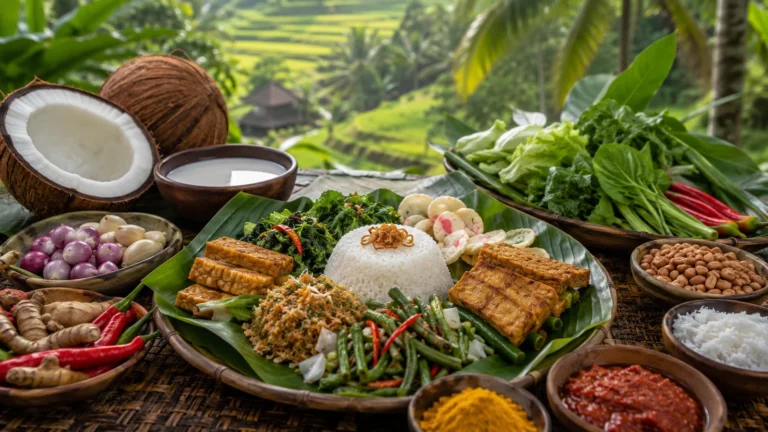
The best first Balinese meal is not necessarily the mildest or most famous dish. It is a plate that lets a new diner experience aromatic spices, rice, vegetables, grilled food, coconut, and sambal at a comfortable pace. Choosing several small portions is usually easier than ordering one large, intensely seasoned specialty.
Travelers planning a cooking class ubud can use the same approach: begin with familiar ingredients, learn how the seasoning is built, and taste stronger components gradually. “Beginner-friendly” should mean approachable, not stripped of local character.
Nasi Campur Offers a Broad Introduction
Nasi campur is rice served with several side dishes. A plate may include chicken, vegetables, tofu, tempeh, egg, peanuts, a skewer, and sambal. Because portions are small, diners can compare flavors without committing to an entire bowl of one unfamiliar food.
Ask what is included and request sambal on the side. Vegetarian diners should confirm each component, as vegetables or coconut mixtures may contain shrimp paste, meat, or stock.
Satay Provides a Familiar Grilled Format
Skewered food feels recognizable to many travelers. Chicken, pork, fish, or minced mixtures may be seasoned and grilled. Balinese sate lilit is made by wrapping a seasoned mixture around a stick or stalk rather than threading cubes of meat.
The texture is tender and the outside picks up smoky browning. Sauces vary, so do not assume every satay comes with peanut sauce. Ask about chili if heat is a concern.
Grilled Chicken or Fish Can Be Easy to Understand
A simply presented grilled protein with rice gives diners a clear point of reference. The marinade may still be aromatic, and sambal or sauce can be tasted separately. Fish may be served whole, so check carefully for bones.
Chicken can be shredded, grilled, fried, or slow-cooked. Choose a preparation whose spice level can be explained clearly by the server.
Tofu and Tempeh Are Worth Trying
Tofu is soft and absorbs sauces, while tempeh has a firmer, nutty texture from fermented soybeans. Both can be fried until crisp, cooked in sweet soy, mixed with vegetables, or served as part of nasi campur.
They are not merely substitutes for meat. Their texture and ability to carry seasoning make them central foods in their own right. Confirm shared oil and sauce ingredients when following a strict vegetarian or allergy-sensitive diet.
Urab Introduces Vegetables and Coconut
Urab combines cooked vegetables with grated coconut and aromatics. Long beans, bean sprouts, cabbage, or leafy greens may be included. The dish can be mild or spicy and may have a fresh, textured quality that balances richer foods.
Ask whether shrimp paste is used. When suitable, urab is an excellent way to experience coconut in a savory preparation rather than a dessert.
Clear Soup Creates a Gentle Pause
A light broth with vegetables, chicken, or other ingredients can balance grilled and fried foods. The appearance may be simple, but the broth can contain aromatic roots, pepper, stock, or fried shallots.
Vegetarians should ask what the liquid is made from. Diners avoiding chili should confirm whether sambal or chili paste has been added.
Ayam or Bebek Betutu Offers Deeper Flavor
Betutu is a richly seasoned chicken or duck preparation associated with Bali. The meat is cooked with an aromatic spice mixture until tender. Depending on the recipe, it may be mild, warm, or quite hot.
This can be a good second step after simpler foods. Share a portion with rice and vegetables so the concentrated seasoning is balanced across the plate.
Lawar Is Interesting but Requires Questions
Lawar is a chopped mixture that may contain vegetables, grated coconut, spices, meat, and sometimes blood. It offers complex texture and is closely connected with Balinese food traditions.
First-time diners should ask which version is being served. Vegetarian lawar exists, but the appearance alone does not reveal whether meat, blood, or shrimp paste is included.
Sambal Matah Is Best Tasted Gradually
Sambal matah is a fresh mixture commonly made with sliced shallots, chilies, lemongrass, citrus leaves, and oil. Its fragrance is as important as its heat. A tiny amount can brighten rice, fish, chicken, or vegetables.
Do not begin with a full spoon. Place a little at the edge of the plate, combine it with rice, and add more only after the heat becomes clear.
Mixed Vegetables Make a Plate Feel Balanced
A first meal should not be only meat and rice. Stir-fried greens, long beans, eggplant, bean sprouts, or coconut-dressed vegetables add freshness, color, and texture. They also help diners experience how Balinese seasonings work with produce.
Seasonal availability matters, so ask what vegetables are fresh that day rather than searching for one required dish.
Balinese Sweets Offer Gentle Familiarity
Desserts and snacks may use banana, coconut, rice flour, pandan, palm sugar, or sweet potato. The textures can be chewy, soft, steamed, fried, or sticky. Palm sugar brings caramel depth, while pandan adds a fragrant green note.
Those with allergies should ask about peanuts, sesame, coconut, dairy, and shared frying oil. Sweetness levels vary, and some snacks are served in small portions with coffee or tea.
A Comfortable First Tasting Order
- Begin with rice and a mild vegetable dish.
- Add tofu, tempeh, chicken, fish, or a small skewer.
- Taste one richly seasoned item with extra rice.
- Try sambal at the edge of the plate.
- Finish with fruit or a small coconut-based sweet.
This sequence is flexible. The purpose is to create contrast and control, not to establish a formal rule.
How to Order for a Group
Choose a mix of mild and strongly flavored dishes, one or two vegetables, enough rice, and sambal separately. Sharing allows everyone to taste more while avoiding waste. Confirm dietary restrictions before dishes are placed in the center.
Children and heat-sensitive adults should have a separate mild plate so serving spoons do not accidentally transfer sambal.
What to Ask the Server or Cook
Ask which dish is mild, which contains chili in the paste, whether sambal is separate, and what the broth or sauce contains. Vegetarians should mention shrimp paste and stock. People with allergies should explain the ingredient and possible cross-contact.
The guide to planning your first Ubud cooking experience can help travelers connect menu choices with hands-on learning.
Enjoy the Food Without Searching for a Perfect List
Every cook, family, market stall, and restaurant may prepare a dish differently. A comfortable first meal should create curiosity for the next one. Taste slowly, use rice to balance strong seasoning, and ask how the food was made.
The broader Balinese food guide explains ingredients, menu words, serving customs, vegetarian considerations, and spice levels. With that context, beginners can move beyond safe choices while still respecting their own comfort and dietary needs.