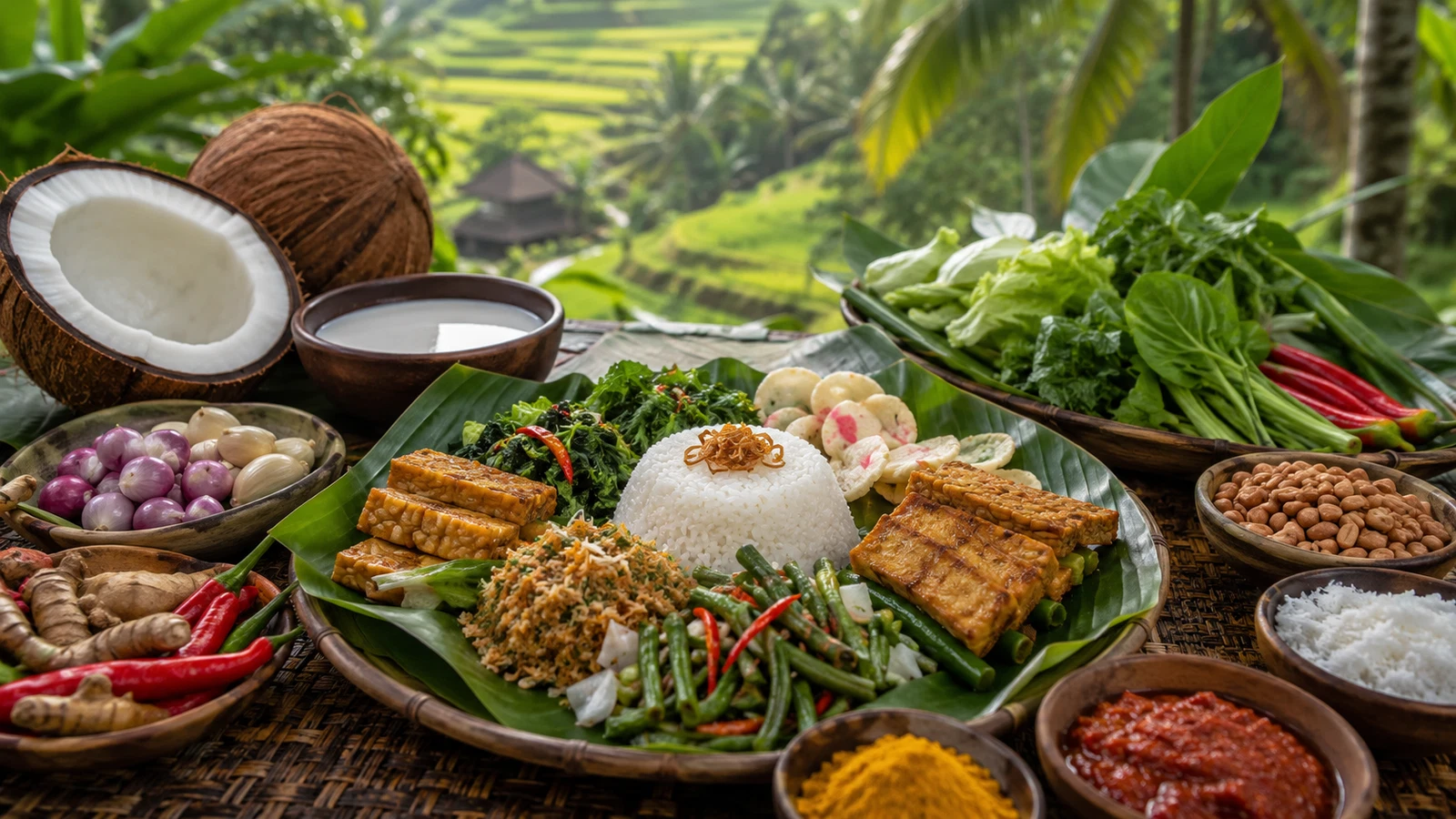
A Balinese meal may contain ingredients that first-time visitors have seen before but cannot immediately identify once they are ground, sliced, toasted, or cooked into a spice paste. Ginger-like roots can have very different aromas. A pale nut may thicken a sauce. A dark paste may contribute savory depth without leaving a visible trace. Learning a few common ingredients makes menus easier to understand and helps travelers communicate dietary needs more accurately.
Many of these foods are easiest to recognize during an ubud cooking class or a market visit, where the whole ingredient can be smelled and handled before it becomes part of a dish. Recipes vary between families and cooks, so the descriptions below explain typical roles rather than fixed formulas.
Galangal Is Not the Same as Ginger
Galangal resembles ginger from the outside, but its aroma is sharper, more citrus-like, and slightly resinous. It is often sliced, bruised, or ground into a seasoning mixture. Large pieces may be used to perfume a broth and removed before eating, while finely ground galangal becomes part of the sauce.
Ginger brings a warmer and more familiar heat. Both roots may appear in the same recipe because they contribute different qualities. Travelers who dislike chili may still notice warmth from ginger or galangal, but this sensation is usually aromatic rather than the burning heat of chili.
Turmeric Adds Earthiness and Golden Color
Fresh turmeric is a small root with vivid orange flesh. It stains fingers, boards, and cloth easily, which explains the golden color of many spice pastes and cooked dishes. Its flavor is earthy and slightly bitter when raw, but it becomes rounder after cooking.
Turmeric is often combined with shallots, garlic, ginger, galangal, coriander, and other seasonings. It rarely stands alone as the only flavor. In a finished dish, visitors may notice its color before they can identify its taste.
Kencur Has a Distinctive Fragrance
Kencur is another rhizome used in Indonesian and Balinese kitchens. It is smaller than common ginger and has an intense, distinctive aroma that can seem peppery, camphor-like, or earthy. English descriptions vary because there is no perfect everyday comparison.
A small amount can strongly influence a spice paste, sambal, or vegetable preparation. If a dish has an unfamiliar aromatic note even though the visible ingredients seem simple, kencur may be one of the reasons.
Candlenuts Give Body to Spice Pastes
Candlenuts are pale, round nuts used for richness and texture. They are normally cooked as part of a paste rather than eaten raw. Once ground, they help bind ingredients and give sauces a fuller consistency.
They may look similar to macadamia nuts, but they should not be treated as an interchangeable snack. People with nut allergies should ask specifically about candlenut because it can disappear completely into a smooth seasoning base.
Shrimp Paste Adds Savory Depth
Terasi, a fermented shrimp paste, is used in small quantities in many Indonesian sambals and seasoning mixtures. Its smell can be strong before cooking, but after roasting or frying it contributes a deep savory quality. It may be difficult to detect as a separate ingredient in the finished food.
This is important for vegetarians, vegans, people with seafood allergies, and diners who avoid shellfish for religious reasons. Asking whether a dish contains shrimp paste is more reliable than looking for visible shrimp. Some cooks can omit it, while others use a spice base that was prepared earlier.
Base Genep Combines Many Aromatics
Base genep is a Balinese seasoning foundation that can include shallots, garlic, chilies, turmeric, ginger, galangal, kencur, lemongrass, candlenuts, coriander, pepper, shrimp paste, and other ingredients. The exact combination and proportions vary. It is better understood as a family of complete spice bases than as one universal recipe.
The ingredients may be chopped or ground, then cooked until fragrant and mellow. The paste can season meat, vegetables, soups, and coconut mixtures. The article about Balinese spices and flavor building explains why cooking the paste properly matters as much as selecting the ingredients.
Lemongrass and Citrus Leaves Lift Rich Food
Lemongrass is often bruised or finely sliced to release its fresh, lemony aroma. The tough outer layers are useful for flavoring but may not be pleasant to chew unless cut very finely. Citrus leaves, commonly from makrut lime, add a bright fragrance without necessarily making a dish sour.
These ingredients balance coconut, fried food, meat, and strong spice pastes. Thinly sliced lemongrass and citrus leaves are also central to the fresh character of sambal matah.
Torch Ginger Can Taste Floral and Citrusy
Torch ginger flowers are striking pink blossoms used in some sambals, salads, and regional dishes. The edible flower has a fresh, slightly floral, citrus-like quality. It is not present in every Balinese meal, but visitors may encounter it at markets or in more ingredient-focused cooking.
Because the flavor is delicate compared with cooked spice paste, it is often added in a way that preserves freshness. Thin slices can brighten fish, vegetables, or sambal.
Coconut Appears as Milk, Flesh, and Grated Texture
Coconut milk enriches sauces, soups, and sweets. Grated coconut may be steamed, toasted, or mixed with vegetables and seasonings. Young coconut has softer flesh and refreshing water, while mature coconut supplies richer milk and firmer grated flesh.
A vegetable dish containing coconut may be moist and mild, dry and toasted, or strongly seasoned. Coconut does not automatically mean the food is sweet. In savory cooking it often provides texture, richness, and a background aroma.
Palm Sugar Balances Savory and Spicy Ingredients
Palm sugar is usually brown and has a deeper caramel flavor than white sugar. It is used in sweets, sauces, marinades, and sambals. A small quantity can soften acidity, bitterness, salt, or chili without making the finished dish taste like dessert.
The level of sweetness varies by cook. Travelers who prefer less sweet food can ask, but it is worth recognizing that the sugar may be serving a balancing role rather than acting as the main flavor.
Banana Leaves Are a Cooking Material
Banana leaves are used to wrap food for steaming or grilling, line serving baskets, and hold individual portions. They help retain moisture and contribute a subtle aroma when heated. The leaf is not generally eaten; it functions as a natural wrapper or surface.
Charred edges are normal when a packet is grilled. Open it carefully because steam and hot sauce may be trapped inside. The leaf can also make a market snack or rice portion easier to carry.
Long Beans, Fern Tips, and Other Local Vegetables
Long beans are common in stir-fries, salads, and coconut mixtures. Fern tips may appear in seasonal vegetable dishes. Bean sprouts, leafy greens, eggplant, cabbage, jackfruit, and cassava leaves are also used in different preparations.
Availability changes by season and market, so a named vegetable dish may not always look identical. A local market visit before cooking is useful for seeing how everyday produce differs from the imported or supermarket varieties travelers may know.
How to Ask About an Unfamiliar Ingredient
Ask what the ingredient is, whether it is cooked into the spice paste, and whether it can be omitted. For allergies, mention the specific food and possible hidden forms, such as shrimp paste, stock, candlenut, peanuts, coconut, soy, or shared oil. A picture or translated allergy card can reduce confusion.
The broader Balinese food guide connects these ingredients with flavor, serving customs, vegetarian choices, and menu language. Once visitors can identify a few roots, leaves, pastes, and nuts, Balinese food becomes less mysterious without losing its sense of discovery.


