Sambal matah is one of Bali’s most recognizable condiments, but its appeal is easy to underestimate if you think of it only as “raw chili sauce.” A good sambal matah is not simply hot. It is crisp, aromatic, citrusy, savory, and lightly glossy, with each sliced ingredient still identifiable. Shallots bring sweetness and bite, chilies provide heat, lemongrass adds perfume, citrus leaves lift the aroma, and warm oil helps those flavors come together without turning the mixture into a cooked paste.
For travelers, sambal matah shows how Balinese food can create intensity through freshness and aroma rather than long cooking. For cooking learners, its simplicity makes knife work, seasoning, and oil balance easy to observe.
This guide explains what sambal matah is, which ingredients commonly define it, why slicing matters, how the warm-oil step changes the mixture, how to manage chili heat, what foods it can accompany, and which dietary and food-safety questions are worth asking.
What Is Sambal Matah?
Sambal is not one standardized Indonesian sauce. It is a broad family of chili-based condiments with many regional styles, ingredients, textures, and preparation methods. Some sambals are pounded in a mortar, some are fried, some are cooked with tomato or shrimp paste, and others emphasize fresh ingredients. Sambal matah belongs to the fresh, sliced end of that spectrum and is strongly associated with Bali.
The word matah is commonly explained as “raw” or “uncooked” in Balinese. That description points to the character of the main aromatics: instead of being ground and cooked into a homogeneous sauce, ingredients such as shallot, chili, lemongrass, and citrus leaf are thinly sliced and kept visibly distinct.
“Raw,” however, does not always mean untouched by heat. Many versions are finished with warm or hot oil. The oil can soften the sharpest edge of the shallots, release fragrance from lemongrass and citrus leaves, spread chili flavor through the mixture, and give the sambal a cohesive texture. The result is still very different from a fried sambal because the sliced ingredients remain recognizable rather than cooking down into a paste.
When tasting sambal matah, notice the sequence of sensations: crisp shallot, fresh chili, citrus aroma, lemongrass, salt, oil, and sometimes a deeper savory note from shrimp paste. Different cooks balance those elements differently, so variation is normal.
Core Sambal Matah Ingredients and What They Do
There is no single formula that every Balinese household, warung, restaurant, or cook must follow. Published recipes vary, and local practice can vary as well. It is more useful to understand the role of the main ingredients than to memorize one fixed set of measurements.
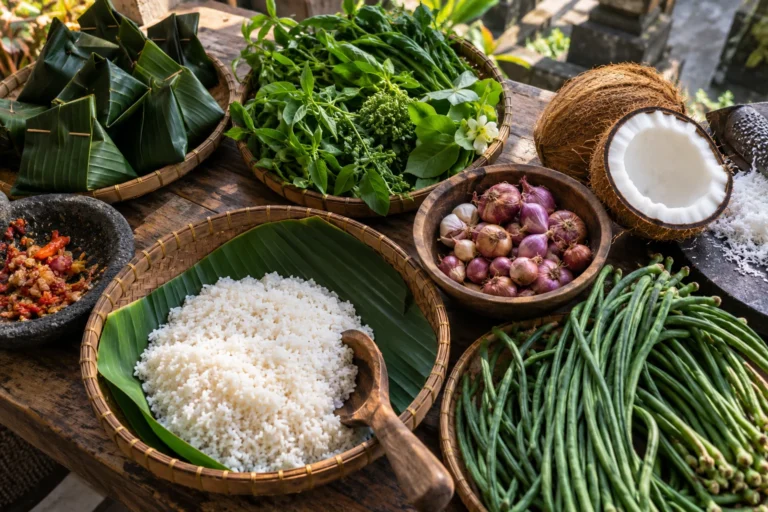
Shallots
Shallots form much of the body of sambal matah. Thin slices contribute sweetness, pungency, moisture, and crunch. If they are cut too thickly, the raw onion character can dominate the bite. If they are crushed or chopped too finely, the condiment loses some of the clean layered texture that distinguishes it from pounded sambal.
Fresh chilies
Chilies provide direct heat, but they also contribute fresh, fruity, or grassy notes depending on the variety. Heat can vary dramatically between chilies, so the number of pieces is not a reliable measure of how hot a finished sambal will be. A small quantity of a very hot chili can dominate a batch more than a larger amount of a milder variety.
Lemongrass
Lemongrass is central to the aroma. The tender inner part is usually the most suitable for very fine slicing because the tougher outer layers can be fibrous. This is one place where knife work directly affects eating quality: the goal is to release a strong fragrance without leaving coarse strands that are unpleasant to chew.
Citrus leaves and juice
Finely sliced citrus leaves contribute perfume rather than simply sourness. Lime or another suitable citrus can provide acidity. These two forms of citrus do different jobs: the leaves affect aroma, while juice sharpens the overall flavor and helps balance oil, salt, and chili.
Oil, salt, and optional savory ingredients
Oil carries aroma and rounds out the fresh ingredients. Coconut oil may be used in Balinese cooking, although other cooking oils can also appear. Salt is essential because it helps the aromatics taste complete rather than merely sharp. Some sambal matah recipes include roasted shrimp paste, while others do not. That difference is important for vegetarians, vegans, people with shellfish allergies, and diners who avoid seafood products for religious reasons.
If several of these ingredients are unfamiliar, the guide to common Balinese food ingredients provides useful background on lemongrass, citrus leaves, chilies, coconut products, shrimp paste, and other components found across Balinese cooking.
Why Thin Slicing and Warm Oil Matter
Sambal matah is sometimes described as easy because it does not require a long simmer or a complicated reduction. That is true, but the simplicity makes technique more visible. When only a few fresh ingredients are used, uneven slicing, too much oil, or poor seasoning changes the result immediately.
The first principle is to slice rather than grind. Sambal matah should retain the identity of its components. Shallots need enough thickness to stay crisp but should not be so thick that one bite tastes like raw onion. Lemongrass and citrus leaves need even finer slicing because their fibers are firmer. Chilies should be distributed well enough that one spoonful is not completely mild while the next is overwhelmingly hot.
The second principle is to season in stages. Salt, citrus, and any optional sugar or shrimp paste should support the aromatics rather than cover them. Taste a small amount with plain rice rather than a full spoonful by itself, because sambal is designed to work beside other food.
The warm-oil step is also a technique rather than a mere finishing flourish. Heat encourages aromatic compounds to become more noticeable and can slightly soften the sliced ingredients. The goal is not to deep-fry the mixture. Too much very hot oil can make the sambal heavy, limp, and oily; too little may leave the ingredients tasting disconnected. A modest amount, mixed through carefully, preserves freshness while helping the flavors integrate.
Texture is a useful final checkpoint. A successful sambal matah should still look and feel like a mixture of sliced aromatics. If it becomes watery, greasy, or mushy, adding more salt or chili rarely solves the underlying problem. It is better to ask what changed the structure: too much citrus juice, excessive oil, bruised shallots, thick lemongrass, or too much time sitting after mixing.
How to Control the Chili Heat Without Flattening the Flavor
One of the easiest mistakes is to treat chili as the only ingredient responsible for character. Removing nearly all chili can make sambal matah feel flat, while using too much can obscure the shallot, lemongrass, and citrus that make it distinctive. The target is not maximum heat. The target is enough heat to energize the condiment while leaving the other aromatics easy to recognize.
For a milder version, start by reducing the quantity of very hot chilies or substituting a milder chili where appropriate. Keep the sambal separate from the main dish so each diner can control the amount. Pairing a small quantity with plain rice, tofu, egg, fish, chicken, or vegetables also spreads the intensity across a larger bite.
Do not assume that “mild” means the same thing to every cook or diner. If you have a low chili tolerance while traveling in Bali, ask whether sambal can be served separately rather than asking only whether the meal is “spicy.” The broader guide Is Balinese Food Spicy? explains the difference between chili heat and the aromatic warmth of ingredients such as ginger, galangal, pepper, and other seasonings.
If chili avoidance is related to a medical condition rather than personal preference, communicate that clearly. Chili may be mixed into a seasoning base elsewhere in the meal even when sambal is served on the side. A kitchen may also use shared equipment. Asking specific questions is more reliable than assuming a dish is suitable because the visible sambal has been removed.
At home, make small batches when learning. Change one variable at a time: reduce chili before reducing lemongrass or shallot, adjust citrus gradually, and note the type of chili used. This approach helps you understand balance instead of simply chasing a predetermined spoon count.
What to Eat With Sambal Matah
Sambal matah works best through contrast. Its freshness, acidity, aroma, and crisp texture can lift foods that are grilled, fried, roasted, or simply seasoned. Fish and seafood are common pairings because the sambal cuts through richness while adding brightness. Chicken, duck, eggs, tofu, tempeh, rice, and vegetables can also work well depending on how the rest of the plate is seasoned.
The condiment may appear beside a meal, on top of a protein, or as one small component of a mixed rice plate. A small portion is normal. Sambal is concentrated; it is not supposed to be eaten in the same quantity as rice or vegetables.
If you are trying sambal matah for the first time, place a little at the edge of the plate. Taste it with rice first, then with the main dish. Notice what changes. Lemongrass may become more obvious beside fish. Citrus may feel brighter with fried food. Chili may seem much stronger when tasted alone than when distributed through rice. This kind of comparison teaches more than simply deciding whether the sambal is “hot” or “not hot.”
Restaurant versions are not universal standards. Family recipes, ingredient availability, and the accompanying food can all affect proportions. The Balinese food guide for first-time visitors gives broader context on how meal combinations and serving styles vary.
Dietary, Allergy, and Food-Safety Questions
Sambal matah may look completely plant-based, but appearance cannot confirm whether a particular version is vegetarian or vegan. Some recipes include shrimp paste. If that matters to you, ask directly. The same issue is more serious for people with shellfish allergies because a small amount of shrimp paste can be mixed through the entire condiment and may be impossible to identify visually.
Cross-contact can matter as well. A kitchen may use the same knives, boards, bowls, spoons, oil, or preparation surfaces for multiple foods. Travelers with severe allergies should explain the allergy before ordering and ask what level of separation the kitchen can realistically provide. A menu label alone cannot describe every preparation practice.
Fresh handling is also important because sambal matah relies on sliced produce that is eaten raw or only lightly affected by warm oil. Wash hands before preparation, rinse fresh produce under running water, use clean knives and cutting boards, and keep raw meat or seafood and their utensils separate from ingredients that will be eaten without further cooking. Pouring warm oil over the mixture should not be treated as a substitute for clean produce and clean equipment.
For texture as well as safety, sambal matah is best treated as a fresh preparation. If you prepare components ahead, keep cut ingredients appropriately chilled until needed. In warm conditions, do not assume that chili, citrus, salt, or oil makes prepared food safe to leave out indefinitely. Use normal food-safety practices for fresh ingredients and perishable foods.
The freshness that makes sambal matah attractive is also the reason careful handling matters.
What Sambal Matah Teaches a Cooking Learner
Sambal matah is a small preparation with a surprising number of transferable lessons. It shows how thin slicing changes flavor release, how oil can carry aroma without becoming the dominant taste, how acidity and salt sharpen fresh ingredients, and how chili should be balanced rather than treated as a competition.
It also teaches restraint. Not every aromatic needs to be ground into a paste, and not every ingredient becomes better when cooked until soft. Preserving contrast can create complexity of its own: crisp shallot, fragrant lemongrass, citrus leaf, fresh chili, salt, acidity, and warm oil remain separate enough to be noticed but connected enough to taste like one condiment.
For travelers who want to understand Balinese food beyond reading restaurant menus, preparing a condiment like this can be as educational as making a larger dish. You can compare whole ingredients with the finished mixture, learn how local aromatics behave under the knife, and see how small changes in proportion affect the final result. If you choose to learn Balinese cooking in Ubud, ask which sambals or condiments are included rather than assuming sambal matah is part of a particular class menu.
The most useful takeaway is therefore not one supposedly universal recipe. It is the structure behind the preparation: fresh aromatics, controlled chili, precise slicing, balanced salt and acidity, and enough oil to release fragrance without making the mixture heavy. Once those roles make sense, it becomes easier to understand why two sambal matah preparations can taste noticeably different while still expressing the same Balinese culinary idea.